
Opening Ceremony Brings Thousands to Minneapolis
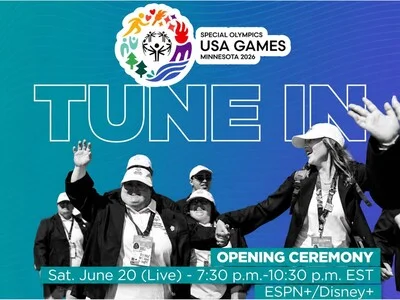
The 2026 Special Olympics USA Games officially began Saturday night with opening ceremonies at Huntington Bank Stadium in Minneapolis, drawing an estimated 75,000 fans and featuring a performance by pop star Demi Lovato. The six-day event brings together 3,000 athletes from across the United States, supported by 10,000 volunteers. Athletes from every delegation entered the stadium waving flags, dancing, and exchanging high-fives, with Minnesota Governor Tim Walz leading the home-state team onto the field.
Historic Torch Run Finale
Earlier Saturday, the "Flame of Hope" completed its final leg in Blaine, Minnesota, after a groundbreaking 10,000-mile journey across more than a dozen states. For the first time in Special Olympics history, the torch run spanned coast to coast over several weeks. Local law enforcement officers partnered with athletes for the final stretch, a tradition that symbolizes the unity between Special Olympics and first responders. Lucas Giambelluca, President of Bank of America Minnesota—a sponsor for 50 years—announced a $5 million grant to support athlete development at the final leg event.
Why the Games Matter: Inclusion and Economic Impact
The Special Olympics USA Games, held every four years, represent the pinnacle of competition for athletes with intellectual disabilities. This year’s event is expected to generate nearly $70 million in economic impact for the Twin Cities metro area. But organizers and participants emphasize that the true value lies in the message of inclusion.
Unified Sports Takes Center Stage
A key feature of the Games is Unified Sports, which pairs athletes with and without disabilities on the same teams. Utah’s delegation, which includes 70 athletes, coaches, and Unified partners, exemplifies this approach. Basketball coach Loretta McClure, a life skills teacher at Westlake High School, noted that the Games give her athletes a rare opportunity to "develop those athletic wings." Swimming coach Wendy Harris echoed that sentiment, saying many of her students "never get this opportunity to shine." Athletes like Ryker Shepard expressed excitement to "show the entire U.S. what I got."
Economic and Community Boost
The influx of 75,000 fans and 10,000 volunteers provides a substantial boost to local businesses, hotels, and restaurants. Bank of America’s long-standing sponsorship, now totaling $5 million for this cycle, underscores corporate commitment to disability sports. The coast-to-coast torch run also expanded community engagement, with events in multiple states leading up to the Minnesota finale.
Broader Implications: A Growing Movement
The 2026 USA Games reflect a broader trend toward greater visibility and investment in adaptive sports. Unlike the 2026 NHL Draft: Scouts See Depth, Not Star Power, in a Wide-Open Class, where talent evaluation is the focus, the Special Olympics emphasizes participation, personal growth, and breaking down social barriers.
Changing Perceptions Through Sport
For decades, Special Olympics has worked to shift public perception of intellectual disabilities. The Games provide a platform for athletes to demonstrate skill, determination, and joy—qualities that CBS Minnesota described as “grit, sheer joy, determination.” The inclusion of Unified Sports also promotes mainstream acceptance, as athletes with and without disabilities compete as equals. This model is increasingly being adopted in school sports programs nationwide.
Future of the Games
With the 2026 event now underway, attention will turn to the next host city. The success of the Minnesota Games—both in terms of participation and economic impact—sets a high bar. Organizers hope to continue expanding the torch run and Unified Sports components. The Games also coincide with other major sporting events this summer, including the World Cup and the U.S. Open, highlighting a packed season of athletics at all levels.
Conclusion
As the Special Olympics USA Games continue through June 26, athletes will compete in sports ranging from basketball and swimming to bocce. The opening ceremony’s energy, the historic torch run, and the commitment to inclusion signal that this year’s Games are not just a competition, but a celebration of ability. For the 3,000 athletes, 75,000 fans, and millions watching, the message is clear: the Special Olympics is a powerful force for unity and change.
Comments