
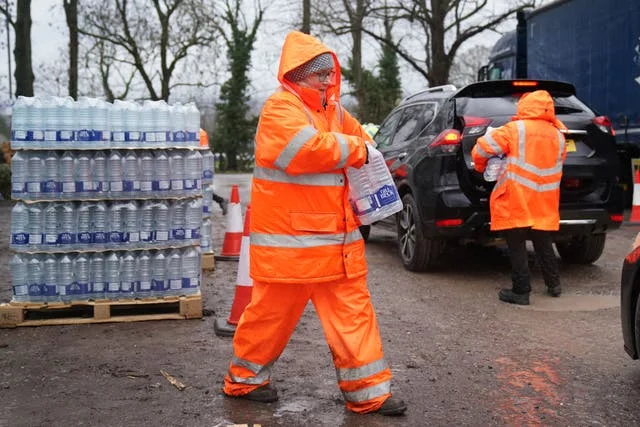
Thousands in Kent Face Days Without Water as South East Water Struggles to Restore Supply
More than 8,000 South East Water customers in Kent are facing days without a reliable water supply, as the company scrambles to fix a combination of pipe bursts, power failures, and heat-driven demand that has left taps dry and bottled-water stations busy. The worst-hit communities include Cranbrook and Benenden, where residents have endured four days of disruption, according to the BBC.
In an update on August 18, South East Water said it had opened bottled-water stations in Cranbrook, Canterbury, Challock, and Herne Bay, although most customers in Herne Bay were expected to have their supplies restored. The company's incident support manager, Mike Pickard, told BBC South East: "It's an ongoing challenge for us at the moment and we apologise sincerely to all affected customers." He admitted the situation was "unacceptable" but insisted the firm was doing everything it could.
Staff are working around the clock, but the strain is showing. "Our team is exhausted and being pushed to limits to make sure water is running," Pickard said. The company also reported that some employees and contractors have been subjected to abuse by frustrated customers, a development that incident manager Jenny Rhodes said would not be tolerated.
A Perfect Storm of Heat, Demand, and Infrastructure Failures
South East Water has attributed the current crisis to prolonged hot weather, which has driven up demand, combined with recent pipe bursts and overnight power issues. The region has been gripped by an unusually intense heatwave, with temperatures soaring and little rain in recent weeks. This has left storage tanks depleted and the network struggling to keep up.
Water levels in local storage tanks have dropped dangerously low, forcing the company to use tankers to support the network and move water around to balance supplies. In some areas, airlocks have formed in the pipes after bursts, complicating efforts to restore normal flow.
The scale of the problem became clear over the weekend when up to 1,383 properties in Benenden, Cranbrook, and Rolvenden lost supply. A burst main on Swattenden Lane was repaired, but the knock-on effects—low pressure, airlocks, and intermittent supply—lingered. Meanwhile, a separate incident in Charing, Challock, and Molash left up to 833 homes without water or with very low pressure for a second day.
South East Water says it is moving water around the network and bringing in extra tankers, but for many customers, the wait is far from over. Mike Pickard declined to give a definitive timeline, saying only that it "could be a couple of days" before all supplies are restored.
Why This Matters: Drought, Leaks, and an Ageing System
The current crisis is not happening in a vacuum. England is in the grip of one of the most severe droughts in decades. According to the Guardian, last month was the driest July since records began almost two centuries ago, with the country receiving just 7% of its long-term average rainfall. Almost three-quarters of England and all of Wales are now officially in drought.
Helen Wakeham, chair of the National Drought Group, has called this year's drought "exceptionally serious," with long-lasting impacts on the environment and the economy. The situation is a stark reminder that the UK, despite its rainy reputation, is increasingly vulnerable to water shortages.
A key factor is the country's ageing water infrastructure. There has not been a new reservoir built in the UK since 1992, and water companies lose an estimated 2.87 billion litres of water every day through leaky pipes—enough to fill 1,150 Olympic-sized swimming pools, according to research by Greenpeace UK. That amounts to a fifth of all water pumped through the network.
South East Water has acknowledged that investment is needed. "We know we need to invest in certain areas and we are, but we can't do that overnight," Pickard said. But for residents like Frazer Stodart, who has eight people in his household and no water, the explanations ring hollow. "I'm slightly annoyed after a large increase in bills—the least they should do is provide water," he told the BBC.
The Department for Environment, Food and Rural Affairs (Defra) has been blunt in its criticism. "The situation is simply not good enough," a spokesperson said. "South East Water needs to go further and faster to reduce leaks and follow their drought plans to ensure supplies are not disrupted in even the driest of weather. Their new leadership must now deliver a step change in performance, where customers' needs are prioritised and there is a stop to supply outages."
A Pattern of Disruption
This is not the first time South East Water customers have been left high and dry. David Ciechanski, a resident in east Kent, told the BBC: "It is getting a lot more common. We first had it a few months ago and there's now been one every three or four weeks across east Kent." Properties in Charing, Challock, and Molash were hit by supply interruptions as recently as May.
This recurring pattern raises serious questions about the robustness of the region's water network and the ability of South East Water to manage demand during extreme weather. With climate change making heatwaves more frequent and intense, the pressure on water companies is only set to grow.
The Human Toll
For those affected, the impact goes beyond inconvenience. Elderly residents, families with young children, and people with medical conditions are particularly vulnerable when water supplies fail. The lack of water makes it impossible to cook, clean, or stay hydrated during a heatwave. Bottled-water stations offer some relief, but they are a poor substitute for a reliable mains supply.
South East Water has urged customers with water to use it only for essential purposes, but with temperatures still high, the demand is understandably difficult to curb. The company has also asked for patience, but the message is wearing thin for many.
Perspective: A Warning for the Future
The current crisis in Kent is a microcosm of a broader challenge facing England and Wales. The droughts of 2022 and 2026, combined with the driest July on record, are stark indicators that the country's water resources are under severe strain. The question is no longer whether the UK could run out of water, but when and where it will happen again.
The National Farmers' Union is calling on the government to streamline planning rules to make it easier for farmers to build on-farm water storage. Environmental groups are urging water companies to fix leaks as a matter of urgency. But the scale of investment required is enormous, and the pace of change is slow.
For South East Water, the immediate priority is restoring supply to the 8,000 customers in Kent. But the long-term challenge is building a system that can withstand the kind of heat and demand shocks that are becoming the new normal. As Defra noted, a "step change" is needed—not just in performance, but in the way water is managed and valued.
Until then, residents like Frazer Stodart will continue to rely on bottled water and the hope that the taps will soon flow again. But as climate change tightens its grip, such disruptions may become an increasingly familiar part of life in the south east of England.
For more on how the heatwave is affecting the region, see our coverage of the record heat persisting across the UK.
Comments