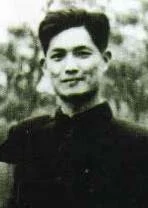
Who Is Song Ping?
Song Ping (宋平) is one of the most distinguished elder statesmen in the history of the People's Republic of China. Born on April 4, 1917, in Jianshan County, Shandong Province, he became a towering figure within the Chinese Communist Party (CCP) during the twentieth century. His career spanned several decades of transformative political change in China, and his influence extended well into the post-Mao era.
Early Life and Education
Song Ping joined the CCP in 1936, during a period of intense national crisis marked by the threat of Japanese invasion and internal political struggle. He studied at Qinghua University in Beijing, where he became politically active. His early commitment to communist ideals shaped the trajectory of a career that would eventually reach the very top of the Chinese political system.
Rise Within the Party
Following the establishment of the People's Republic of China in 1949, Song Ping held a series of important administrative posts. He worked closely in areas related to planning and economic development, gaining expertise in national resource allocation and population management. His reputation for discipline, ideological consistency, and administrative competence earned him the respect of senior party leaders, including Deng Xiaoping.
Political Career and Key Roles
Song Ping's most prominent period in public life came during the 1980s and early 1990s. He served as Director of the State Planning Commission, a body responsible for coordinating China's national economic development strategy. In this role, he played a significant part in guiding China through complex periods of economic transition.
Member of the Politburo Standing Committee
Song Ping reached the pinnacle of Chinese political power when he was elevated to the Politburo Standing Committee (PSC) — the country's most powerful decision-making body — in 1987, during the 13th National Congress of the CCP. He served on this committee until 1992, making him one of the most influential figures during a critical chapter of China's modernization.
During his time on the PSC, Song Ping was notably involved in personnel decisions within the party. He is widely credited with having recognized and promoted the political career of Xi Jinping, who would later become China's paramount leader. Song Ping served as a party secretary in Gansu Province, where Xi Jinping's father, Xi Zhongxun, had also worked, creating a network of relationships that proved historically significant.
Role in Gansu Province
Before his elevation to the national stage, Song Ping served as the First Secretary of the CCP in Gansu Province during the 1970s. Gansu, a predominantly rural and economically underdeveloped region in northwest China, presented significant governance challenges. His tenure there helped establish his credentials as a pragmatic administrator capable of managing difficult conditions.
Legacy and Historical Significance
Song Ping retired from active political life in 1992 but remained a respected elder figure — a so-called "party elder" — whose counsel continued to carry weight in Chinese political circles. His longevity has itself become a notable aspect of his legacy; as of the mid-2020s, he has lived past 107 years of age, making him one of the oldest living former senior leaders in CCP history.
Influence on Succeeding Generations
Perhaps Song Ping's most enduring contribution to Chinese politics is his early support for Xi Jinping. According to multiple historical accounts, Song Ping visited Xi Jinping in Zhengding County, Hebei Province, in the early 1980s and came away deeply impressed by the young official's capabilities and work ethic. This early endorsement helped set Xi Jinping on a path toward higher office.
Beyond individual patronage, Song Ping represents a generation of CCP leaders who bridged the revolutionary period and the era of reform and opening up. His career encapsulates the ideological tensions and pragmatic adjustments that defined Chinese governance in the latter half of the twentieth century.
Ideological Positioning
Song Ping has generally been associated with the more conservative, ideologically orthodox wing of the CCP. He consistently emphasized party discipline, Marxist-Leninist principles, and cautious, centrally planned economic management. This positioning distinguished him from more reform-minded figures during the Deng Xiaoping era, although he worked within the reform framework without direct opposition.
Conclusion
Song Ping's life offers a window into the broader arc of Chinese Communist Party history. From his student activism in the 1930s to his seat on the Politburo Standing Committee and his quiet influence in retirement, he exemplifies the kind of dedicated, long-serving cadre who shaped modern China. His role in mentoring future leaders, particularly Xi Jinping, ensures that his historical footprint extends far beyond his own years in formal office.
Comments