
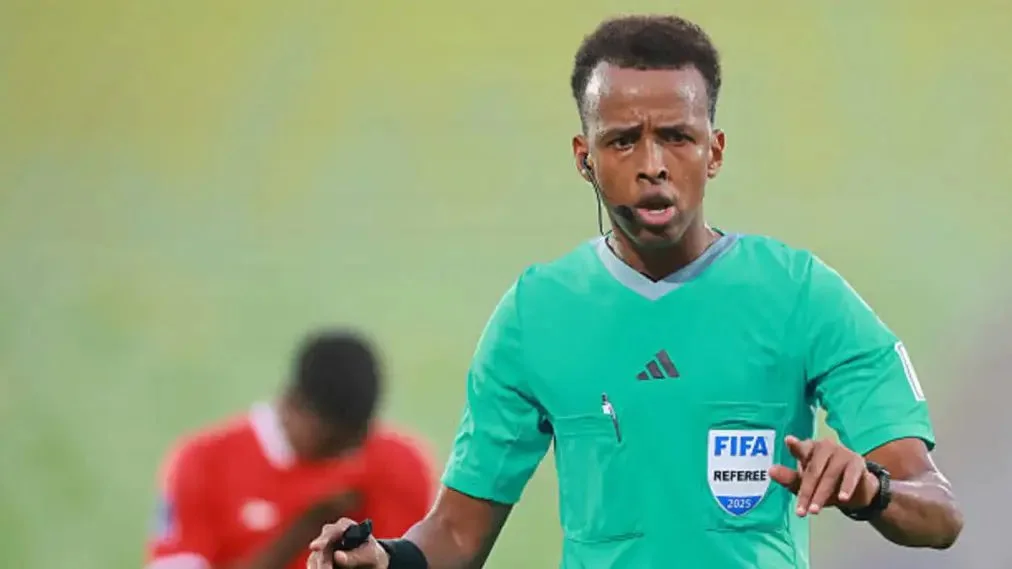
Somali referee Omar Artan denied US entry, barred from officiating at World Cup 2026
Omar Artan, the first Somali referee ever selected to officiate at a FIFA World Cup, has been denied entry to the United States and removed from the tournament's officiating roster. The decision, confirmed by FIFA and the U.S. Department of Homeland Security on June 8, 2026, has sparked condemnation from Somali officials and raised fresh concerns about the impact of U.S. travel restrictions on the global sporting event.
Artan, 35, was barred from entering the country at Miami International Airport over the weekend and has since returned to Istanbul, where he had been based in recent months. The Department of Homeland Security stated that Artan was "determined to be inadmissible due to vetting concerns," without disclosing further details. FIFA confirmed that his status "will not be changed at present" and that he would be unable to train or officiate at the tournament, which begins on June 11.
“Fifa is not involved in host country immigration processes, including visa adjudications … a host government ultimately determines who receives a visa and who is admitted into their country,” FIFA said in a statement.
Artan had been included among 52 referees announced by FIFA to oversee matches at the 2026 World Cup, which is being co-hosted by the United States, Canada, and Mexico. He was widely celebrated in Somalia and across Africa as a symbol of merit and perseverance, having risen from officiating in the Somali national league to becoming the Confederation of African Football's (CAF) men's referee of the year in 2025.
Why it matters: A blow to representation and fair play
Artan’s exclusion is more than a personal setback. It undercuts the spirit of inclusion that the World Cup is meant to represent, according to Somali officials and football advocates.
“Omar Artan is among Africa’s most respected referees and deserves the support of the entire football community,” said Ciise Aden Abshir, senior adviser to Somalia’s Ministry of Youth and Sports and a former national team captain. “Denying him entry to the United States and preventing him from officiating scheduled matches harms not only him personally but also undermines football’s commitment to fairness, merit, and the spirit of fair play.”
Somalia is one of several countries affected by a travel ban introduced under the Trump administration. The ban has been a recurring point of tension in the lead-up to the World Cup. While Artan reportedly held a valid visa and traveled with a diplomatic passport issued specifically to ease his travel after earlier visa difficulties, he was still turned away at the border.
Andrew Giuliani, who leads the White House Task Force on the World Cup, defended the decision. Speaking to the BBC World Service, he said: “While I can't go into the derog [derogatory information] on that, I can tell you it was the right decision by customs and border patrol and I support that decision.”
Somalia’s President Hassan Sheikh Mohamud had previously praised Artan as “a symbol of inspiration for the new generation of Somalis.” The Somali Football Federation has contacted FIFA seeking urgent clarification, and a Somali embassy official in Nairobi confirmed that Artan’s diplomatic passport had been issued to facilitate travel after earlier visa difficulties.
Stakes for the World Cup and host countries
The incident is the latest in a series of visa and immigration controversies surrounding the 2026 World Cup. Iran’s national team has been forced to remain based in Mexico due to visa issues, with some staff members denied U.S. visas entirely. There are also widespread concerns about federal agents harassing foreign nationals or targeting undocumented immigrants in stadium areas, particularly in New York City, which is set to host matches including the final in nearby New Jersey.
New York Mayor Zohran Mamdani publicly rebuked the Trump administration’s plans to surge Immigration and Customs Enforcement (ICE) agents into the city during the tournament. “Soccer would not exist without immigrants. Immigrants play and coach the game, work in the stadiums, fill the stands, and make celebrations like the World Cup possible,” Mamdani wrote in a social media post. “We will not allow ICE or anyone else to sow fear in our communities — especially at this moment.”
Artan’s case has amplified these concerns. For many observers, it demonstrates that even individuals with valid visas and official FIFA accreditation are not immune from the administration’s travel restrictions.
Background: A historic rise, now stalled
Omar Abdulkadir Artan became a FIFA referee in 2018, officiating in the Somali national football league championships before moving on to continental competitions. He officiated at the 2023 Africa Cup of Nations (AFCON) in Algeria and was named CAF’s men’s referee of the year in 2025.
His selection for the World Cup was heralded as a milestone for Somali football, a country that has faced decades of conflict and instability. The Somali government had issued him a diplomatic passport specifically to ease travel ahead of the tournament, but it ultimately made no difference at the U.S. border.
Artan was scheduled to be one of 170 referees, assistant referees, and video assistant referees overseeing a record 104 matches across the six-week tournament. His removal leaves a gap in the officiating team and raises questions about whether other officials from restricted countries might face similar obstacles.
Broader implications: What this changes for future World Cups
Artan’s exclusion is not an isolated event. It reflects a broader trend in which immigration policies increasingly intersect with international sports, often to the detriment of athletes and officials from countries deemed security risks by host nations.
The 2026 World Cup was sold as a unifying global event, with matches spread across three nations to showcase diversity and cooperation. Instead, it has become a stage for geopolitical friction. The denial of entry to a respected official from a country facing a travel ban has cast a shadow over the tournament before the first whistle is blown.
For Somalia, the incident is a painful reminder that even the highest achievements may be thwarted by political barriers. For the global football community, it signals that merit and accreditation may not guarantee equal treatment at the border.
“This is not just about one referee,” Abshir said. “It’s about whether the World Cup truly belongs to the world — or only to those who fit a certain profile.”
As the tournament kicks off, Artan will watch from Istanbul. His story, however, is likely to resonate far beyond the pitch, adding new urgency to calls for reform in how host countries manage visa processes for participants in major international events.
Comments