
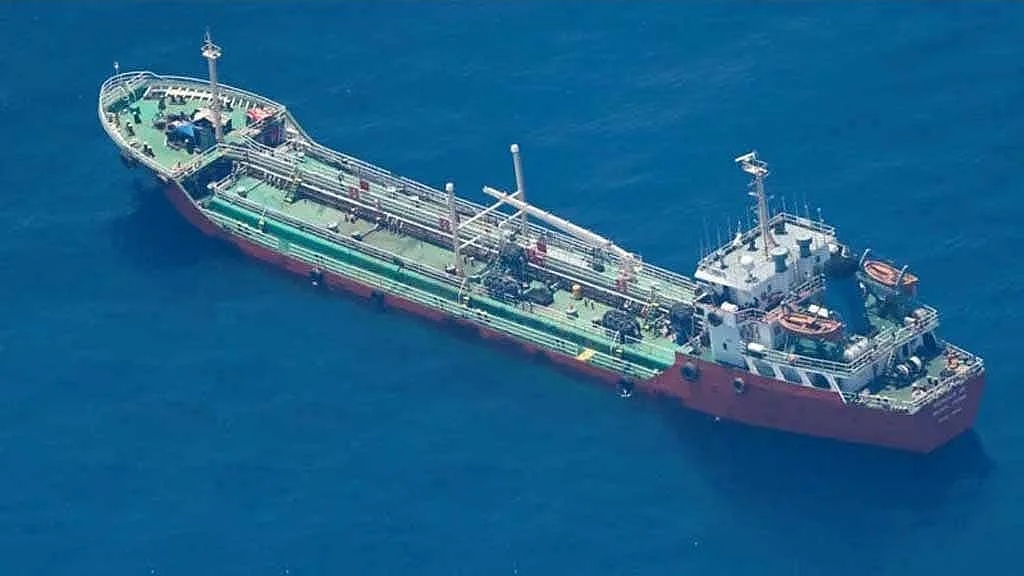
Somali Pirates Kill Five Crew Members on MT Honour 25 Before Rescue
Somali pirates killed five crew members aboard the hijacked oil tanker MT Honour 25 before regional security forces stormed the vessel and rescued the remaining crew, authorities in Somalia's semi-autonomous Puntland region said Tuesday. The deaths appear to be the first at the hands of Somali pirates in more than a decade, underscoring a resurgence of piracy off the Horn of Africa that experts link in part to the economic fallout of the U.S. and Israeli war on Iran.
The Palau-flagged tanker, carrying about 18,500 barrels of oil destined for Mogadishu, was seized by six armed men in April while sailing off Somalia's coast. Puntland's Information Ministry said in a statement that a rescue mission had freed the ship and captured 16 suspected pirates. "Before the operation began, the pirates on board the ship killed five of the crew," the statement said. Among those killed were three Pakistani nationals, one from Myanmar and one from India. Four other crew members — three Pakistanis and one Indian — were injured.
Puntland Deputy Information Minister Bile Qabowsade told the BBC that the five were killed by pirates before regional forces boarded the vessel. He said the tanker had been anchored near the Somali coast between the fishing towns of Xaafun and Bander Beyla. Authorities have not given further details on how the crew members were killed or how the pirates took control of the ship.
In a post on X, India's embassy in Kenya said it was "deeply saddened" by the killing of the Indian crew member. "All other Indian seafarers on board are reportedly safe, including those on MT Sibu 1 and MT Eureka, which have also been recently rescued," it added. The Puntland Maritime Police Force said the vessel was "safe" and under government control, and that efforts were continuing to find others involved in the hijacking.
Second Tanker Freed as Puntland Escalates Anti-Piracy Operations
The rescue of the MT Honour 25 came alongside the freeing of a second hijacked tanker, the MT Eureka, which pirates had seized in May. Puntland's Maritime Police Force said in a statement late Tuesday that its forces had also rescued the Eureka after its hijackers fled when police approached. "As PMPF forces approached the area, the pirates fled towards the shore and moved inland," the force said, adding that it was pursuing those who escaped.
The two operations bring the total to five out of six ships held by pirates off the Somali coast as of late August that have now been freed. The rescue followed another operation last week in which maritime police freed the Sibu 1, a tanker sanctioned by the U.S. that Somali pirates had hijacked in August. However, 28 of the 41 pirates arrested in that operation later escaped while being transferred to jail, and several Puntland security officials accused local police of complicity — an allegation Qabowsade rejected.
According to Drop Site News, the decision to carry out the attacks on the hijacked vessels was made on September 9, after weeks of surveillance confirmed that pirates on board the Honour 25 and the Eureka had been offloading barrels of oil and diesel to shore. "The pirates had been loading the barrels (of fuel) on to small boats, then transporting them to shore," a Puntland security official told Drop Site. "Once they moved the barrels (of fuel) to shore, their on-land criminal network would take the barrels and sell them on the black market to local fuel importers." Another official said the pirates were "trying to make two profits. Sell the fuel worth millions, and also get a ransom for the hijacked ships and their crew."
Drones belonging to the European Union Naval Force (EUNAVFOR) provided extensive surveillance ahead of the operation, officials said. EUNAVFOR is tasked with anti-piracy operations in Somali territorial waters and had been carrying out regular reconnaissance missions on both hijacked oil tankers. The Puntland Maritime Police Force — created in 2013 with funding from the United Arab Emirates and trained by private South African security firm Saransor — is responsible for maritime security in waters under Puntland's jurisdiction.
Why the Resurgence Matters: Piracy's Economic and Security Fallout
The killings mark a grim milestone in the resurgence of Somali piracy, which had fallen sharply after 2011 following international naval operations. At least 15 attacks have been reported off Somalia since April, according to officials. Experts attribute the uptick in part to the effects of the U.S. and Israel's war on Iran, including elevated oil prices that make tankers more attractive targets.
The previous wave of piracy from 2008 to 2014 disrupted one of the world's busiest shipping routes, cost the global economy billions of dollars, and resulted in hundreds of millions of dollars in ransom payments. The current resurgence threatens to revive those costs at a time when global shipping already faces heightened geopolitical risks. The MT Honour 25 was carrying oil worth an estimated $1.7 million, while the MT Eureka carried diesel worth an estimated $4.3 million, according to Drop Site News.
The involvement of EUNAVFOR surveillance and the UAE-funded Puntland force highlights the complex international web of actors attempting to secure Somali waters. Yet the escape of 28 pirates from custody last week — and the accusations of local police complicity — raise questions about the durability of these efforts. "They were trying to make two profits," one Puntland official said of the pirates' strategy, describing a criminal network that extends from the sea to onshore black markets.
Regional and Global Implications
The rescue of the MT Honour 25 and MT Eureka brings the total to five of six ships freed, but the deaths of five crew members signal that piracy off Somalia is again exacting a human toll. The victims came from Pakistan, India and Myanmar, underscoring the international makeup of crews on vessels traversing the Gulf of Aden and Somali waters. Families of the Pakistani crew members had protested in Karachi as early as May, calling for the safe return of their loved ones.
The resurgence also complicates security dynamics in a region already strained by the Iran war and its ripple effects. Puntland's security coordination office said pirates were not holding any ships in waters off Puntland's coast, though one vessel was still being pursued. The ability of pirates to seize multiple tankers and hold them for months — offloading fuel to black markets while demanding ransoms — suggests a level of organization and onshore support that naval patrols alone may not defeat.
What This Changes
The killing of five crew members on the MT Honour 25 is the first such loss of life at the hands of Somali pirates in over a decade, and it may force a reassessment of anti-piracy strategy. While international naval forces and regional maritime police have demonstrated the capacity to retake hijacked vessels, the deaths occurred before the rescue operation began — a reminder that by the time forces board, it may already be too late for hostages. The escape of suspects in the Sibu 1 case further suggests that capturing pirates is only half the battle; securing convictions and preventing prison breaks are equally critical.
For now, Puntland authorities say they are pursuing those who fled the Honour 25 and the Eureka, and that no ships remain in pirate hands off Puntland's coast. But with at least 15 attacks reported since April and experts pointing to the Iran war's economic aftershocks as a driver, the conditions that fueled this resurgence have not disappeared. The international community may need to confront a familiar question: how to prevent the next hijacking before it turns deadly.
This article was compiled from reporting by Al Jazeera, the BBC, Drop Site News and The Jerusalem Post.
Comments