
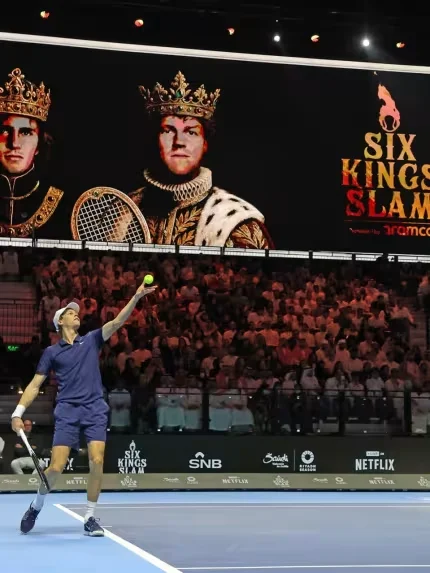
Six Kings Slam Postponed Amid Saudi Security Crisis
The highly anticipated Six Kings Slam tennis exhibition, set to feature Carlos Alcaraz, Novak Djokovic, and Alexander Zverev, has been postponed following a series of deadly attacks on Riyadh, Saudi Arabia. Organizers announced on Wednesday that the tournament, originally scheduled for October 21-24, will now take place from December 27-30. The decision comes after Yemen's Houthi movement launched missile and drone strikes on the Saudi capital over the weekend, including an attack on King Khalid International Airport that killed 13 people and wounded more than 300.
Turki al-Sheikh, chairman of Saudi Arabia's General Entertainment Authority, cited "organizational and logistical challenges" in a statement on X, sharing a notice from the Riyadh Season entertainment program. The Six Kings Slam, which was to be streamed live by Netflix, was expected to draw global attention with six of the world's top men's players: Alcaraz, Djokovic, Zverev, Taylor Fritz, Learner Tien, and Alex de Minaur. The ANB Arena, located about 31 kilometers from the airport, was to host the third edition of the lucrative event, won last year by Italy's Jannik Sinner.
Safety Concerns Prompt Postponement
The postponement follows a weekend of escalating violence. On Saturday, a missile strike on Riyadh's airport killed 13 and injured over 300, marking one of the deadliest attacks on Saudi soil in recent years. The Houthis, backed by Iran, also targeted oil and gas facilities, prompting Saudi Arabia's energy minister to vow a "serious" response. The conflict has already disrupted sports: three Saudi Pro League fixtures, including one involving Cristiano Ronaldo's Al-Nassr, were postponed on Tuesday. Ronaldo's AFC Champions League match on Monday was delayed by an hour due to a missile alert.
Organizers told BBC Sport that the decision "reflects Riyadh Season's commitment to delivering sporting events to the highest standards" and cited "potential impact on the quality of the audience experience." While the statement did not explicitly mention the attacks, the timing leaves little doubt about the security concerns. The Saudi Pro League also cited "logistical considerations" for rescheduling matches, with Al-Nassr's clash against Al-Ahli moved to March 2027.
Context: A Region on Edge
The Six Kings Slam is the latest high-profile sporting casualty of the renewed Houthi offensive. The attacks underscore the fragility of Saudi Arabia's ambitious sports strategy, which has invested billions to attract top talent and global events. The kingdom has positioned itself as a premier destination for tennis, golf, boxing, and football, but security risks now threaten that vision. Formula 1 races in Qatar and Abu Dhabi, scheduled for later this year, could also be affected, while golf's Asian Tour said it is "closely monitoring" the situation ahead of the PIF Saudi International in November.
For players, the postponement adds another layer of uncertainty to an already grueling calendar. Alcaraz, who crashed out of the Shanghai Masters earlier this week, had spoken about the challenges of the season's back end. "I didn't play the way that I wanted to play," he said after losing to Zizou Bergs. Djokovic had also criticized court conditions in Shanghai, calling them "way too fast." Now, both stars face a reshuffled schedule, with the Six Kings Slam pushed to late December—a window traditionally reserved for off-season training and exhibitions.
Financial and Reputational Stakes
The Six Kings Slam is not just another exhibition; it is a symbol of Saudi Arabia's push into tennis. Last year's winner reportedly took home £4.5 million, one of the richest prizes in the sport. Netflix's involvement signaled a broader media play, aiming to bring tennis to new audiences. The postponement delays those ambitions and raises questions about the reliability of Saudi-hosted events. For the players, the financial hit is significant, though likely manageable. For organizers, the reputational risk is greater: can Riyadh guarantee safety for global stars?
Perspective: Sports and Geopolitics Collide
This postponement highlights the growing intersection of sports and geopolitics. Saudi Arabia has used sports to diversify its economy and soften its international image, but regional conflicts can quickly undermine those efforts. The Houthi attacks, which Saudi officials describe as Iran-backed, are a stark reminder that even the most well-funded events are vulnerable to geopolitical shocks. The decision to postpone rather than cancel suggests organizers hope the situation stabilizes by December, but that is far from certain.
Other sports are watching closely. The Asian Tour's statement about the PIF Saudi International reflects a wait-and-see approach. Formula 1, which has races in Qatar and Abu Dhabi in November and December, may face similar decisions. If attacks continue, the kingdom's sports calendar could unravel, affecting everything from sponsorship deals to broadcast agreements. For tennis, the Six Kings Slam was meant to be a showcase of the sport's growing reach. Now, it is a cautionary tale.
As Alcaraz and Djokovic await a new date, the broader message is clear: in a volatile region, even the most lucrative tournaments can be delayed by forces beyond the court. The coming weeks will determine whether December's rescheduled event proceeds—or whether the conflict claims another victim.
Comments