
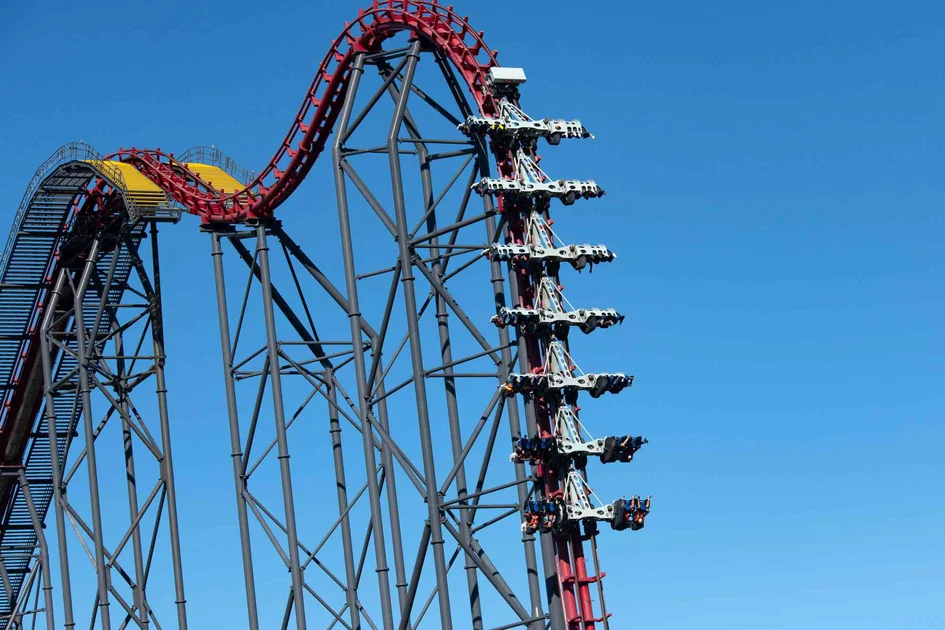
Six Flags Magic Mountain Permanently Closes X2 Coaster
Six Flags Magic Mountain announced Tuesday, Sept. 29, that it is permanently retiring X2, the iconic roller coaster that has thrilled riders for nearly two decades. The Valencia, California, theme park cited a history of injuries and ongoing litigation in its decision to close the ride, which had already been shuttered since July 12.
"After almost 20 years, we have decided to permanently retire X2," Magic Mountain President Brian Oerding said in a statement. "Since X2 reopened in 2008, it has welcomed more than 16 million guests and earned a passionate following among ride enthusiasts. While X2 consistently passed a multitude of safety tests, we have decided to close the ride because we believe it's the right thing to do. Ride safety is a cornerstone of our business, and when we see guest confidence affected, we take it seriously."
The announcement comes after a CNN investigation revealed that two women who rode X2 six days apart in July both lost consciousness and required surgery for similar brain hemorrhages, injuries that neurosurgeons described as resulting from "a traumatic rapid acceleration-deceleration event." Three lawsuits were subsequently filed in September, and attorneys representing the plaintiffs say more than 100 additional people have come forward with injury claims. Six Flags' decision to close the ride should not be interpreted as an admission of liability in those cases.
X2 first opened as X in January 2002, introducing the world's first fourth-dimension roller coaster. Designed by Arrow Dynamics, the prototype featured seats extending beyond the track that could rotate independently as the train traveled through the course. The ride stood 200 feet tall, reached speeds of 76 mph, and included head-first, face-down drops, flips, and two rare "raven turns." After Arrow Dynamics filed for bankruptcy shortly before the coaster opened, S&S Worldwide acquired portions of its assets. X underwent a major transformation and reopened as X2 in May 2008 with new trains, a new color scheme, onboard audio, and additional sensory effects.
A History of Injuries and Lawsuits
The permanent closure follows years of safety concerns and legal action. In June 2022, 22-year-old Christopher Hawley died after riding X2. The Los Angeles County medical examiner ruled his death an accident, citing blunt head trauma sustained in a "park ride accident." His family sued Magic Mountain and settled the case in August 2026. Anne Hawley, Christopher's mother, expressed mixed emotions upon learning of the closure.
"We have tried for four years to do the best we can to spread awareness," she said. "They finally listened."
Other lawsuits date back further. Hilda Farias was 28 when she rode X2 in 2010 and developed a brain bleed that led to her death, according to court records. Sheila Katerelos claimed in a separate suit that she suffered a traumatic brain injury in 2020 after riding X2. Lucy Alvarez alleged a traumatic brain injury in 2021, causing her "great physical, mental and nervous pain and suffering." These cases, along with the recent July incidents, have cast a long shadow over the coaster's legacy.
What X2 Meant to the Coaster World
When X2 opened as X in 2002, it was a groundbreaking engineering achievement. As the world's first fourth-dimension roller coaster, it placed riders in seats that extended from the sides of the track and could rotate 360 degrees independently of the train's movement. This design created a disorienting, sensory-overload experience that thrilled enthusiasts and inspired future ride designs, including S&S 4D Free Spin coasters like Batman: The Ride.
The coaster's troubled history began early. Just months after opening, it closed to repair design flaws. In 2007, it closed again to replace its trains with lighter ones, reopening in 2008 as X2. Despite these setbacks, it remained one of Magic Mountain's signature attractions, drawing millions of riders and earning a devoted fanbase.
Broader Implications for Theme Park Safety
The permanent closure of X2 raises questions about the balance between thrill-seeking and rider safety, particularly for high-intensity coasters with complex rotational systems. While Six Flags emphasized that X2 passed safety tests, the decision to retire the ride underscores growing scrutiny from the public, media, and legal system. The CNN investigation and subsequent lawsuits have brought national attention to the coaster's injury record, potentially influencing how parks evaluate risk and respond to incidents.
For Magic Mountain, the closure marks the end of an era. X2 was not just a ride; it was a landmark that helped define the park's identity as a destination for extreme coasters. Its removal leaves a void in the lineup and may prompt discussions about what comes next. Six Flags has not announced plans for a replacement.
As the theme park industry continues to innovate with new technologies and more intense experiences, the X2 case serves as a cautionary tale. It highlights the importance of transparent safety protocols, timely maintenance, and responsiveness to guest concerns. For now, riders will have to find their thrills elsewhere, as the roar of X2 falls silent permanently.
Comments