
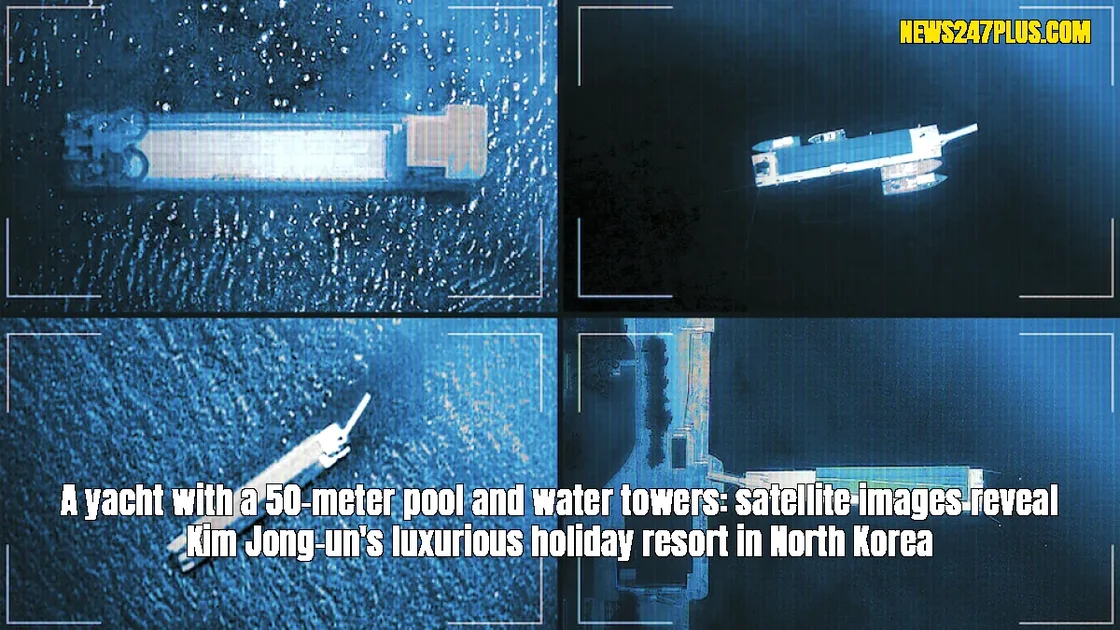
Satellite Images Spot Luxury Vessel Near Kim Jong Un's Summer Retreat
Satellite images have revealed an 80-metre (263-foot) luxury yacht with a 50-metre swimming pool and a cluster of waterslides cruising off North Korea's Wonsan coast from July to mid-October this year. The vessel, which was previously idle at a maintenance facility, relocated in early July to waters near the Kalma Peninsula, close to a sprawling seaside villa used by North Korean leader Kim Jong Un and his family, according to a BBC analysis of satellite imagery.
The yacht is not alone. A handful of other large vessels—approximately 50, 55, and 60 metres long—were repeatedly seen near Kim's villa in the satellite images. Former North Korean officials, defectors, and experts say it would be difficult for anyone unconnected to the regime's leadership to own or freely use vessels of this size. While the images do not definitively prove Kim was on board, the movements of the vessels overlap with gaps in his public appearances, suggesting activities that would otherwise remain out of public view.
A Fleet of Leisure Craft and a History of Luxury
The vessels are widely believed to be used by Kim and his family. Ri Jong Ho, a former official at the Workers' Party's Office 39—which is believed to be involved in raising and managing foreign currency for the leadership—told the BBC: "In winter, they would keep them at the shipyard. When summer came, they would bring them out and move them to Kim Jong Un's villa or towards Kalma, and use them for swimming and recreation." He added: "Kim Jong Un is supposed to be a 'leader of the people', yet he has four luxury vessels like these while ordinary people are struggling just to get one meal a day."
The cost of the vessels is unknown, but comparable luxury yachts run from tens of millions to over $100 million (£75 million). Kim's much smaller, 29-metre Princess yacht was previously estimated to be worth about $7 million. Wonsan has long been the Kim family's personal playground, dating back to Kim Jong Un's childhood and the rule of his father, Kim Jong Il. A former bodyguard who spent 13 years guarding royal residences recalled seeing dozens of privileged teens and children jet-skiing off the coast during summer retreats. Even basketball legend Dennis Rodman has described a massive vessel used by the North Korean leader.
Context: Stark Contrast Between Elite Luxury and Mass Poverty
The satellite revelations come against a backdrop of severe economic hardship for most North Koreans. The United Nations and others rely on estimates to classify North Korea as one of the world's poorest countries, with an especially large military budget that funds a sanctioned nuclear programme. According to a 2025 UN report, most North Koreans live under "systematic, widespread and gross human rights violations" with total state control, widespread forced labour, and chronic food shortages that leave an estimated 40% of the population undernourished. Per capita income sits at a miserable $667 (£513) a year.
The regime has long been known to live in luxury, but the scale of the vessels—particularly the 80-metre yacht with its massive pool and waterslides—underscores the gap between the leadership and the general population. The imagery emerged as North Korea continues to grapple with international sanctions and food insecurity, with the regime spending heavily on playthings for the elite while ordinary citizens struggle to meet basic needs.
Wonsan: A Playground for the Privileged
Next to the closed world of the Kim family's residences, the Wonsan-Kalma resort, opened in July 2025, operates for ordinary citizens. Its hotels, restaurants, water parks, and sports facilities are designed for 20,000 visitors. According to South Korean media, some North Koreans were offered four nights for approximately $100—a large sum for most of the population. This dual reality—a luxury playground for the leader and a modest resort for the masses—highlights the stratified nature of North Korean society.
At the same time, North Korea has its own middle class. Over the past decades, trade and private initiative have created a layer of people whose well-being depends on entrepreneurship. The wealthy part of this group is called donju—"masters of money"—who are involved in supplying goods, transportation, lending, and sharing profits with state-owned enterprises. This layer grew out of the markets that helped people survive after the famine of the 1990s. For such families, signs of prosperity include better apartments, mobile phones, and washing machines. But wealth does not guarantee political protection: entrepreneurs depend on officials, pay bribes, and risk losing property during campaigns against private business.
Perspective: Satellite Imagery Sheds Light on Secretive Regime
The BBC's analysis of commercial satellite imagery offers a rare window into the private life of one of the world's most secretive leaders. While North Korean state media rarely report on Kim's vacations—such trips are usually presented as working visits—the movements of the yachts suggest a pattern of summer leisure that aligns with his disappearances from public view. The images also reveal the extent of the Kim family's personal fleet, which includes at least four large vessels.
The revelations are likely to fuel criticism of the regime's priorities, especially as international observers continue to document widespread human rights abuses and food shortages. The satellite imagery does not change the underlying political or economic situation, but it provides concrete visual evidence of the elite's luxurious lifestyle at a time when many North Koreans face chronic deprivation. As experts note, the ability to own and operate such vessels is a privilege reserved for those at the very top of the North Korean leadership, further isolating the regime from the population it governs.
Comments