
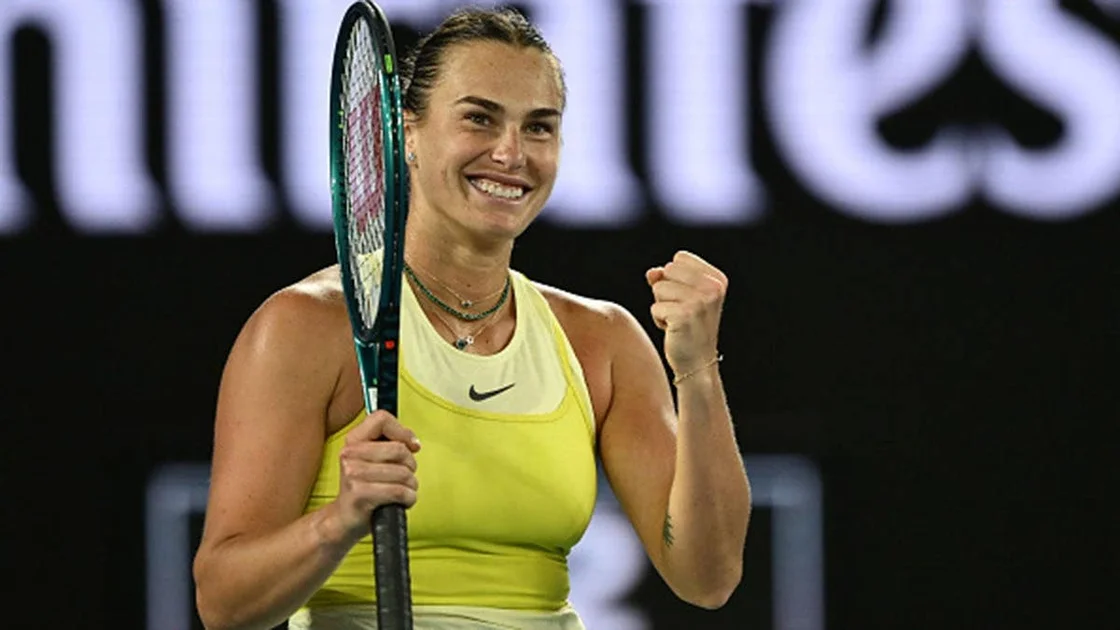
Sabalenka Advances in Toronto, Extends Hard-Court Streak
World No. 1 Aryna Sabalenka opened her Canadian Open campaign with a 6-3, 6-3 victory over Japanese qualifier Moyuka Uchijima on Tuesday, extending her hard-court winning streak to 13 matches. The 28-year-old trailed 2-0 in the first set before reeling off five consecutive games, then repeated the pattern in the second set to close out the match in 1 hour, 21 minutes. The win improved her season record on hard courts to 24-1, with her only loss coming in the Australian Open final against Elena Rybakina.
Sabalenka will next face China's Shuai Zhang in the third round, a first tour-level meeting between the two. Zhang advanced after Jelena Ostapenko retired due to injury while trailing 6-0, 4-0. Sabalenka's performance in Toronto is a strong statement after a brief post-Wimbledon break, and she noted she was prepared for a potential slow start. "I knew going into this match I might struggle a little bit after a little break, but I was ready for that," she said.
The win also extended Sabalenka's dominance against lower-ranked opponents and qualifiers. She has now won 11 consecutive WTA 1000 matches against qualifiers or lucky losers, and her last loss to a player outside the Top 100 came in 2025. Sabalenka is the first player since Serena Williams in 2015 to win 24 of her first 25 WTA-level hard-court matches in a season.
Sabalenka's Stance on WTA Genetic Testing
Beyond her on-court success, Sabalenka made headlines during her pre-tournament press conference by endorsing the WTA's new genetic eligibility testing policy. The policy, which took effect July 21, requires players to undergo a one-time test for the SRY gene—a marker typically found on the Y chromosome—via cheek swab or blood sample. The tour states the test is for eligibility in the women's category and is not intended to challenge gender identity or legal sex.
Sabalenka framed her support in terms of competitive fairness. "I think it's really important to keep the fairness in our tour," she said. "Biologically, the men are way stronger than women, so I feel like it would not be really fair for the woman to compete against a biological man." She added that she is happy to be tested and that she supports the decision. The WTA's policy replaces a previous rule that allowed transgender women to compete after meeting testosterone requirements for two years. There are currently no known transgender women playing professional tennis.
Sabalenka's comments align with a broader debate in women's sports, echoing WNBA player Sophie Cunningham's recent calls to exclude biologically male athletes. Sabalenka's support for testing, which she reiterated in Toronto, was also covered in Sabalenka Backs WTA Genetic Testing, Says Biological Men Shouldn't Face Women. The Belarusian has personal experience with the physical gap: in December 2025, she lost an exhibition match to Nick Kyrgios 6-3, 6-3, a result she has cited as reinforcing the biological differences between the sexes.
The Stakes in Toronto and the Season Ahead
Sabalenka's Toronto campaign is part of a critical stretch leading into the US Open, where she will aim to add a fifth Grand Slam title. Her hard-court form has been the bedrock of her world No. 1 ranking, and she has already captured the Sunshine Double (Indian Wells and Miami) this year. A deep run in Toronto would solidify her status as the favorite for the season's final major, especially with rivals like Iga Swiatek and Elena Rybakina also competing in Canada.
The genetic testing policy adds a layer of significance to Sabalenka's public stance. As a leading figure in the sport, her endorsement could influence public opinion and policy debates beyond tennis. The WTA's move is part of a wider trend in sports organizations implementing or clarifying eligibility rules for transgender athletes, a topic that remains contentious. Sabalenka's comments highlight the tension between inclusivity and competitive fairness, a conversation that is unlikely to fade.
A Broader Shift in Women's Sports
Sabalenka's support for testing reflects a growing sentiment among some athletes that biological differences must be addressed to preserve the integrity of women's competitions. While no trans women currently compete on the WTA tour, the policy anticipates future scenarios. Critics worry that such testing could stigmatize intersex athletes or create a slippery slope for inclusion. But Sabalenka is clear: "Whatever it takes. If they want to test us all, I'm happy to do that; it's pretty fair, and let's keep it that way."
As Sabalenka advances in Toronto, her on-court results continue to dominate headlines. But her off-court stance has put her at the center of a larger debate about the future of women's sports. With the US Open less than a month away, Sabalenka has made it clear she intends to be a force both on the court and in the conversation.
Comments