
State Department Blacklist Names 43 Americans as Cuban Agents of Influence
WASHINGTON – July 21, 2026 – Secretary of State Marco Rubio released a 100-page State Department report on Saturday that explicitly names 43 American individuals and organizations as participants in what it calls Cuba’s “campaign of subversion against the United States.” The document, titled Cuba: The Capital of 21st Century Communism, reads as a de facto blacklist of left-wing figures and groups, including New York City mayoral candidate Zohran Mamdani, Los Angeles Mayor Karen Bass, media personalities Amy Goodman and Hasan Piker, and the Democratic Socialists of America (DSA).
Rubio Links Domestic Turmoil to Havana
The report ties the George Floyd protests, the rise of Antifa, and pro-Palestinian campus activism directly to Cuban influence. “Many of the most significant upheavals in recent American political history … can be linked, in some way, shape, or form, to Cuban influence,” the report states. Rubio, who led a “Resurgence of Political Terrorism” summit last week, posted on X/Twitter that “for more than six decades, the Cuban regime has been the leading sponsor of radical leftism and Third Worldism in the United States.”
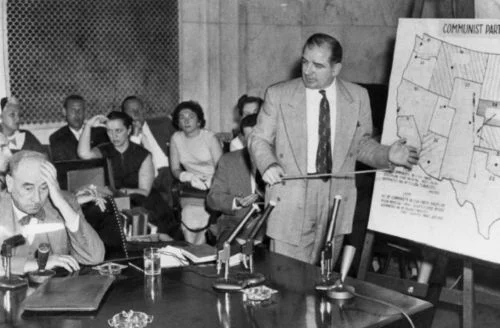
A Modern McCarthy Era?
The report explicitly references the “blacklists, McCarthy-era investigations and prosecutions” of the 1950s as effective tools for dismantling the Communist Party USA. It dedicates more than three pages to the DSA, which the document concedes was “not shaped by the direct and tangible influence of the Cuban government” and has “organic ideological commitments.” However, the report insists that delegations from DSA to Cuba prove the organization has ties to Havana’s “influence network.”
Critics immediately denounced the report as a government-sanctioned blacklist reminiscent of the Red Scare. Independent journalist Ken Klippenstein, who obtained an early copy of the report, wrote that “the implication is clear: Secretary of State Marco Rubio thinks there should be a modern-day blacklist of the political left in America.”
Context: Rubio’s Broader Campaign Against International Institutions and Domestic Dissent
Rubio’s ICC Assault and MAGA Positioning
The Cuba report is part of a wider offensive by Rubio against institutions and voices he deems hostile to the Trump administration. Yesterday, Salon reported that Rubio is leading an effort to “destroy the International Criminal Court,” leveraging the right’s long-standing hatred of the ICC to burnish his “MAGA bona fides for 2028.” The Trump administration has withdrawn the U.S. from 66 international organizations since returning to office in January 2025, continuing a pattern of dismantling multilateral frameworks like NATO, the Paris Climate Accords, and the World Health Organization. Rubio’s aggressive posture on the ICC and Cuba positions him as a leading contender to succeed Trump.
Venezuela Breakthrough Amid the Turmoil
On the same weekend the Cuba report made headlines, Rubio addressed a different Latin American crisis. Speaking to reporters about Venezuela, he hailed a “very good news” development: the 2015 democratically elected National Assembly had reached an agreement with the Chavista regime. He said the two sides would “begin the process of transition” with official talks starting in the first week of August. Rubio also noted that U.S. aid for Venezuela’s earthquake recovery, which has killed more than 5,000 people since June 24, has exceeded $180 million. The simultaneous outreach to Venezuela and crackdown on domestic leftists highlights the administration’s pragmatic, hawkish approach to the region.
Grooming for 2028?
Observers have noted Rubio’s increasing prominence. Commentary from outlets like PJ Media has speculated whether President Trump is “grooming” Rubio as his successor. Rubio’s coordination with Trump on tearing down international courts and implementing the Cuba blacklist suggests a tightly aligned foreign policy vision — one that blends anti-communist fervor with a rejection of globalist institutions.
Perspective: Implications of the Rubio Blacklist
The State Department’s decision to name American citizens and organizations is a dramatic escalation. For decades, U.S. administrations have avoided publicly targeting domestic political groups as foreign agents. The report’s explicit praise of McCarthy-era tactics signals a willingness to weaponize state power against political opposition.
While the report is not a criminal indictment, it could chill activism, trigger federal investigations, or provide pretext for sanctions and visa revocations. Organizations like the Amazon Labor Union and the DSA, which claims tens of thousands of members, may face increased scrutiny.
Rubio’s approach reflects a broader global trend: the normalization of state-issued blacklists. The report also arrives amid a tense domestic climate, where debates over public benefits and immigration are intensifying. The Trump administration recently revived the public charge rule to deny green cards over benefits use, further restricting avenues for marginalized communities. Meanwhile, scientific debates continue over health and environmental issues, with warnings about artificial sweeteners and cognitive decline, though these gain less traction in the current political firestorm.
Rubio’s report is likely to face legal challenges on First Amendment grounds. But for now, the message from Foggy Bottom is clear: Washington is willing to name, shame, and potentially sanction Americans it views as ideological adversaries. Whether this signals a new era of domestic political warfare or a short-lived controversy will depend on how aggressively the administration follows up on its own blacklist.
Comments