
Rocket Launch Today: Relativity Space Sends Cargo to Orbit Amid Busy July Window
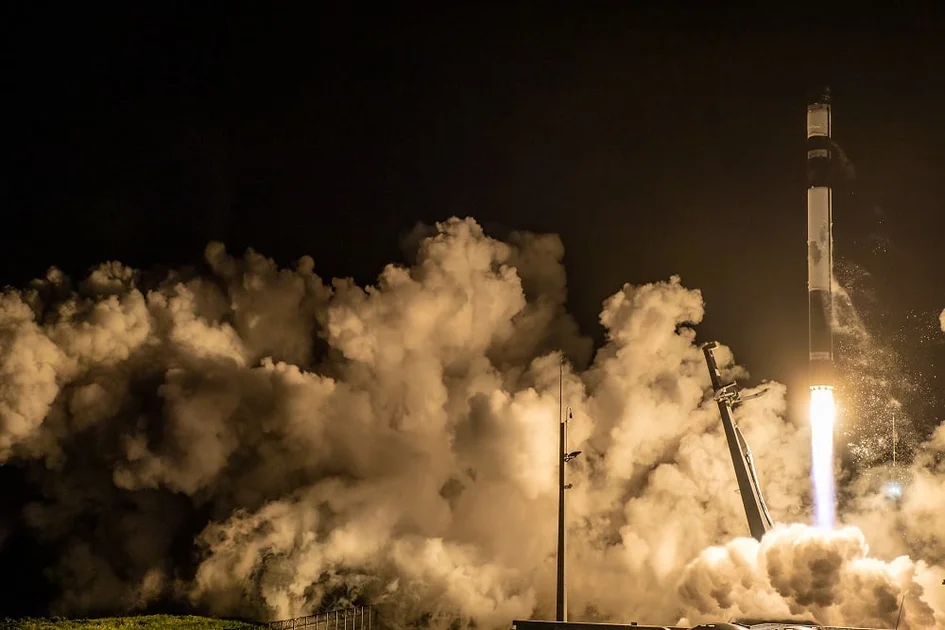
A rocket launch today at Cape Canaveral saw Relativity Space’s Terran-R booster successfully lift off at 9:14 a.m. EDT, carrying a communications satellite for a European consortium. The mission, named “Leap of Faith,” marks the company’s fifth flight of the year and its second this week. Within minutes of stage separation, the first stage executed a controlled landing on the drone ship Just Read the Instructions, a feat achieved on only its third attempt.
According to the Federal Aviation Administration, this launch brings the total number of orbital missions in the first seven days of July to nine, already exceeding the monthly average for 2025. The payload, a 3.2-ton satellite built by Thales Alenia Space, is destined for geostationary transfer orbit and is expected to provide broadband coverage for underserved regions in sub-Saharan Africa. Relativity Space CEO Tim Ellis confirmed the deployment was nominal, stating, “This is the kind of cadence the industry needs to meet global connectivity demands.”
A Surge in Launch Frequency Reshapes the Space Coast
Today’s event is not an outlier. Since June 2026, Florida’s Space Coast has hosted launches every 48 hours on average, with SpaceX, United Launch Alliance, and now Relativity Space competing for range slots. The increase is driven by smaller, cheaper rockets that enable more frequent missions. Relativity’s Terran-R, partially 3D-printed and reusable, reduces turnaround costs by an estimated 40% compared to traditional expendable boosters. Industry analysts note that this shift mirrors broader trends in logistics—similar to how Krafton Settles $250M Bonus Dispute with Unknown Worlds, Entire Staff to Be Paid reflected a move toward equitable worker compensation in tech, the launch industry is redistributing access to space through affordability.
Why This Matters: The Stakes of a Privatized Space Race
The quiet competition among private launch providers carries significant implications for national security and scientific research. A single launch failure can delay critical satellite deployments by months. Today’s successful profile—especially the landing—demonstrates that reuse is becoming routine, which lowers the barrier for new entrants. However, the FAA is also under pressure to modernize airspace management; the current launch window required rerouting 47 commercial flights over the Atlantic, a figure that has tripled since 2024. The National Transportation Safety Board released a preliminary report last week noting that ground-crew fatigue is emerging as a risk factor at high-cadence facilities, though no incidents were reported today.
Economic Ripple Effects Beyond the Launchpad
The surge in launches is creating a secondary market for smallsat deployers and insurance underwriters. Marsh McLennan reported a 22% increase in space-related premiums in Q2 2026. Meanwhile, local economies in Brevard County are seeing a jobs boom: the aerospace workforce grew by 8% year-over-year, outpacing the national average. For context, the kind of economic transformation unfolding in Florida parallels the fan-driven shifts seen in sports, such as when Rooney Backs Mainoo for England Start, Questions Kane Penalty Call at World Cup highlighted how critical decisions ripple through team dynamics. In space, every launch decision now affects satellite insurance rates, supply chains, and even broadband pricing.
Perspective: What This Changes for Space Access and Global Connectivity
The long-term significance of today’s rocket launch today extends beyond engineering. If private companies can sustain a launch every other day through July, it will validate a new economic model: space as a high-throughput logistics service, rather than a sporadic government endeavor. Analysts at Space Capital estimate that reducing per-kilogram costs to below $2,000 could unlock a $1 trillion market in Earth observation, materials processing, and orbital data centers by 2030. This runs parallel to the way the USA vs Bosnia-Herzegovina: Hosts Face Knockout Test in World Cup Round of 32 represented a proving ground for emerging teams; today’s launch proves that smaller players can compete at the highest level of spaceflight.
Critics caution that the pace may be unsustainable. The Space Debris Office of ESA recorded 14 close-call conjunctions this week alone, and regulators are debating mandatory deorbit timelines for second stages. Yet for now, the mood at Cape Canaveral is bullish. Relativity Space has already booked 12 more launches for 2026. As Ellis put it after today’s mission: “We’re not just building rockets. We’re building a schedule.”
Comments