
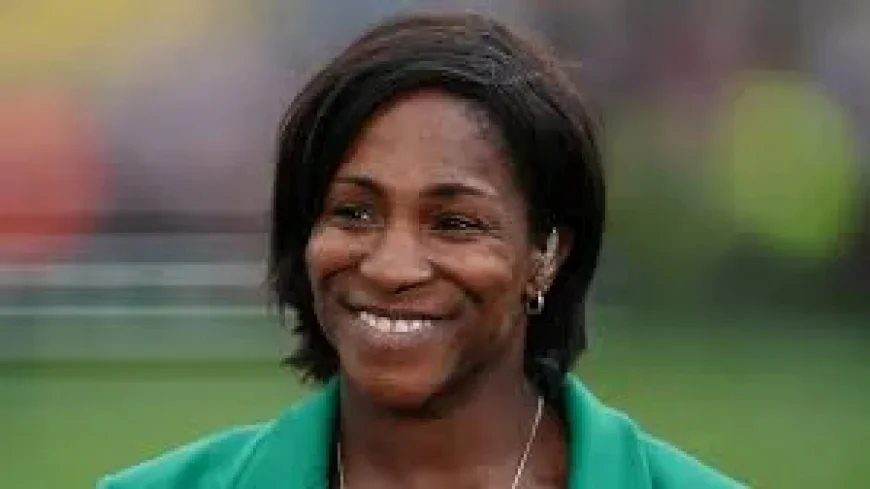
RFU council member banned from Twickenham for sexist Maggie Alphonsi post
A Rugby Football Union (RFU) council member has been stripped of his match-day privileges and banned from Twickenham’s Allianz Stadium for seven months after posting a discriminatory comment about England World Cup winner and pundit Maggie Alphonsi.
Matthew Smith, who represents Warwickshire on the RFU Council, wrote on Facebook during France’s 48-46 victory over England in this year’s Six Nations: “Can someone please explain to me WTF does Maggie Alphonsi know about men’s rugby?” The post was made on March 14 and removed by Smith within hours, but not before it was reported and investigated.
An independent disciplinary panel found Smith had breached the RFU Council’s code of conduct, which enforces a “zero-tolerance approach” to discrimination and harassment. His initial one-year suspension was reduced to seven months on appeal after the panel considered mitigation, including his support for a girls’ rugby festival in 2025 and his long service to the sport.
From June 4 to December 14, Smith will be unable to enter RFU premises, including Allianz Stadium, and will lose all associated hospitality benefits such as England match tickets, free meals and travel expenses. He may still attend council meetings virtually and retains his voting rights. The RFU itself lacks the power to remove a council member; any such decision would have to come from Warwickshire RFU or its voting members.
Alphonsi: Punishment ‘does not go far enough’
Alphonsi, 42, won 74 caps for England, was a key figure in the 2014 Women’s Rugby World Cup triumph, and has since built a successful broadcasting career with the BBC, ITV and Sky Sports. She served on the same RFU Council from 2016 to 2025, becoming the first female former player to do so.
In a statement released after the verdict, Alphonsi said she was “extremely disappointed” that Smith, who sent her a letter of apology on May 21, would face no greater sanction.
“He is now not allowed to attend Allianz Stadium and access his privileges, but can still actively serve as a council member,” she said. “This incident has had greater ramifications on myself. I have to publicly defend myself which will likely lead to further misogyny and sexism from people who equally hold this view. I also have to drag this incident up again rather than be done with it, which has obviously led to greater frustration and distress.
“Going forward I will now likely have to endure further criticism, but Mr Smith initiated this incident and the only punishment he will receive is not getting hospitality tickets to some England games. It shows sexism and misogyny still exists within the game and it’s important it is stamped out and called out.”
Smith said in a separate statement: “I shouldn’t have shared my view online and apologise if this has caused any offence to anyone. Once I realised my error of judgment I immediately removed the post. I can assure you that I had no intent of causing any offence and that unfortunately I made an error of judgment which was hampered by personal stress and anxiety.”
Why this matters: the ongoing battle against sexism in rugby
The case comes at a time when rugby union is grappling with deep-seated issues of gender discrimination. Women’s rugby has grown exponentially in profile and participation, yet female pundits and former players like Alphonsi regularly face online abuse and questions about their authority to comment on the men’s game.
Alphonsi has been a trailblazer in this regard. When she appeared on ITV’s coverage of the 2015 Rugby World Cup, she became the first female former player to serve as a pundit on a men’s Test rugby broadcast in the UK. She has since become a regular voice on BBC’s Six Nations coverage and a columnist for The Daily Telegraph.
In 2021, she publicly called out trolls after receiving sexist abuse during another Six Nations broadcast, writing that her accolades “far surpass what any of those sexist individuals have achieved”. She has repeatedly urged governing bodies to take stronger action against online harassment.
The RFU’s handling of the Smith case has drawn renewed scrutiny. Critics argue that a seven-month ban on hospitality privileges is a mild penalty for a council member who publicly questioned a woman’s right to comment on rugby. The fact that Smith retains his voting rights and can continue to shape policy has frustrated many who believe the sport is failing to set a strong deterrent.
Those who support the panel’s decision point to the mitigation offered by Smith – his swift removal of the post, his apology, and his previously unblemished record of service – as reasons for leniency. The independent panel also noted Smith’s role in organising a girls’ rugby festival as a positive contribution to the women’s game.
Broader implications: what this changes
The Smith case is the latest in a string of incidents that highlight the persistence of sexism within rugby’s administrative structures. While the RFU promotes inclusion and diversity, its inability to remove council members – a power that lies with local constituent bodies – has frustrated campaigners who want swifter and more decisive accountability.
For Alphonsi, the case has been personally draining. “I have to publicly defend myself which will likely lead to further misogyny and sexism,” she said. Yet she remains a central figure in the fight for equality in the sport. She is due to deliver a keynote speech at the Builders Merchants Federation Annual Members Conference in September, where she will share lessons on resilience and adversity.
The episode also raises questions about the RFU’s internal culture. If a council member can publicly denigrate a female pundit with no greater sanction than losing match tickets, many fear the message sent to the wider rugby community is a weak one.
Away from the disciplinary debate, Alphonsi continues to build a high-profile media career and remains a respected voice on both men’s and women’s rugby. As the sport prepares for the next Rugby World Cup and the launch of the Nations Championship, her commentary – and the reaction to it – will keep the spotlight on how far rugby still has to go in tackling discrimination.
This is not the first time a rugby figure has been penalised for online behaviour. In other sports, controversies have also emerged in unexpected contexts, such as the ongoing Browns QB battle where a player’s jersey number triggered a war of words.
Comments