
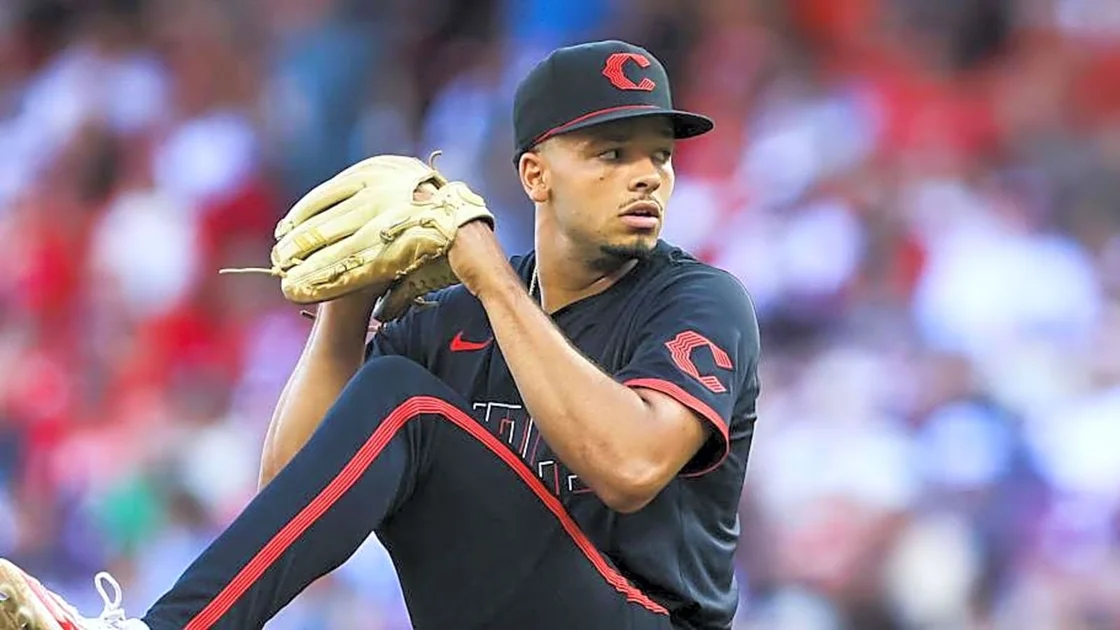
Reds Navigate Innings Limit for Ace Chase Burns as Season Rolls On
Cincinnati Reds manager Terry Francona has declined to commit to a strict innings limit for rookie sensation Chase Burns, opting for a more flexible approach as the 23-year-old continues to dominate in his first full MLB season. Following Burns’ latest stellar outing — a 6-2 win over the New York Mets on Tuesday, where he struck out eight over 5.1 innings — broadcaster Jeff Brantley warned fans to savor every start. “You better get a ticket and watch him now, because there’s only so many innings that this kid is going to be able to pitch this year,” Brantley said during the broadcast, suggesting a limit of roughly 100 to 150 innings.
After Tuesday’s game, Burns has thrown 64.1 innings. With a 2025 total of just 109 innings between the minors and majors, the ace is on pace to exceed that workload by midsummer. The Reds are now weighing how best to preserve their franchise arm without shutting him down entirely.
Francona Embraces a Flexible Approach
“I don’t have an answer for you right now,” Francona told reporters Wednesday. “If we ran into an issue, in a way that’d be good (because he’d be deep into the season healthy). There will be a lot of opinions on this.” The manager emphasized that he’ll rely on trainers, analytics, and visual cues rather than a rigid cap. “If you see pitchers losing range of motion, or if their delivery is lower … that’s more important than a hard pitch count or a hard innings limit. It’s how guys are doing.”
This data-driven but flexible strategy mirrors a broader MLB trend where teams prioritize pitcher health over strict innings quotas, though it creates uncertainty for a Reds squad chasing a playoff spot.
The Stakes: Why Burns’ Workload Matters Now
Burns ranks among the league’s best in multiple categories: 9th in strikeouts, 3rd in batting average against, 6th in WHIP, and 6th in ERA. He is arguably the Reds’ most valuable player and a down-ballot Cy Young candidate. However, his current pace of roughly six innings per start projects to nearly 150 innings by late July — a significant jump from his 2025 workload.
Brantley’s warning of a limit “somewhere from 150 back towards 100” has sparked fan concern. Lance McAlister of 700WLW notes that the organization’s goal is likely 140-150 innings for the season, leaving about 80 innings remaining. “If you are going to complain about pitchers getting hurt, or not developing, you can’t complain when the Reds execute a plan with Burns,” McAlister wrote, defending the cautious management.
A Six-Man Rotation Could Offer Relief
One potential solution re-emerging in team discussions is a six-man starting rotation. The Reds originally planned to open the 2026 season with six starters before Nick Lodolo’s blister issue scrapped that idea. With Rhett Lowder — another Wake Forest product — set to begin a rehab assignment next week, the option is back on the table.
Adding a sixth starter would reduce the burden on any single pitcher, including Burns, but it would also shrink the bullpen from eight relievers to seven. This trade-off could strain a relief corps already asked to cover 11 outs after Burns’ early exit Tuesday. A piggyback arrangement, pairing Burns with another starter on his off days, is another possibility.
Broader Implications for a Playoff Push
The Reds are currently in a tight division race, and managing Burns’ innings without sabotaging the team’s competitiveness is a delicate balance. Relying on a deep bullpen and a potential return of Hunter Greene later this season could help absorb the load, as noted by SI.com. Yet the larger question — how much to invest in a rookie phenom’s long-term future versus short-term contention — defines this moment.
Francona’s emphasis on real-time assessment rather than a rigid limit gives the team flexibility, but it also means every start will be scrutinized. Fans may not want to hear it, but Brantley’s advice stands: watch Burns now. His outings are appointment television, and if the Reds stick to their plans, the best may be saved for October — or for future seasons.
For now, the Reds are leaning on a method that has worked for other young stars: listen to the body, trust the data, and hope for the best. As Francona said, “Everybody is different.” And for Cincinnati, Chase Burns is a different kind of talent.
Comments