
Real Lioness Operatives Speak Out: Taylor Sheridan's 'Lioness' Distorts Their Service
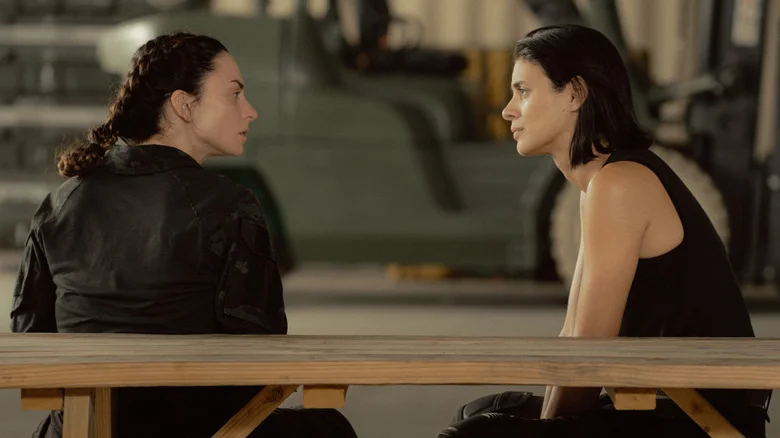
As Paramount+’s Lioness continues to dominate streaming charts with its third season, the real women whose service inspired the show are speaking out with frustration and a sense of betrayal. The action-packed CIA thriller, starring Zoe Saldaña and Nicole Kidman, has drawn millions of viewers—Season 3 premiered to over 7 million views in its first week—but several veterans of the original U.S. military Lioness program say the series bears little resemblance to their actual experiences and has effectively erased their history.
Ranie Ruthig, one of the original Lionesses, told The Telegraph in an interview published August 17, 2026, "It makes me mad that it doesn’t follow what we did at all. They took the Team Lioness name and twisted it into a spy thing. I like Taylor Sheridan’s writing—I’ve watched his other shows—but he took our history and kind of corrupted it." Her sentiments echo those of other team members, who describe the show as "appropriation" that repackages a complex wartime story into a sanitized, Hollywood-friendly narrative.
A Recent History of Silence and Discontent
This is not the first time veterans have voiced criticism, but the renewed attention comes as Lioness Season 3 debuted on August 2, 2026, and quickly became one of Paramount+'s most-watched originals. The series, created by Yellowstone mastermind Taylor Sheridan, follows a fictional CIA program that recruits female operatives to befriend the wives and daughters of terrorists. While Sheridan has described the show as "inspired by a true story," the real Lioness program was a U.S. Marine Corps initiative, not a CIA operation.
The disconnect has been building since the show's first season, but the latest wave of interviews and social media commentary has amplified the veterans' concerns. Daria Sommers, co-director of the 2008 documentary Lioness, has also launched a 12-episode podcast titled The Lioness Origin Story to dissect the TV series and reclaim the true narrative. "I’m not critiquing Nicole Kidman or Zoe Saldaña—they should get all the kick-ass adventure roles they want," Sommers told The Telegraph. "But if Taylor Sheridan had called the show something else, we wouldn’t be having this conversation."
What the Real Lioness Program Was (And Wasn't)
A Combat Necessity, Not a Spy Thriller
The real Team Lioness emerged in 2003, during the early years of the Iraq War, out of a practical necessity. Male soldiers could not search Iraqi women without violating cultural norms, so female soldiers were attached to combat units to conduct these searches, protect translators, and gather intelligence. The program was formally comprised of mechanics, engineers, clerks, and combat medics—support roles that were temporarily attached to infantry and Marine units because Pentagon policy at the time barred women from direct ground combat assignments.
These women went "outside the wire" in places like Ramadi and Fallujah, often on patrols, house raids, and checkpoint operations. They found themselves in firefights, and several became the first all-female team to engage in offensive ground combat operations in U.S. military history. One Lioness team member described their work as "anything from going to schools and handing out soccer balls to finding intel."
"We were not secret agents," said Michelle Dallocchio, who served with Team Lioness from 2004 to 2005. "We were soldiers doing a job that had to be done. The show makes it look like some glamorous spy game, but it was harsh, dangerous, and often traumatic." The 2008 documentary Lioness, directed by Meg McLagan and Daria Sommers, followed five women from the Army's 1st Engineer Battalion, including Shannon Morgan, Rebecca Nava, Kate Guttormsen, Anastasia Breslow, and Ranie Ruthig. The film highlighted not only their combat experiences but also their struggles with PTSD after returning home—a component that veterans feel the TV series completely overlooks.
The TV Show's Divergence: Espionage vs. Service
Taylor Sheridan's Lioness is a spy thriller centered on the CIA's "Lioness" program, where female operatives go undercover to infiltrate terrorist networks. Season 3 follows Joe (Saldaña) as she navigates an attempted kidnapping tied to the Russo-Ukrainian conflict, with personal betrayals and hidden networks at the forefront. The show has been praised for its action sequences and plot twists, but veterans argue that by taking the "Lioness" name and attaching it to a fictional CIA operation, the show implies that the real women were spies, not front-line soldiers.
Ruthig emphasized that the real Lionesses were not spies. "We were mechanics and medics who ended up in combat because we were needed," she said. "To make it a spy story is to completely misrepresent what we did and why." The show also sanitizes the violence and its aftermath, according to Dallocchio: "I see a really complicated women’s wartime history repackaged into something safer and sanitized for mass consumption—while erasing the actual women who lived it."
Why This Matters: Historical Erasure and Cultural Appropriation
The veterans' criticism goes beyond mere inaccuracy; it speaks to a larger trend where real military history is appropriated for entertainment, potentially overshadowing the actual sacrifices made by service members. Daria Sommers noted that the term "Lioness" has become honorific, but the TV series has co-opted that honor without acknowledging its origin. "The key thing is it has no basis in reality," she said. This not only misleads viewers into thinking they are watching a true story but also minimizes the genuine contributions of women in combat.
Kate Guttormsen, a captain and the only female company commander in the 1st Engineer Battalion, stressed that the Lionesses' work was diverse and impactful, from humanitarian efforts to intelligence gathering. The TV series, she argues, reduces that complexity to a simple spy narrative. The veterans also worry that the show's popularity might lead audiences to ignore the real history entirely. A 2025 study on media's influence on public perception of military operations found that dramatized depictions often become the primary reference for viewers, even when they know they are fictionalized. That makes the veterans' plea for accuracy all the more urgent.
A Broader Trend: Hollywood vs. Reality
When 'Inspired By' Becomes Erasure
The Lioness controversy is part of a larger pattern in Hollywood, where historical events and military programs are adapted with significant creative liberties. While some degree of dramatization is expected, the line between "inspired by" and "distorted" is often crossed. As Sommers pointed out, had the show been called something else, the conversation would be different. But by using the real name, the show becomes a stand-in for the real story, and the veterans feel their legacy is being rewritten.
This tension is not unique to the military. Documentaries and veterans' groups have previously criticized films like Zero Dark Thirty and American Sniper for similar reasons. However, the Lionesses' case is particularly striking because the program itself was marginalized within the military, and the women who served were often overlooked in official histories. The show, intended to shine a light on their bravery, has instead overshadowed them. As Ruthig noted, "We thought the show would finally honor our mission. Instead, it feels like we're invisible."
The Show's Success and the Veterans' Fight for Recognition
Despite the criticism, Lioness remains a ratings powerhouse. Season 3's premiere attracted over 7 million viewers in its first week, and the show has been renewed for a fourth season. This continued popularity only amplifies the veterans' frustration, as the fictionalized version reaches far more people than the documentary ever did. However, the veterans and documentary filmmakers are fighting back. Daria Sommers's podcast, The Lioness Origin Story, aims to educate audiences on the real history, and the veterans have been participating in interviews and panel discussions to set the record straight.
For those interested in the actual story, the 2008 documentary Lioness is still available and offers a raw, unfiltered look at the women's experiences. It stands in stark contrast to the glossy TV show. As Sommers said, "If you want to know what the Lionesses really did, watch the documentary. The show is just entertainment."
A Call for Accuracy in Storytelling
The real Lionesses served their country in the most dangerous circumstances, breaking barriers and proving that women could fight alongside men in combat roles. Their story is one of courage, resilience, and often overlooked trauma. Taylor Sheridan's Lioness, while successful, has inadvertently contributed to the erasure of that story by replacing it with a fictional narrative that prioritizes action over accuracy. The veterans are not asking for the show to be cancelled; they are asking for acknowledgment and respect. They want their history told correctly, not just their name used.
As the debate continues, one thing is clear: the real Lionesses will not be silenced. Their voices, through interviews, documentaries, and podcasts, are working to reclaim the narrative. For viewers, the takeaway is to distinguish between entertainment and history. For the entertainment industry, it's a reminder that "based on a true story" carries a responsibility—not to the box office, but to the people who lived it.
If you're interested in the fictional world, you can catch up on Lioness Season 3 Episode 3 'The Bear Is Infected': A Breach From Within, but for a deeper understanding, the veterans recommend starting with the documentary. The choice, as always, is up to the viewer.
About the Author
This article was reported and written by an SEO journalist focusing on the intersection of entertainment, military history, and cultural discourse. For more on similar topics, stay tuned to our coverage.
Comments