
Ray LaMontagne Collapses During Nashville Concert, Blames Heat Dehydration
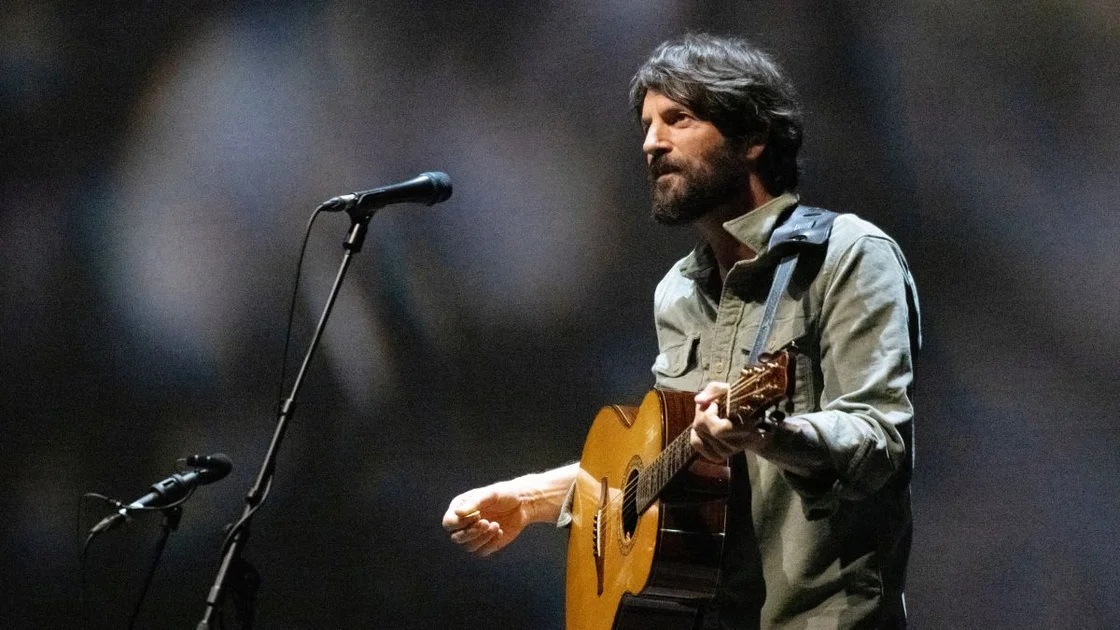
Grammy-winning singer-songwriter Ray LaMontagne collapsed onstage mid-performance at Nashville's historic Ryman Auditorium on Saturday night, September 5, abruptly ending the show and sparking immediate concern among fans. The 53-year-old folk artist was in the middle of singing his song "Jolene" when he visibly lost his balance and fell to the stage floor. Video footage captured by concertgoers and shared on social media shows LaMontagne crouching and putting his hands toward his eyes before collapsing, with crew members rushing to his aid within seconds.
LaMontagne was helped off the stage and the concert was brought to an early close. His management team later confirmed that he was being treated for heat-related dehydration. In a statement shared via his Instagram Story, his representatives wrote: "Thank you to everyone who came out to tonight’s show at the Ryman. Ray is in good hands with the local EMS and is being treated for heat related dehydration, he is doing well now and is grateful for everyone’s understanding." The statement added that LaMontagne was "looking forward to being onstage in Louisville tomorrow night," signaling that the incident would not derail the remainder of his tour.
The collapse occurred during the latest stop on his 'Trouble' 20th Anniversary Tour, in which he is performing his acclaimed 2004 debut album in full. According to multiple fan reports and local weather data, temperatures in Nashville on the evening of September 5 hovered around 95 degrees Fahrenheit, just five degrees below the day's high of 100 degrees. Several concertgoers took to social media afterward to describe the Ryman Auditorium as unusually hot during the performance, raising questions about venue conditions during extreme weather.
A Night of Warning Signs Before the Collapse
Eyewitness accounts and fan-shot footage reveal that LaMontagne showed signs of distress well before the collapse. Earlier in the set, he stopped twice during the song "Hannah" after apparently losing his place in the lyrics. He apologized to the crowd before moving on, but the struggle was noticeable enough that many in the audience began expressing concern. Shortly after that, he briefly left the stage before returning to begin "Jolene," the track during which he ultimately fell.
One fan, Nick Schafer, posted on X (formerly Twitter): "@RayLaMontagne just collapsed on stage at @theryman. Show is over. Praying for Ray." Another concertgoer shared video with the caption: "He collapsed during his performance at The Ryman Theater minutes ago. (Suspected heat exhaustion)." These posts quickly circulated, drawing an outpouring of support from fans and fellow musicians alike.
The Nashville show was part of a broader tour that sees LaMontagne performing his 2004 breakthrough album 'Trouble' in its entirety, alongside selections from his eight subsequent studio albums. The Weather Station has been serving as support act on all dates. The tour is scheduled to continue through Philadelphia, Detroit, Boston, Portland, and New York, among other cities, with several dates still on the calendar through the fall.
Why Heat-Related Collapses at Concerts Are Raising Alarms
LaMontagne's collapse is not an isolated incident. As the 2026 summer concert season draws to a close, several high-profile health emergencies have occurred at live music events across the country, many linked to extreme heat conditions. Just a day before LaMontagne's ordeal, 14 people were hospitalized during a Chainsmokers concert in San Jose, California, due to heat-related issues. That incident, combined with LaMontagne's collapse and reports of extreme temperatures at outdoor and indoor venues alike, has reignited a broader conversation about artist and audience safety during increasingly hot weather.
Heat-related dehydration occurs when the body loses more fluids than it takes in, often exacerbated by high temperatures, physical exertion, and inadequate hydration. For performers onstage, the combination of intense stage lighting, physical movement, and often poor ventilation can create dangerously high body temperatures. The Ryman Auditorium, while iconic for its acoustics and history, is an older venue without modern climate control in all areas. Reports that the venue was "unusually hot" on the night of the concert suggest that environmental conditions played a significant role in LaMontagne's health emergency.
The broader implications for the live music industry are significant. Even as the industry enjoys a robust post-pandemic rebound, with concert revenues hitting record highs in recent years, the increasing frequency of extreme heat events attributed to climate change is creating new logistical and safety challenges. Venue operators are being pressured to assess their HVAC systems, hydration stations, and emergency medical preparedness.
More recently, in what has become a growing trend, fans themselves are showing heightened sensitivity to artists' health during performances. In the weeks leading up to LaMontagne's collapse, social media has been filled with videos of artists pausing shows to sit down, request water, or cut sets short due to heat. This has led to renewed calls for tours to schedule more indoor venues during the summer months, adjust set times to avoid peak heat, and ensure that artists have access to cooling measures such as fans, ice packs, and medical staff on standby.
The Ryman's Reputation and the Perils of Historic Venues
The Ryman Auditorium, often referred to as the "Mother Church of Country Music," holds a special place in the pantheon of American music venues. With a capacity of just over 2,300, it offers an intimacy that many artists prize. Yet its historic nature also presents challenges. Original construction dates to 1892, and while the venue has been renovated multiple times, the preservation requirements that protect its architectural heritage can limit major modernizations to climate control systems.
The venue's management has not yet released a public statement addressing the specific temperature conditions during LaMontagne's show. However, following the incident, multiple attendees described the interior as stuffy and hot. "It was very warm in there," one concertgoer wrote on Reddit. "I was sweating just standing in the crowd." Another noted that while the Ryman can feel comfortable on milder days, the extreme Nashville heat of early September likely made the air conditioning struggle to keep up.
LaMontagne's team did not publicly criticize the venue, instead focusing on the singer's recovery. They also confirmed that he was in "good hands with the local EMS" and that treatment was administered quickly. The decision to continue with the Louisville show the following evening suggests that medical professionals cleared him to perform after what appears to have been an acute incident rather than a chronic condition.
In a related context, the music industry has seen a number of artists post about the physical toll of touring, perhaps most notably in the context of YouTube TV Settlement Deadline: File Your Disney Claim by Sept. 8 where a significant legal deadline affecting many consumers has dominated on a different front. While not directly related, the conversation around safety verifies the need for robust healthcare and legal measures in all public events.
The Aftermath and What This Means for LaMontagne's Tour and Industry Standards
True to the initial statement from his team, LaMontagne returned to the stage on Sunday, September 6, at the Louisville Palace in Kentucky. According to press reports and fan videos from the Louisville show, LaMontagne appeared in good spirits and delivered a full performance, seemingly without any recurrence of the issues that plagued his Nashville set. This quick recovery is encouraging news for fans holding tickets for the remainder of the tour, which includes stops in major markets such as Philadelphia, Detroit, Boston, Portland, and New York.
The incident, however, has cast a spotlight on the physical demands of touring, particularly for artists in their 50s and older who maintain rigorous performance schedules. LaMontagne has been a consistent presence in folk and rock music since the release of 'Trouble' in 2004, and his career has been characterized by a certain rugged authenticity. Yet the physical strain of performing for two hours under hot lights cannot be understated, regardless of the artist's stamina.
For the industry as a whole, this event will likely contribute to ongoing conversations about "duty of care" for artists. Tour managers and concert promoters are increasingly being asked to implement heat illness prevention protocols, including monitoring core temperatures, scheduling strategic breaks, and having immediate access to IV fluids on site. The fact that LaMontagne's emergency was resolved efficiently on site suggests that some protocols were in place, but the visible distress he experienced earlier in the set begs the question of whether earlier intervention was warranted.
From a broader perspective, LaMontagne's collapse is also part of a pattern of incidents that have raised public awareness about heat-related illnesses in everyday life, not just in concert settings. With the summer of 2026 having brought record heat waves to many parts of the United States, including the Southeast, the event serves as a stark reminder of the dangers of dehydration and heat exhaustion.
LaMontagne's own discography has often dealt with themes of perseverance and personal struggle, giving his fanbase a deeper emotional connection to the moment. His return to the stage in Louisville was met with warm applause, and his management confirmed he is looking forward to the remaining dates.
Looking ahead, the remainder of the 'Trouble' anniversary tour will be watched closely, not just for musical performances but for signs of the artist's health. For the concert industry, the hope is that this incident serves as a catalyst for meaningful change in how performances are scheduled and managed during extreme weather, ensuring both artists and audiences remain safe. While LaMontagne is reportedly "doing well now," his health scare remains a cautionary tale for performers and venues everywhere.
In the Context of a Changing Climate and Live Music Economy
The implications of LaMontagne's collapse extend beyond a single concert. Live music is a multi-billion-dollar global industry, and its future viability is intertwined with climate resilience. As extreme heat events become more frequent, the traditional summer touring season may need to be reimagined. Bold predictions have suggested that more tours will shift to fall or spring schedules, or that evening shows will begin later to avoid the hottest hours.
The economic stakes are high. A single canceled show can result in significant revenue loss, not just for the artist but for the venue, staff, and surrounding hospitality businesses. In this context, the decision by LaMontagne's team to cancel the remainder of the Nashville show but preserve the Louisville date reflects a pragmatic approach to minimizing disruption while prioritizing health.
The music industry often looks to its leaders for best practices. The Ryman Auditorium is one of the most respected venues in the country, and if it implements new heat-related safety measures in response to this incident, it could set a standard for other historic venues facing similar challenges. These might include adjusting load-in times, providing better airflow on stage, or offering cooling towels to artists and crew.
In the long run, this incident will likely be studied as an example of the intersections between climate change, public health, and entertainment. As temperatures continue to rise, the question will no longer be whether such incidents can be prevented entirely, but how the industry adapts to mitigate risks and respond effectively when medical emergencies occur. LaMontagne's quick treatment and return to the stage demonstrate the importance of having trained medical personnel on site and a clear communication plan for fans.
For fans of LaMontagne's music, the takeaway is relief that he is safe. The broader takeaway for society is a renewed appreciation for the physical limits of the human body under extreme heat, a reminder amplified by his visible struggle on the stage. As LaMontagne moves forward with his tour, audiences will be watching with gratitude that the "Trouble" anniversary is continuing, but also with a heightened awareness that even for celebrated performers, health is the most critical part of the show.
Meanwhile, the news cycle continues to cover other major stories, including sports and entertainment, but few have the visceral impact of watching an artist collapse on stage. The resilience shown by LaMontagne, in returning to perform the very next night, provides a note of optimism. However, it also invites a critical look at industry norms. For now, the show must go on, as it did in Louisville. The question is whether the industry will take the necessary steps to ensure that in the future, it can go on in a manner that is safer for everyone involved.
Comments