
Senate Poised for Vote on Protect College Sports Act
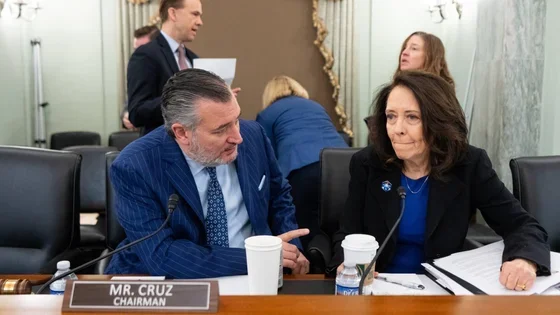
Senate leaders are preparing for a possible vote on the Protect College Sports Act as early as this week, according to Sen. Ted Cruz (R-Texas), a chief architect of the bipartisan legislation. Cruz said Monday that he expects the Senate to act before lawmakers leave Washington for the midterm elections, expressing confidence that the bill will pass with broad support.
"I believe we are going to get this done," Cruz said at a news conference alongside Sen. Maria Cantwell (D-Wash.), college athletes, coaches and other members of Congress. "I have a very high level of confidence that the House will pass this bill, and one of the best ways to do that is get a big bipartisan vote coming off the Senate."
The bill, launched by Cruz and Cantwell in late May, aims to establish a national set of standards for college athletics. It would cap how much schools can pay athletes through name, image and likeness (NIL) deals, limit the number of times players can transfer, and grant antitrust exemptions to the NCAA, conferences and schools. Supporters argue these measures are necessary to stabilize a chaotic landscape in which schools can now pay players directly.
Cruz took to ESPN's "College GameDay" on Saturday to make his case, spending nearly 10 minutes explaining the legislation's importance even as loud boos rang out from the University of Texas crowd behind him. He argued that the current transfer portal system, which allows athletes to transfer multiple times, is damaging to the sport.
"Right now college sports is in chaos, it's just nuts... and the situation with the transfer portal where kids go and transfer two, three, four, five times. It's terrible for the game, it's terrible for the players, it's terrible for the schools, and it's terrible for the fans," Cruz said during the segment.
Supporters have launched an all-out blitz to push the legislation through the Senate before the chamber breaks. High-profile men's college basketball coaches, including Arkansas' John Calipari and Gonzaga's Mark Few, were on Capitol Hill Monday advocating for the bill. The SEC and Big Ten have also put their names on an advertisement urging the public to call Congress in support of the bill. Legendary football coach Nick Saban and current University of Colorado coach Deion Sanders have lent their voices to the cause.
Athlete Advocates Raise Concerns Over Health and Safety Protocols
Despite the momentum, the bill faces pushback from a coalition of athlete advocates, including student-athletes who were victims of sexual abuse and the father of a football player who died during practice. They argue that the Protect College Sports Act does not go far enough to codify health and safety protections for athletes.
The concerns center on what advocates describe as a major flaw: the bill's failure to include robust health and safety protocols. Among those raising alarm is the father of Jordan McNair, a University of Maryland football player who died in 2018 after collapsing from heatstroke during practice. Advocates say the legislation misses an opportunity to prevent similar tragedies by not mandating nationwide safety standards.
"This bill protects the billions of dollars that coaches and sports industry executives are making over the suppression of compensation for some of the most highly valued athletes in the world," Sen. Chris Murphy (D-Conn.) said on a call with reporters Monday. "What we're being asked to do is to basically allow colleges and conferences and the NCAA to illegally collude."
Murphy's opposition highlights a broader critique: that the bill prioritizes the financial interests of conferences and executives over the rights and well-being of athletes. Critics contend that the antitrust exemptions would allow the NCAA and conferences to collude on compensation limits, effectively suppressing athlete pay. They also argue that transfer restrictions would limit athletes' freedom to move to better situations, whether for playing time, academic opportunities or safer environments.
In a commentary published by The Spokesman-Review, Adam Hill noted that the debate has been one-sided, with prominent platforms like ESPN's "College GameDay" presenting largely unchecked support for the bill. "Their voices weren't heard nearly enough in the drafting of this legislation and are conspicuously absent during the lobbying," Hill wrote of the athletes. He acknowledged that the bill might benefit fans and athletic departments by restoring order and curbing spending, but questioned the fairness of ignoring the counterargument.
The Stakes: A Crossroads for College Athletics
The Protect College Sports Act arrives at a pivotal moment for college sports. Since the Supreme Court's 2021 decision in NCAA v. Alston and the subsequent NIL rules, athletes have gained unprecedented opportunities to profit from their fame. However, the lack of uniform regulation has created a patchwork of state laws and conference policies, leading to what many describe as a "wild west" environment.
Schools and conferences argue that the current system is unsustainable. Escalating spending on NIL deals and transfer portal activity has led to concerns about competitive balance and financial stability. The bill's supporters say that without antitrust exemptions, the NCAA and conferences cannot enforce rules without risking costly litigation. They believe the legislation is the only path to reining in the chaos.
"Sometimes that beautiful house at the end of the block maybe has a rotting foundation, and that's where we're at," Gonzaga coach Mark Few said Monday. "We're going to rot from within, because we just — there needs to be some stability. We need to have some enforceable rules."
Yet the push for stability comes at a cost, critics say. By capping NIL deals and limiting transfers, the bill could reduce athletes' earning potential and restrict their mobility. The antitrust exemption, in particular, raises concerns about collusion and price-fixing. Athlete advocates argue that the bill should include a robust "bill of rights" that guarantees health and safety protections, due process in disciplinary matters, and a share of revenue.
Senate Vote Looms as Midterms Approach
With Congress set to recess for the midterm elections, the window for action is narrowing. Cruz said he expects the Senate to vote on the bill this week or next, and he is hoping for a strong bipartisan showing. The House would then need to pass the bill before it goes to President Donald Trump, who has backed the effort along with major conferences and Senate leadership.
The bill cleared its first major hurdle in the Senate earlier this week, setting the stage for a floor vote. But opposition from senators like Murphy and advocacy groups could complicate its path. The midterm elections add another layer of urgency, as lawmakers are eager to return to their districts and campaign.
Supporters are mounting a full-court press. The SEC and Big Ten advertisement, featuring Saban and Sanders, is part of a broader campaign to rally public support. Commercials in favor of the bill aired throughout college football broadcasts last weekend, underscoring the high stakes for the industry.
Still, the bill's opponents are not backing down. They argue that the legislation is being rushed through without adequate consideration of its impact on athletes. The absence of athlete voices in the lobbying effort has been striking, with advocates saying they were not consulted during the drafting process.
Broader Implications: What the Bill Could Change
If passed, the Protect College Sports Act would fundamentally reshape college athletics. The national standards would override the current patchwork of state NIL laws, creating a uniform system for compensation. The transfer restrictions would curtail the portal's free-for-all, potentially returning some stability to rosters. The antitrust exemption would shield the NCAA and conferences from legal challenges, allowing them to enforce rules without fear of lawsuits.
For fans, the bill promises a return to a version of college sports they remember: players staying at schools for multiple years, rivalries intact, and spending under control. For athletic departments and boosters, it offers financial predictability. But for athletes, the outcome is more uncertain. While they would still be able to earn from NIL and transfer once, the caps and restrictions could limit their leverage.
The debate reflects a larger tension in American sports: how to balance the commercial interests of institutions with the rights of the laborers—in this case, student-athletes—who generate the revenue. As the Senate prepares to vote, that tension is on full display.
In the end, the Protect College Sports Act may pass, but the controversy surrounding it is unlikely to fade. Athlete advocates have vowed to continue fighting for stronger protections, and the bill's implementation would undoubtedly face legal challenges. For now, all eyes are on the Senate, where a vote could come at any moment.
Comments