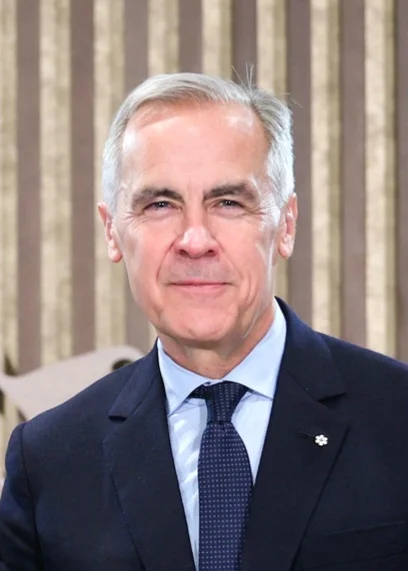
Who Is Mark Carney?
Mark Carney is a Canadian economist, banker, and politician who became the 24th Prime Minister of Canada in March 2025. He succeeded Justin Trudeau as leader of the Liberal Party of Canada following Trudeau's resignation announcement in January 2025. Carney's ascent to the country's highest political office marked a significant transition — bringing a career built in global finance directly into national governance.
Early Life and Education
Born on March 16, 1965, in Fort Smith, Northwest Territories, Mark Carney grew up in Edmonton, Alberta. He pursued his undergraduate degree in economics at Harvard University before earning his master's and doctoral degrees from the University of Oxford. This academic foundation set the stage for a distinguished international career in finance and economic policy.
Career in Finance and Central Banking
Before entering politics, Carney spent over a decade at Goldman Sachs, working in offices across Toronto, London, Tokyo, and New York. His most prominent roles, however, came in public service. He served as Governor of the Bank of Canada from 2008 to 2013, guiding the country through the global financial crisis with policies that earned widespread praise for keeping Canada's economy relatively stable.
From 2013 to 2020, Carney served as Governor of the Bank of England, becoming the first non-British citizen to hold that role. His tenure covered turbulent periods including the Brexit referendum and its economic aftermath. His work at both central banks earned him an international reputation as a steady and credible economic manager.
Rise to Political Leadership
Following his central banking career, Carney took on roles in sustainable finance and climate policy. He served as the United Nations Special Envoy on Climate Action and Finance, advocating for greater private investment in green initiatives. He also chaired Brookfield Asset Management's transition investing division.
Liberal Party Leadership Race
When Justin Trudeau announced his plan to step down as Liberal leader in January 2025, Carney entered the leadership race as a prominent candidate. His economic credentials and international profile made him a compelling choice for a party seeking renewal ahead of a federal election. After a competitive race, he secured the Liberal leadership in March 2025, subsequently being sworn in as Prime Minister.
Election and Mandate
Following his appointment as party leader, Carney called a federal election. The Liberal Party, under his leadership, won a mandate from Canadian voters, allowing him to form a government and pursue his stated policy agenda. The election took place against a backdrop of significant domestic and international pressures, including economic uncertainty and evolving trade relationships with the United States.
Key Policy Priorities
Prime Minister Mark Carney has outlined several central priorities for his government, drawing heavily from his background in economics and climate finance.
Economic Sovereignty and Trade
One of the most immediate challenges facing Carney's government has been managing Canada's trade relationship with the United States amid tariff disputes. He has taken a firm stance on protecting Canadian economic interests, emphasizing trade diversification and reducing reliance on a single trading partner. His government has worked to strengthen ties with European and Asian markets as part of a broader economic resilience strategy.
Climate and Clean Energy
Given his background in sustainable finance, climate policy remains a defining element of Carney's agenda. His government has committed to accelerating Canada's transition to clean energy, supporting green infrastructure investment, and maintaining carbon pricing frameworks, while balancing these goals against the economic concerns of energy-producing provinces.
Housing and Cost of Living
Addressing Canada's ongoing housing affordability crisis has been another declared priority. The Carney government has introduced measures aimed at increasing housing supply, streamlining construction approvals, and making homeownership more accessible for younger Canadians facing record-high real estate prices.
International Standing and Diplomatic Role
Mark Carney entered office with an unusually high international profile for a newly elected national leader. His years at the helm of two of the world's most influential central banks, combined with his work in multilateral climate negotiations, gave him established relationships with foreign leaders and financial institutions.
His approach to foreign policy reflects a commitment to multilateralism and rules-based international order. Canada under his leadership has continued to engage actively within NATO, the G7, and other international forums, with Carney himself participating in high-level summits shortly after taking office.
As Prime Minister Mark Carney navigates both domestic challenges and a complex global environment, his administration represents a notable shift in Canadian political leadership — combining deep institutional knowledge with an agenda shaped by contemporary economic and environmental realities.
Comments