
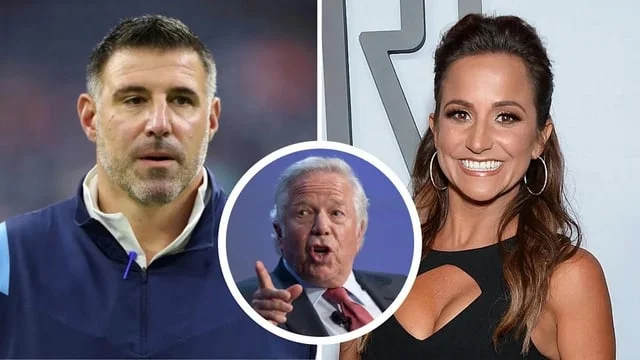
Vrabel Breaks Silence as New Details Emerge
Nearly two weeks after the New York Post published photographs of New England Patriots head coach Mike Vrabel and former Athletic reporter Dianna Russini together at an adults-only resort in Sedona, Arizona, the story continues to generate fresh developments. On Tuesday, April 21, Vrabel addressed reporters at Gillette Stadium for the first time since the images went public, offering a brief but carefully worded statement without taking any questions.
"I've had some difficult conversations with people that I care about, with my family, the organization, the coaches, the players," Vrabel told assembled media. "Those have been positive and productive." Speaking for just under three minutes, he acknowledged that personal accountability extends to his role on the sideline: "We believe that in order to be successful on and off the field you have to make good decisions. That includes me, that starts with me."
Vrabel did not mention Russini by name and declined to elaborate on the nature of his private conversations, saying only: "We'll keep those private and to ourselves." He closed by pledging that his family, the organization, and Patriots fans "will get the best version of me going forward."
Patriots Reportedly Tried to Suppress Publication
Also on Monday, a report from InTouch — amplified by Yahoo! Sports — added a significant new layer to the saga, claiming the Patriots organization attempted to prevent the New York Post from running the story altogether. According to the report, owner Robert Kraft leveraged an extended response window the Post had offered Vrabel, with a "notorious crisis strategist" placing pressure on the reporter and the newspaper. The effort ultimately failed.
That account aligns with earlier reporting from ESPN's Ben Strauss, who detailed how Russini had quickly contacted a "crisis communications expert" after a Post reporter appeared at her New Jersey home on Easter Sunday, April 12. Strauss also reported that Russini, Vrabel, and executives from The Athletic scrambled to coordinate a response, and that the Post indicated it would be open to modifying or even spiking the story if the two could provide compelling evidence supporting their claim that each had been traveling independently with friends.
What the Photos Show — and What Has Followed
The original photographs, published April 7, were taken on March 28 at the Ambiente hotel in Sedona, Arizona, just days before the NFL's annual league meeting in Phoenix. They showed Vrabel, 50, and Russini, 43 — both married to other people and parents of children — holding hands, embracing, and sharing time in a pool and a hot tub at the luxury property.
At the time of publication, both parties issued dismissive statements. Vrabel called the interaction "completely innocent" and said the suggestion of anything further was "laughable." Russini defended her professional record and framed the images as a distortion of a trip with friends.
Russini Resigns; The Athletic Pivots
The timeline shifted sharply in the week that followed. On April 14, Russini resigned from The Athletic, submitting what was described as a defiant letter of resignation to executive editor Steven Ginsberg. Ginsberg, who had initially supported Russini publicly and praised her professionalism, subsequently informed the outlet's staff that "new questions were raised that became part of our investigation" — a notable reversal that pointed to undisclosed developments uncovered during the inquiry. The Athletic is owned by the New York Times.
Russini had been one of the most prominent NFL insiders in the business, a regular presence on ESPN before joining The Athletic, where she was known for breaking news on coaching hires, trades, and league policy. Her departure marks a significant rupture in NFL media. Questions about the boundaries between reporters and the subjects they cover — and the professional consequences when those lines blur — are now squarely in focus across sports journalism. This dynamic echoes broader conversations in media culture, similar to the scrutiny faced by other public figures navigating the intersection of professional conduct and personal life, as explored in profiles of journalists such as Shannon Bream, honored at the Washington Women in Journalism Awards.
No NFL Discipline — but Reputational Stakes Remain High
For Vrabel, the professional consequences have so far been contained. NFL spokesman Brian McCarthy confirmed to USA Today Sports on Monday that Vrabel is not under investigation for any violation of the league's personal conduct policy. The policy, as it applies to non-players such as coaches, calls on all parties associated with the NFL to "show respect for others inside and outside our workplace" and to "conduct ourselves in ways that favorably reflect on ourselves, our teams, the communities we represent, and the NFL."
The league's decision not to open a formal inquiry gives Vrabel a clear runway heading into the NFL draft and the start of the 2026 season. The Patriots reported to Gillette Stadium on Monday for the first day of voluntary organized team activities, and Vrabel's statement to reporters was timed to coincide with that fresh start.
Broader Implications: Media Ethics, Crisis Management, and the NFL's Image Machine
The episode raises pointed questions that extend well beyond the individuals involved. The reported effort to suppress publication — deploying a professional crisis strategist, applying pressure through ownership, and negotiating with reporters over framing — illuminates the mechanics of image management at the highest levels of professional sports. That the attempt failed, and that details of it are now part of the public record, underscores how difficult information control has become in the social-media era.
For sports journalism, the fallout from Russini's resignation signals a reckoning. NFL reporters operate in unusually close proximity to the coaches, executives, and players they cover, often cultivating sources over years. The question of where professional relationships end and personal ones begin — and who bears the professional cost when that boundary is crossed — is one the industry has rarely been forced to examine so publicly.
Vrabel, for his part, enters the draft week with his job intact but his reputation altered. Whether that changes the dynamic inside the Patriots locker room — or in league circles more broadly — may become clearer as the season approaches.
Comments