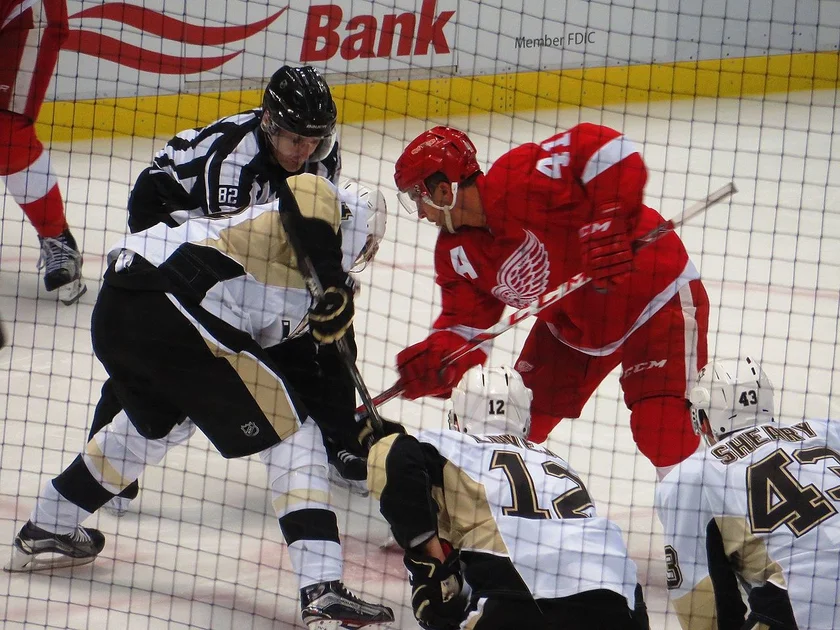
Panthers Take Control Against a Struggling Red Wings Squad
The Florida Panthers and the Detroit Red Wings met in a matchup that carried significant weight for both franchises, with Florida firmly establishing itself as one of the NHL's elite teams while Detroit continues to fight for relevance in a competitive Eastern Conference. The Panthers, back-to-back Stanley Cup champions entering the 2024–25 season, delivered another commanding performance against the Red Wings, showcasing the depth and defensive structure that has made them the standard-bearers of modern hockey.
Florida's offensive firepower, anchored by forwards Aleksander Barkov and Matthew Tkachuk, proved too much for a Detroit defensive unit that has struggled with consistency throughout the season. The Panthers' ability to convert on the power play and suppress opposing offenses in five-on-five situations was once again on full display, reinforcing why they remain the team to beat in the Atlantic Division.
Key Performers on Both Sides
Barkov continued his Selke Trophy-caliber two-way play, generating scoring chances while neutralizing Detroit's top line. Goaltender Sergei Bobrovsky was sharp when called upon, finishing with a strong save percentage in a game where the Panthers' defensive structure limited Detroit's high-danger opportunities. For the Red Wings, forward Dylan Larkin was the most dangerous offensive presence, working hard to generate zone time and keep Detroit competitive, though consistent support from linemates remained elusive.
Why This Matchup Matters: Playoff Positioning on the Line
With the NHL playoff race intensifying, every point in the standings carries enormous consequence. The Florida Panthers are locked in a battle for Atlantic Division supremacy, competing with teams like the Toronto Maple Leafs and Tampa Bay Lightning for home-ice advantage throughout the postseason. A win over a division rival, even one lower in the standings, adds a critical two points that can prove decisive come the end of the regular season.
For Detroit, the stakes are equally significant but for different reasons. The Red Wings have been striving to return to the playoffs after a lengthy postseason drought, and games against top-tier opponents like Florida serve as measuring sticks for a rebuilding franchise. The team's front office made bold moves ahead of the trade deadline to bolster its roster — including the acquisition of veteran defenseman Justin Faulk, traded to the Detroit Red Wings in a deadline move with major playoff implications — signaling that the organization believes this group is ready to compete.
Detroit's Rebuild and the Cost of Competing With Elite Teams
The Red Wings' rebuild has been one of the more closely watched projects in the NHL over the past several seasons. Young talents like Lucas Raymond and Moritz Seider have taken meaningful developmental strides, and the front office has been aggressive in supplementing the core with experienced veterans. However, games against a Panthers team operating at championship level expose the gap that still exists between a contender and a team still finding its identity.
Detroit's penalty kill has been an area of concern, and Florida's power play — one of the most efficient in the league — exploited those vulnerabilities. Closing that structural gap will be essential if the Red Wings hope to push past the first round of the playoffs, should they qualify.
The Panthers' Dynasty in the Making: A Broader NHL Trend
Florida's dominance over Detroit is not an isolated result — it reflects a broader trend in the NHL, where a small group of organizations have built sustainable winning cultures through smart drafting, elite goaltending, and system-driven coaching. The Panthers under head coach Paul Maurice have become the clearest example of this model, having turned a perennial underachiever into a consecutive Cup champion.
What makes Florida particularly formidable is their ability to maintain a high level of performance even when depth players are asked to step up. Unlike teams that rely on one or two star players, the Panthers distribute offensive production across all four lines, making them extraordinarily difficult to game-plan against over a seven-game series.
The NHL as a whole is watching Florida's blueprint closely. Teams in rebuild mode, including Detroit, are attempting to replicate the organizational patience and player development pipeline that turned the Panthers from a lottery team into a dynasty. For the Red Wings, this loss is a data point in a longer journey — a reminder of how much distance remains between aspiration and achievement at the highest level of professional hockey.
As the regular season enters its final stretch, all eyes will remain on whether Detroit can secure a playoff berth and how deep Florida can extend its championship run. The Panthers vs Red Wings rivalry may not yet carry the historic weight of some classic NHL matchups, but in the current competitive landscape, it represents one of the league's most compelling narratives: a dynasty at its peak facing a franchise desperately clawing its way back to relevance.
Comments