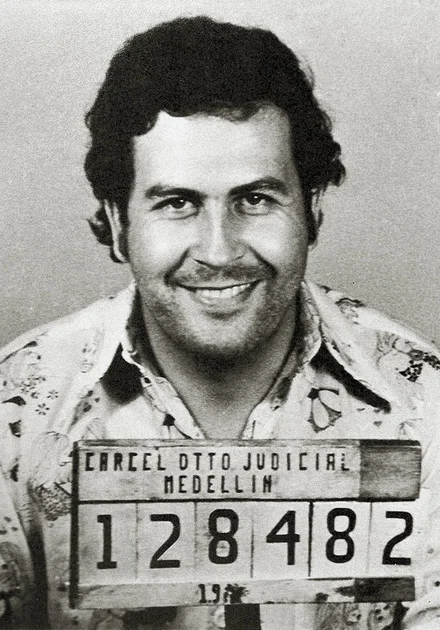
A New Wave of Escobar Content Is Capturing Global Attention
Decades after his death in December 1993, Pablo Escobar continues to generate headlines. In 2025, the narco kingpin's story is once again at the center of a cultural and legal storm, driven by a forthcoming international docuseries, fresh disputes over the commercial use of his name and image, and renewed debate in Colombia about how — or whether — his legacy should be memorialized or monetized.
The new documentary project, produced by a European streaming platform and expected to premiere in late 2025, promises previously unseen archive footage and interviews with former cartel associates, law enforcement officials, and surviving victims of Medellín Cartel violence. Promotional material has already sparked controversy, with Colombian civil society groups arguing that the project risks glamorizing one of the most destructive figures in modern Latin American history.
Family Disputes and Intellectual Property Claims
Adding legal complexity to the cultural debate, members of Escobar's family — most notably his son Sebastián Marroquín, born Juan Pablo Escobar — have renewed their efforts to control how the drug lord's likeness is used commercially. Over the past several years, Marroquín has spoken publicly about his efforts to rebrand his father's story as a cautionary tale rather than a glorified myth. In 2025, reports indicate that his legal team is actively contesting the use of Escobar's image by merchandise vendors, gaming companies, and at least one international entertainment production, arguing for tighter intellectual property protections.
The commercial appetite for Escobar-branded content remains enormous. From video games to fashion lines, the Medellín Cartel leader's face has become, paradoxically, one of the most recognizable and marketable in global pop culture — a phenomenon that continues to disturb victims' advocacy groups in Colombia and abroad.
Why This Story Refuses to Fade
Pablo Escobar led the Medellín Cartel during the 1970s and 1980s, orchestrating a cocaine empire that at its peak was estimated to supply roughly 80 percent of the world's cocaine market. His organization was responsible for thousands of deaths, including politicians, judges, police officers, and civilians caught in the crossfire of Colombia's brutal narco wars. He was killed by Colombian security forces on December 2, 1993, the day after his 44th birthday.
His story was catapulted back into mainstream global consciousness largely by Netflix's Narcos, which debuted in 2015 and became one of the platform's most-watched international productions. Since then, the demand for content related to Escobar has never truly subsided — a pattern familiar to observers of how media handles controversial historical figures. As noted in broader media discussions, the speed and scale at which content about polarizing figures spreads today makes responsible storytelling more urgent than ever. How Breaking News Travels Faster Than Ever — and Why Accuracy Is Paying the Price explores precisely this tension in modern journalism.
Colombia's Ongoing Reckoning
Within Colombia itself, the legacy of the narco era remains a deeply sensitive and politically charged issue. The government of President Gustavo Petro — himself a former guerrilla member who has spoken at length about the structural roots of the drug trade — has maintained an ambivalent relationship with the memory of that period. Some municipalities have debated whether sites associated with Escobar's life, including his former properties and even his grave in Medellín, should be preserved as historical landmarks or dismantled entirely to deny them the status of dark tourism destinations.
In Medellín, the transformation of the city from the world's most dangerous in the early 1990s into a celebrated hub of urban innovation is a point of enormous civic pride — but it also means that the Escobar chapter is never far from the surface of public conversation.
The Broader Implications of Narco Mythology in 2025
The enduring fascination with Pablo Escobar raises important questions about how societies process and package historical trauma for global entertainment audiences. Scholars of media and criminology have long warned that the aestheticization of organized crime figures — however nuanced the intent — can have real-world consequences, including inspiring criminal romanticization among younger audiences and reducing complex political and social histories to individual villain narratives.
The 2025 moment feels different in one respect: the victims' voices are louder and better organized than at any point since Escobar's death. NGOs, journalists, and former hostages are actively pushing back against productions they view as exploitative, demanding consultation rights and editorial influence over how the cartel era is depicted. Whether streaming platforms and entertainment producers respond meaningfully to these demands will likely define the next chapter in how one of history's most mythologized criminals continues to be told — and sold — to the world.
Comments