
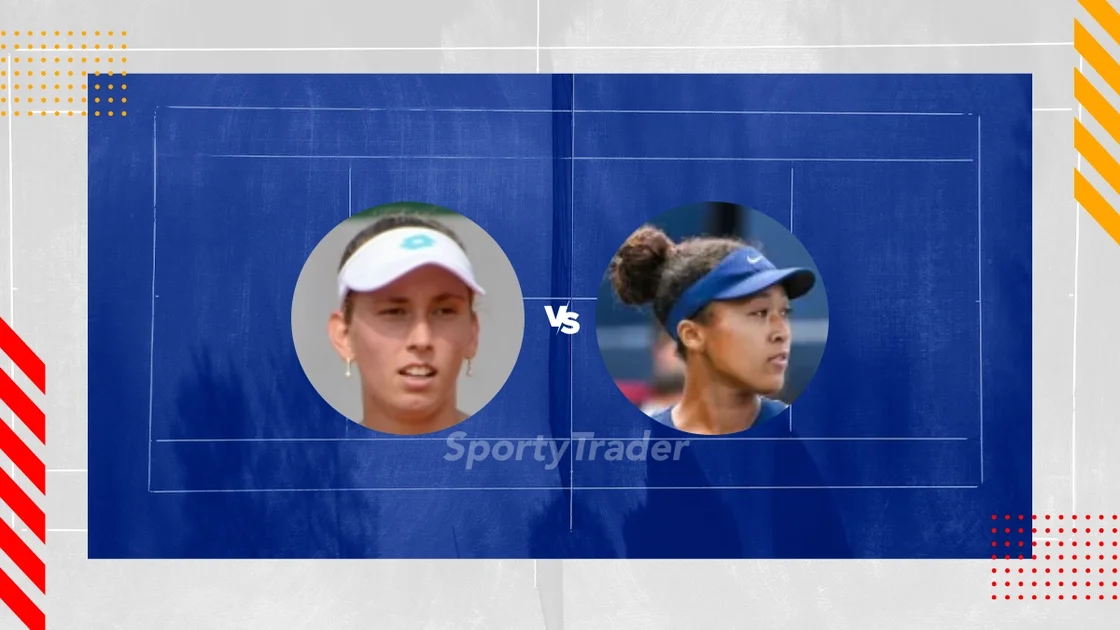
Osaka Eyes US Open Momentum in Toronto Third-Round Clash
Naomi Osaka continues her hard-court resurgence at the 2026 Canadian Open, where she faces Belgium's Elise Mertens in the third round on August 8. The Japanese star, currently ranked world No. 14, advanced with a commanding 6-3, 6-4 victory over Panna Udvardy, firing 10 aces and winning 88 percent of her first serves. The match against Mertens, scheduled for late evening in Toronto, carries significant weight as Osaka looks to build on her recent semifinal run in Washington and position herself as a serious threat ahead of the US Open.
Osaka enters the contest with a narrow 5-4 career lead over Mertens, including a straight-sets win in their last meeting at Bad Homburg. In that encounter, Osaka swept the Belgian 6-3, 6-3, demonstrating the kind of dominant serving and aggressive baseline play that has defined her best hard-court performances. The upcoming match promises to be a test of both form and fitness, as Mertens has also shown solid recent results, including a come-from-behind win over Anna Bondar in her Toronto opener.
Betting markets have installed Osaka as a clear favorite, with odds suggesting she will cover a -5.5 games spread. Analysts point to Osaka's 3-1 record over her last four matches and her 67 percent win rate across her past six outings, while Mertens has won five of six but struggled against top-tier opposition. The matchup aligns with Osaka's strengths: her first serve, when firing, can neutralize Mertens' return game, and her aggressive court positioning often forces errors from the Belgian's defensive style.
The Significance of the Third-Round Showdown
The third-round meeting is more than just a stepping stone; it is a statement opportunity. Both players have shown flashes of elite form but remain inconsistent against the tour's upper echelon. For Osaka, a deep run in Toronto would prove she can string together consecutive high-quality performances against varied opponents—a crucial benchmark before the US Open, where she has historically thrived.
Mertens, ranked No. 24, has been steady on hard courts in 2026, compiling a 12-6 record. Her journey in Toronto included a second-round comeback against Bondar, where she converted six break chances and saved critical points. That resilience indicates she will not fade easily, even if Osaka's power game tests her. The Belgian's ability to extend rallies and force Osaka into unforced errors will be key; in their previous encounters, Mertens has won when she can keep points longer and draw errors from Osaka's forehand.
For Osaka, the match also serves as a chance to avenge her recent semifinal loss in Washington, where she fell to rising star Alex Eala. That defeat, while disappointing, came after a strong week and showcased the level of competition now challenging her. A victory over Mertens would set up a potential rematch with Eala in the semifinals, adding extra intrigue to an already compelling draw.
Context: Osaka's Long Road Back to the Top
Osaka's 2026 season has been a story of steady progress rather than explosive success. She has yet to capture a singles title this year, but her consistency has been evident. Reaching the semifinals in Washington, where she defeated Elisabetta Cocciaretto before losing to Eala, marked her second consecutive semifinal at that level. Earlier in the season, she made a run to the fourth round at Wimbledon, where she fell to Karolina Muchova in straight sets.
The former world No. 1 has been rebuilding her game and confidence since returning to full-time competition after her maternity break. Her hard-court prowess remains her greatest asset; she has won four of her seven career titles on the surface, including two US Open crowns. Canadian soil has also been kind to her; she reached the final in Toronto last year, falling to a resurgent opponent in a tight three-setter.
Mertens, by contrast, has carved out a consistent if unspectacular career. The Belgian has won multiple titles on hard courts, including a 2018 Doha title, and has reached the quarterfinals or better at several majors. Her steady baseline game and exceptional returning make her a dangerous floater, even against higher-ranked opponents. Her recent form includes a semifinal run at Wimbledon's warm-up event and a solid start on North American hard courts.
The Stakes for Both Players
For Osaka, the Canadian Open offers a chance to secure a top-10 seeding at the US Open, which begins in two weeks. A deep run here, particularly past Mertens and potential later rounds against players like Mirra Andreeva or Aryna Sabalenka, would bolster her ranking and confidence. The draw has opened favorably: with several top-20 players already eliminated, Osaka's path to the final appears navigable, provided she maintains her current level.
Mertens, meanwhile, is fighting to solidify her top-25 status and gain momentum for a potential deep slam run. A victory over a player of Osaka's caliber would be her most significant win of the North American hard-court swing and could propel her into the latter stages of a Masters 1000 event. Her defensive skills and experience in big matches make her a formidable opponent, especially if Osaka's first serve percentage dips.
The head-to-head record shows a seesaw battle, with Osaka winning five of nine encounters. Notably, four of their matches have gone three sets, suggesting that Mertens can extend Osaka's patience. However, Osaka has won the last two meetings, including a 2025 clash on grass, indicating she has found a tactical edge against the Belgian's game.
Perspective: Eala's Rise and the Changing Landscape of Women's Tennis
Beyond the immediate match, the Canadian Open is highlighting a shifting dynamic in women's tennis. Alex Eala's surge to world No. 20, following her Washington Open title, has captured global attention. Osaka herself praised Eala's impact, noting the packed practice courts filled with Filipino fans and the young star's ability to attract new audiences. Eala, who could meet Osaka in the semifinals, represents a new generation blending power with tactical intelligence—a threat to established stars.
Osaka, at 28, is part of a cohort navigating the rise of younger players like Eala, Andreeva, and Jovic. Her experience and big-match temperament remain invaluable, but consistency against these hungry challengers will define her ability to secure another major title. The Toronto draw, featuring all top-20 players except a few, is a preview of the US Open battles to come.
Should Osaka and Eala meet in Toronto, it would be a marquee matchup, pitting a former No. 1 against a rising star. Osaka's loss to Eala in Washington was a wake-up call, and she has openly expressed admiration for Eala's game. A rematch on home soil could serve as a benchmark for both players' evolution.
For now, Osaka's immediate focus is on Mertens. The Belgian's steady consistency and ability to absorb pressure make her a classic litmus test for Osaka's hard-court credibility. A straight-sets win would send a message to the rest of the field, while a three-set struggle might raise questions about stamina and closing ability. Tennis analysts and fans will be watching closely.
The Broader Implications for the US Open
The Canadian Open is traditionally a barometer for US Open form. Players who perform well in Toronto or Montreal often carry that momentum into Flushing Meadows. Osaka's track record includes two US Open titles, and she has shown a capacity to peak on hard courts in August. A deep run in Toronto would place her among the favorites, joining Andreeva, Sabalenka, and Eala.
Conversely, an early exit could confirm concerns about her ability to sustain consistency over multiple matches. Osaka has not won a title since 2023, and while she has reached finals and semifinals, the breakthrough has been elusive. Each tournament brings renewed hope, but the pressure to convert strong performances into trophies grows with time.
The matchup with Mertens also offers a tactical preview of challenges ahead. Mertens' return-heavy style is similar to what Osaka might face from players like Iga Swiatek or Aryna Sabalenka, who can redirect pace and force errors. Osaka's serving edge could be neutralized if she misses too many first balls, as Mertens' return position can make even second serves uncomfortable.
As the tennis world converges on Toronto, the Osaka-Mertens clash stands out as a potential highlight of the round of 32. Both players have the pedigree and form to go far, but only one will advance. For Osaka, victory would signal that her hard-court revival is on track; for Mertens, an upset would mark a personal breakthrough. The outcome will shape the narrative entering the final grand slam of the season.
Osaka's Serving as a Decisive Factor
Data from Osaka's recent matches points to her serve as the primary weapon. In Toronto, she won 88 percent of first-serve points and averaged over 65 percent first serves in her last three outings. If she maintains that level against Mertens, who has a weaker return game than the tour's elite, she should dominate holds. However, Mertens' ability to get many returns into play, even without power, can force Osaka into longer rallies, where her error count may rise.
Mertens, conversely, relies on consistency and court coverage. She has won 82 percent of her first-serve points in her Toronto opener, but her second serve is more vulnerable. Osaka's return game, often overlooked, has been solid; she creates pressure by stepping in and attacking short balls. This could be the key: if Osaka can break early, she can control the match's tempo.
Historically, when Osaka plays with a lead, she becomes more aggressive and her serving percentage improves. Mertens' best chance is to stay close in the first set and force tiebreaks, where her steadiness might unsettle Osaka. In their last match, Mertens won only four games, so she will need a better game plan to compete.
Match Prediction and Outlook
Most pundits favor Osaka in two sets, given her current form and head-to-head edge. Her recent wins have come with ease, while Mertens has shown resilience but also inconsistency. The key will be Osaka's ability to maintain focus throughout, especially if Mertens' defensive style frustrates her.
A potential semifinal against Eala adds extra motivation. Osaka has admitted being impressed by Eala's rise, but she also wants to reassert herself as the dominant player in their bracket. Winning in Toronto would set the stage for a compelling US Open narrative, where she could be the dark horse among a pack of title contenders.
The Canadian Open has always been a stage for comebacks and breakthroughs. For Osaka, it represents an opportunity to remind the world of her championship pedigree. For Mertens, it's a chance to topple a star and boost her own ranking. As the evening match approaches, all eyes will be on the hard courts of Toronto, where power meets precision and momentum hangs in the balance.
For more insights on Osaka's US Open preparations, see Naomi Osaka Chases US Open Form as WTA Toronto Open Heats Up. The tennis world will be watching to see if she can deliver.
Comments