
Ortega Ends Elections: Nicaragua's Democratic Break Is Now Explicit
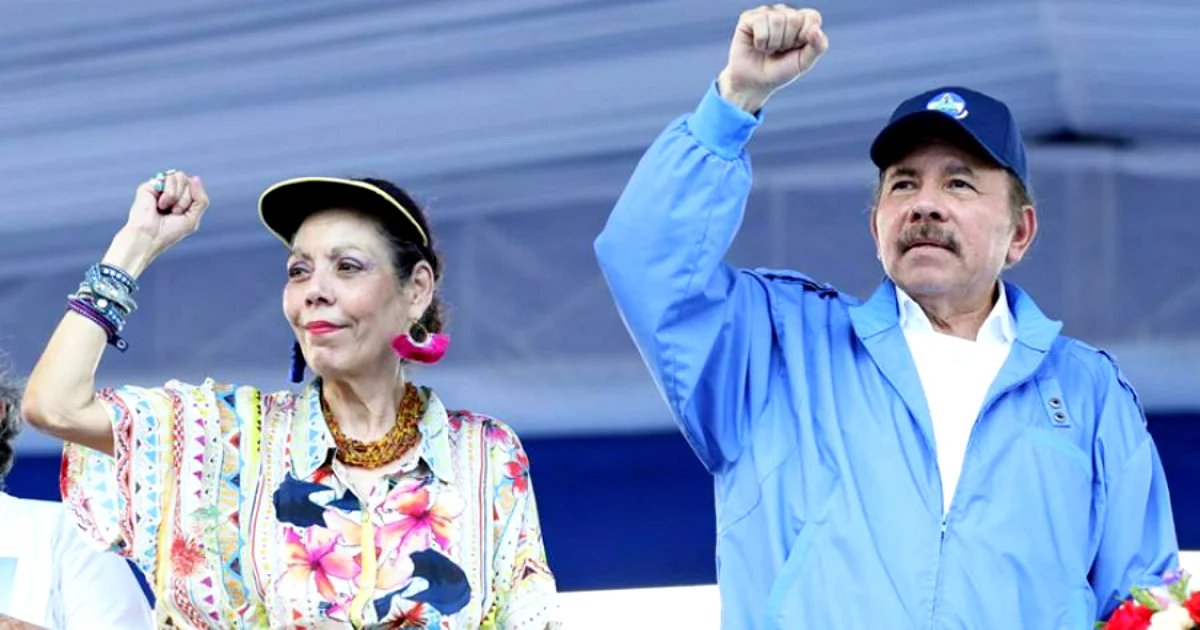
Nicaraguan President Daniel Ortega, in power since 2007, declared on Sunday that the country will hold no further elections, framing the move as a definitive barrier against opposition parties he claims are controlled by the United States. Speaking at the 47th anniversary of the Sandinista revolution in Managua, the 80-year-old Marxist leader told supporters: “There won’t be any more elections here for them to try to seize the government and seize power.” The announcement, which drew immediate condemnation from human rights groups and international observers, marks a stark rhetorical escalation in a nation where democratic institutions have been steadily dismantled for years.
Ortega, who shares power with his wife and co-president Rosario Murillo, said he would work with the National Assembly—controlled by his Sandinista party—to pass new laws that “build a wall, a barrier, against the coup plotters and the traitors who sell out their country.” The timing of the speech, his first public appearance in 61 days, came during a commemoration of the 1979 uprising that overthrew U.S.-backed dictator Anastasio Somoza. According to local reports, thousands of state employees were coerced into attending the ceremony.
The declaration essentially cancels the next presidential election, which was tentatively scheduled for November 2027 under a constitutional reform passed last year. That reform extended the presidential term from five to six years and elevated Murillo from vice-president to co-president, a move widely criticized by the United Nations, the Organization of American States, and the European Union.
A Family Dictatorship Sealed: From Erosion to Explicit Authoritarianism
While Ortega’s government had already been marked by the systematic crushing of dissent—jailing opposition candidates, closing independent media, and stripping citizenship from critics—the announcement represents a significant shift from de facto one-party rule to an explicit rejection of electoral democracy. “With this decision, Ortega and Murillo have sealed the country’s transition to a full-fledged family dictatorship,” said Tiziano Breda, Latin America senior analyst at the Armed Conflict Location and Event Data Project (ACLED).
Ortega’s justification for the move hinged on claims that the opposition is a tool of foreign powers. “The days when parties backed by the Yankees and the Somocistas would return to power are over—never again,” he declared, using the term for followers of the Somoza dictatorship. This narrative, long central to Sandinista rhetoric, has been used to justify a wide range of repressive measures. Since 2018, when more than 300 people were killed in a crackdown on anti-government protests, the government has arrested hundreds of dissidents, forced thousands into exile, and shuttered more than 3,000 civil society organizations.
The UN Human Rights Council has accused Ortega and Murillo of building a “repressive regime,” with officials implicated in arbitrary detentions, torture, extrajudicial executions, and the persecution of civil society and media. In a pattern reminiscent of other authoritarian consolidations, the couple has also turned against former comrades. Many Sandinista revolutionaries from the 1979 uprising have been detained or forced into exile, including those who once fought alongside Ortega.
The 2021 Election: A Preview of the New Reality
The last national election in 2021 offered a clear preview of the path Ortega has now chosen to formalize. During that campaign, the government outlawed several opposition parties, jailed all major presidential hopefuls—including Juan Sebastián Chamorro and Cristiana Chamorro—and claimed close to 76 percent of the vote in a contest that the United States, the European Union, and other democracies refused to recognize. International observers reported widespread irregularities, including ballot stuffing, voter intimidation, and the absence of independent media coverage.
Juan Sebastián Chamorro, speaking from exile after his release, interpreted Ortega’s latest statement as confirmation of an ambition to establish a single-party system modeled on China’s. “They want a system where there is no alternative, no way to challenge them at the ballot box,” Chamorro said. The Costa Rica-based watchdog Nicaragua Nunca Más echoed this view, noting that the Sandinista Front has become a party with no real internal opposition, backed by the closure of thousands of civic organizations and the silencing of critical voices.
International Condemnation and Geopolitical Stakes
The announcement drew swift reactions from international bodies and foreign governments. The United States, which has since 2018 conditioned any normalization of relations with Nicaragua on the restoration of free and fair elections, condemned the move as a “brazen assault on democracy.” The State Department reiterated that Washington does not recognize the 2021 election results and called for the immediate release of all political prisoners.
The Organization of American States (OAS), which has been sharply critical of Ortega, issued a statement saying the end of elections “formalizes the destruction of the constitutional order in Nicaragua.” The European Union also condemned the declaration, with EU foreign policy chief Josep Borrell warning that it would lead to further isolation and sanctions. Nicaragua has already faced multiple rounds of U.S. and EU sanctions targeting Ortega, Murillo, and senior officials.
The reaction from other Latin American governments was mixed. Leftist allies such as Venezuela’s Nicolás Maduro and Cuba’s Miguel Díaz-Canel have not publicly commented on the announcement, but their silence is widely interpreted as tacit acceptance. Meanwhile, democratic governments in the region, including Costa Rica and Chile, expressed alarm and called for a regional response through the OAS and the Community of Latin American and Caribbean States (CELAC).
The Mechanics of Control: Legal Changes and Coercion
Ortega did not provide specific details on how the cancellation of elections would be implemented, beyond vowing to work with the National Assembly on new laws. The assembly, which is entirely controlled by the Sandinista party and its allies, is expected to rubber-stamp any proposal. Analysts suggest the government may amend the constitution to remove references to periodic elections altogether, or pass a law that indefinitely postpones voting under the guise of national security.
The constitutional reform of 2024, which created the co-presidency and extended terms, already laid the groundwork. Under that reform, the next election was scheduled for 2027, but the president had the authority to delay it under a state of emergency—which Ortega has maintained in practice since the 2018 protests. By declaring elections permanently over, Ortega has effectively abolished the electoral system that, while flawed, had provided a semblance of democratic legitimacy.
The move also resolves a long-standing tension in Ortega’s rule: the gap between official rhetoric about democracy and the reality of authoritarian control. By removing elections entirely, Ortega eliminates any remaining risk that political opening could “create the conditions for dissent to manifest and threaten their grip on power,” as Breda put it. The fear of even a symbolic opposition victory, however unlikely, appears to have driven the decision to eliminate the electoral process altogether.
Broader Implications: Nicaragua as a Model of Authoritarian Consolidation?
Ortega’s declaration is not happening in a vacuum. Across the globe, the trend of democratic backsliding and the rise of strongman rule has accelerated in recent years. Nicaragua now joins a small but growing list of countries that have formally abandoned competitive elections, including Eritrea, North Korea, and Syria. The substance of Ortega’s rule has long matched that description, but the symbolic act of declaring it openly carries weight.
For the Nicaraguan people, the announcement signals the closure of even theoretical avenues for change through the ballot box. With the opposition in exile or prison, and civil society crushed, the only remaining forms of dissent are underground or abroad. The government’s control over the media, the economy, and the security forces is virtually absolute. The diaspora, estimated at more than 1 million Nicaraguans—about 15 percent of the population—has grown steadily since 2018, with many fleeing political persecution and economic collapse.
From a geopolitical perspective, Ortega’s regime has aligned itself closely with Russia, China, and Iran, receiving economic aid, military equipment, and diplomatic support. Nicaragua has become a staging ground for Russian military personnel and equipment in Central America, a fact that has alarmed U.S. defense officials. The end of elections further distances Nicaragua from the Inter-American system and strengthens its ties with authoritarian states that offer ideological and financial backing without demanding democratic norms.
What the Opposition Says
Opposition figures in exile expressed a mix of resignation and defiance. In addition to Chamorro, former presidential candidate Félix Maradiaga, who was jailed before the 2021 election and later released under a prisoner swap, called for renewed international pressure. “Ortega and Murillo have shown they will never allow free elections,” Maradiaga said. “The international community must treat Nicaragua as what it is: a dictatorship, not a flawed democracy.”
Some activists argue that the explicit end of elections eliminates ambiguity and forces foreign governments to confront the reality of the regime. “Now no one can say that Nicaragua has any democratic pretensions,” said a spokesperson for the opposition coalition Blue and White Unity, based in Costa Rica. “We hope this leads to stronger sanctions and support for the resistance inside the country.”
What This Changes
For the average Nicaraguan, life under the Ortega-Murillo regime is unlikely to change immediately. The economy remains crippled by sanctions, corruption, and mismanagement, with inflation and unemployment high. The security forces remain vigilant, monitoring dissent through a network of informants and state-aligned neighborhood committees. The announcement does not alter the daily reality of repression, but it removes the last shred of hope for political change through institutional means.
In the longer term, the formal end of elections may deepen Nicaragua’s isolation. International investors, already wary, will find even less reason to engage. Regional migration flows, already significant, are likely to increase as Nicaraguans see no path to change. The regime’s reliance on coercion and foreign patronage may strengthen in the short term, but the lack of any mechanism for renewal or succession—Ortega is 80, Murillo 74—raises questions about stability if one of them becomes incapacitated.
Ortega’s speech, delivered in front of a coerced audience on a day meant to celebrate the overthrow of a dictatorship, closed a chapter in Nicaraguan history. The revolution that once promised democracy, land reform, and social justice has become a vehicle for the permanent rule of a single couple. By declaring that elections are over, Ortega has not created a new reality; he has simply admitted the one that already exists. For Nicaraguans at home and in the diaspora, the question is not whether democracy can be restored, but how many more years—or decades—of family rule lie ahead before that becomes possible.
Comments