
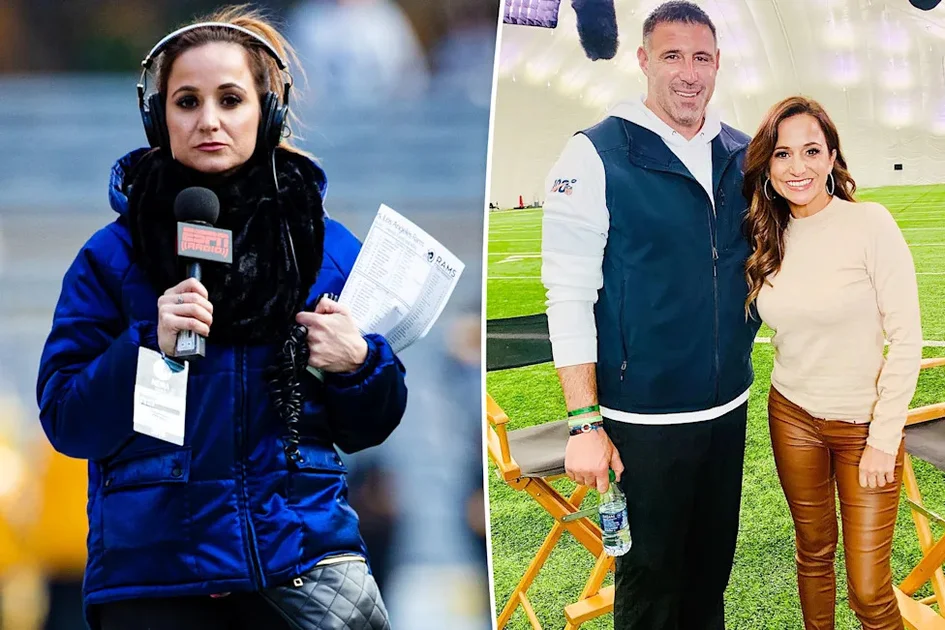
$800K Salary, One Photo, and a Career Unraveled: The Dianna Russini Story
The New York Times has disclosed that former NFL insider Dianna Russini was earning an annual salary of $800,000 at The Athletic before she resigned in May amid a scandal involving New England Patriots head coach Mike Vrabel. The revelation, published Wednesday by Times reporters Katherine Rosman and Ken Belson, details the timeline of Russini’s downfall and the internal investigation that followed the release of intimate photographs by Page Six in April.
According to a former manager who spoke to the Times, Russini was one of the highest-paid journalists at The Athletic, a sports-media outlet acquired by the Times for $550 million in 2022. Her contract was set to expire at the end of June, and the outlet was in discussions to renew it when the photos surfaced. The images showed Russini and Vrabel holding hands and embracing at a luxury resort in Sedona, Arizona. At the time, both were married to other people.
The Times report characterized Russini’s conduct as “unacceptable,” with a company spokesperson stating that her behavior violated the journalistic standards expected under Times ownership. Russini resigned shortly after the internal investigation began, telling the paper that she had “no interest in submitting to a public inquiry that has already caused far more damage than I am willing to accept.”
The Fallout: Blurry Lines and Broken Trust
A Scandal That Shook the NFL Media World
The Russini-Vrabel story dominated sports headlines for weeks. Vrabel, at a press conference in April, admitted to having “difficult conversations” with his family and team, saying, “In order to be successful on and off the field, you have to make good decisions. That includes me. That starts with me. We never want our actions to negatively affect the team, never want to be the cause of distraction.” He also stated that the encounter was “a completely innocent interaction.”
Russini, however, initially pushed back against the narrative, noting that sports reporters frequently meet sources outside stadiums. But the Times investigation found that her relationship with Vrabel blurred traditional journalistic boundaries. “She might have considered calling a coach to get out of a ticket not only appropriate, but a funny story to tell on a podcast,” the reporters wrote. “For The Athletic, under the ownership of The Times, it was out of bounds.”
The Salary That Drew Attention
Russini’s $800,000 salary has stunned many in the industry and among fans, especially when compared to the earnings of her male counterparts. ESPN’s Adam Schefter and Adrian Wojnarowski have previously commanded salaries of $9 million and $7 million per year, respectively, according to the New York Post. While Russini’s pay was substantial, it underscores the growing financial stakes in sports journalism, where top insiders are valued for their access and scoops.
The Times report also reveals that Russini faced “intense scrutiny and personal attacks” after the photos were published. In text messages to Times reporters, she said, “This has had a significant impact on my life, both professionally and personally.” She later asked not to be quoted from those texts when she learned they would be included in the article.
Broader Implications: Ethics, Gender, and the Price of Insider Access
The Russini case raises uncomfortable questions about the sports-media industry, where the line between reporter and source is often thin. The Athletic, under Times ownership, has sought to enforce stricter ethical guidelines. But the scandal also highlights a persistent double standard: female journalists in male-dominated fields like NFL reporting often face heightened scrutiny over their personal relationships, while their male peers may escape similar consequences.
Russini’s situation also reflects the broader trend of high-profile sports journalists earning salaries that rival those of the athletes they cover. As media companies like the Times invest heavily in sports content—the $550 million acquisition of The Athletic was a bet on subscriber-driven, ad-free sports coverage—the pressure on insiders to deliver exclusive access has only grown. When that access crosses into personal territory, the fallout can be swift and severe.
For Vrabel, the scandal has been a personal and professional distraction, though he remains head coach of the Patriots. For Russini, the future is uncertain. Her resignation and the public disclosure of her salary may make it difficult to return to a similar role in sports media. Yet the appetite for insider NFL news shows no signs of slowing, as evidenced by the continued dominance of outlets like The Athletic in the sports journalism landscape.
In a related sports news, Czechia vs Mexico: Hosts Seek Perfect Group Stage Amid Rotation Plans offers a look at how teams balance performance and rest under pressure—a dynamic not entirely unlike the pressures faced by journalists in the high-stakes world of NFL reporting.
As the dust settles, the Russini affair serves as a cautionary tale about the risks of mixing personal and professional lives in an era of constant surveillance and instant digital distribution. The blurred lines that once made for good podcast stories are now more likely to land a reporter in the headlines for all the wrong reasons.
Comments