
Nvidia Concedes China's AI Chip Market to Huawei
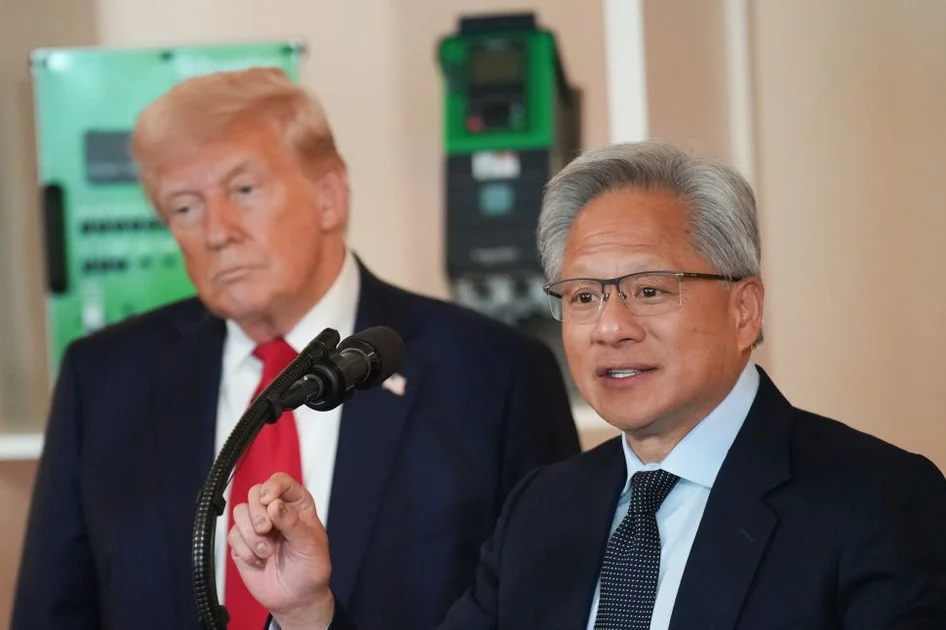
Nvidia CEO Jensen Huang has publicly acknowledged that the company has effectively lost the Chinese AI chip market to domestic rival Huawei, marking a seismic shift in the global semiconductor landscape. Speaking to CNBC, Huang admitted, “Huawei is very, very strong. They had a record year, they’ll likely have an extraordinary year coming up, and their local ecosystem of chip companies are doing quite well, because we’ve evacuated that market.”
Huang’s admission comes as Nvidia reported another blockbuster quarter, with revenue surging 85% year-over-year to $81.62 billion, alongside an $80 billion share buyback program and a dividend hike. Yet China, which once accounted for at least one-fifth of Nvidia’s data center revenue, now contributes virtually nothing. “Today, in China, we have now dropped to zero,” Huang said during a previous interview on the Special Competitive Studies Project’s Memos to the President.
The Root Cause: US Export Controls
The dramatic reversal stems from tightened US export restrictions on advanced AI chips. In April, the Trump administration informed Nvidia that it would need a license to sell chips to China and several other countries, effectively shutting the company out of its second-largest market. Huang told investors to “expect nothing” in terms of approvals for advanced chip sales, signaling a long-term closure of the Chinese market to Nvidia’s top-tier hardware.
Huang’s frank assessment underscores how US policy has inadvertently accelerated Beijing’s push for semiconductor self-sufficiency. Huawei, once crippled by US sanctions on its smartphone business, has now emerged as the dominant player in China’s AI chip sector, capitalizing on the vacuum left by Nvidia’s forced exit.
Huawei Strengthens Its AI Infrastructure Bet
While Huang’s comments made headlines, Huawei has been quietly building its AI infrastructure capabilities to serve both domestic and international markets. On May 20, Huawei Korea hosted the “2026 Huawei Korea Enterprise Partner Summit” at Seoul Dragon City, bringing together roughly 200 domestic partner and client-company representatives.
A Vision for AI-Driven Digital Infrastructure
The summit outlined three core strategic directions: strengthening support for the commercial market, boosting responsiveness to the AI market, and deepening the partner ecosystem. Cain Khan, manager of the Solution Sales Division at Huawei Korea, presented the company’s vision for AI-based digital infrastructure, showcasing use cases in healthcare, education, manufacturing, telecommunications, and cloud services.
Technical sessions at the event highlighted the latest advancements in AI data centers, storage, networks, computing, and cloud technologies. Huawei Korea aims to tailor integrated infrastructure and cooperation models specifically to Korean market demands, positioning itself as a full-stack AI infrastructure provider.
This regional mobilization mirrors Huawei’s global strategy: leveraging a combination of proprietary chips, server systems, and cloud services to offer alternatives to Western technology stacks. The company’s Ascend AI processor series, for example, has become the cornerstone of China’s domestic AI computing ecosystem, allowing local enterprises to train and deploy large language models without relying on Nvidia hardware.
Broader Implications for the Global Tech Order
Huang’s concession and Huawei’s aggressive expansion signal a permanent reshaping of the global AI chip market. The decoupling of US and Chinese technology supply chains, once a theoretical risk, is now a concrete reality with real winners and losers.
The Rise of a New Silicon Order
Huawei’s resurgence is emblematic of a broader trend: Chinese tech companies are no longer merely consumers of Western innovation but are becoming formidable competitors. Huang noted that Huawei’s local ecosystem of chip companies is “doing quite well,” pointing to a network of domestic manufacturers, designers, and software developers that are filling the gaps left by Nvidia’s departure.
For Nvidia, the loss of the Chinese market is not fatal—the company’s revenue growth remains staggering, driven by demand from US hyperscalers and cloud providers. However, the long-term risk is that an independent Chinese AI ecosystem could eventually compete head-to-head with Nvidia in other regions, particularly in Southeast Asia, Africa, and the Middle East, where Huawei already has strong ties.
What This Means for AI Development
The decoupling also has implications for the pace of AI development. Without access to Nvidia’s latest chips, Chinese companies may face a temporary slowdown in training massive models. But the forced innovation could ultimately accelerate the development of alternative architectures, software stacks, and manufacturing processes.
In contrast, US companies may become complacent with a captive market, lacking the competitive pressure that comes from battling Huawei on its home turf. Geopolitical analysts often compare this dynamic to the space race, where competing blocs developed parallel technologies with minimal cross-pollination.
The Human and Political Cost
The US-China tech war has real-world consequences beyond corporate earnings. In a statement that resonated beyond the business world, Huang Nvidia's loss framed the broader stakes: “Don’t have any illusion that this is just about business—it’s about national security, about who controls the future of computing.”
Meanwhile, Huawei’s summit in Seoul demonstrates that the company is looking beyond China. By deepening its partner ecosystem in key markets like South Korea, Huawei is building a global alternative that could reshape IT infrastructure procurement for years to come.
Outlook: A Divided AI Future
Jensen Huang’s blunt acknowledgment that Nvidia has “largely conceded” China to Huawei marks an inflection point for the technology industry. The question now is whether other markets will follow suit. As the US tightens export controls further, and as Huawei expands its partner networks abroad, the vision of a single global AI chip market is fading.
Instead, the world may be entering an era of parallel AI infrastructure—one built on Nvidia’s CUDA ecosystem in the West and another powered by Huawei’s Ascend platform in the East. For enterprises and governments, the choice of AI supplier may increasingly be determined by geography and geopolitics rather than technical merit alone.
Comments