
'Rise Up, Sing Out' Replaces Massive Protests on Trump's 80th Birthday
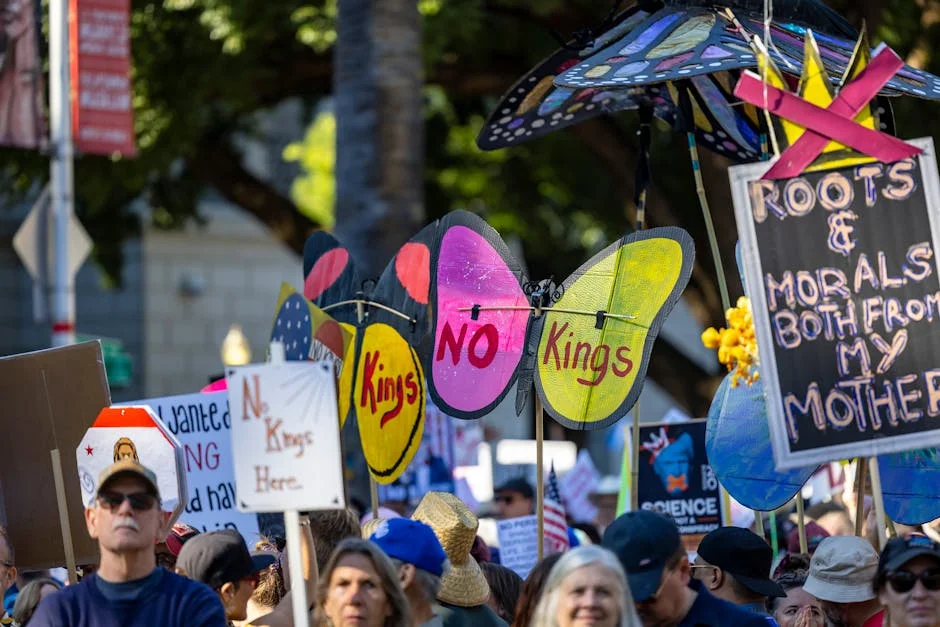
On Sunday, June 14, 2026, the No Kings movement will stage its fourth nationwide day of action — but this time, the strategy has shifted dramatically. Instead of the sprawling street protests that drew millions to over 2,000 cities last year, organizers are steering supporters toward a 90-minute concert at New York City's Town Hall, streamed to roughly 300 watch parties across the country and abroad.
Billed as "an uplifting evening of song, solidarity and action," the event features performers and speakers including Bette Midler, Patti Smith, Rufus Wainwright, Julia Roberts, Lily Gladstone, and Jane Fonda. The concert is a joint production of the No Kings movement, the Committee for the First Amendment, and Indivisible. Its timing is deliberate: President Donald Trump is celebrating his 80th birthday by hosting a UFC event called "Freedom 250" at the White House.
Organizers have called the concert a celebration of the First Amendment's five core freedoms: speech, religion, press, assembly, and protest — all of which they argue are under threat during Trump's second term. "As America approaches its 250th anniversary, we have a choice about what story we tell," the movement said on its website. "We can let strongman politics and corruption define the moment. Or we can make the story of America about people coming together."
No Street Protests — But Plenty of Viewing Parties
Unlike the first No Kings rally on June 14, 2025, which drew an estimated 5 million participants, or the second round in October 2025 with up to 6.5 million attendees, this year's event is not a mapped-out day of marches. A search for "No Kings protest June 14" has spiked as people recall last year's massive gatherings, but organizers have explicitly said there is no call for street protests this time.
Instead, the movement has organized hundreds of local watch parties in homes, community centers, libraries, bars, and union halls. In Colorado, for example, nine gatherings are planned — including in Golden, Superior, Alamosa, and Crestone — at locations like the Common Flame Unitarian Universalist Congregation and the Superior Civic Center. The concert starts at 7:30 p.m. ET (5:30 p.m. MDT) and runs about 90 minutes, with some events adding pre- or post-show activities like sign-making and local action planning.
Even abroad, one gathering is scheduled in Paris, reflecting the movement's global reach. The shift away from centralized protest routes is a strategic pivot that organizers hope will sustain momentum while emphasizing community-building and cultural unity.
From Street Protests to Cultural Celebration: A Strategic Evolution
The No Kings movement began on June 14, 2025, as a direct response to Trump's birthday and Flag Day, with an estimated 2,000-plus rallies nationwide. The protests were largely peaceful, according to reports from Ms. Magazine and other outlets, and drew participants from across the political spectrum who opposed what they saw as authoritarian overreach. A second wave in October 2025 saw numbers swell, with organizers claiming nearly 7 million participants. The third protest, on March 28, 2026, was the largest yet: Britannica estimates about 8 million people attended more than 3,300 organized events nationwide.
This week's event marks a notable departure from that trajectory. Instead of marches, the movement is leaning into a concert format that emphasizes the First Amendment as a unifying principle. Jane Fonda, a vocal figure in the movement, stated on social media that "The First Amendment is not a given. It has to be defended, again and again."
Why the Change of Tactics?
Organizers have not explicitly said why they chose a concert over protests this year, but the shift likely reflects several realities. The movement's previous events were massive logistical undertakings, and sustaining that frequency could risk burnout. Additionally, holding a concert indoors in New York City allows the movement to control its message more tightly and avoid potential clashes with Trump supporters or law enforcement.
White House spokesperson Abigail Jackson dismissed the event, saying, "The only people who care about these Trump Derangement Therapy Sessions are the reporters who are paid to cover them." The Trump administration has consistently portrayed the No Kings movement as fringe, despite its growing attendance numbers.
But the movement's numbers tell a different story. From 5 million to 8 million participants over three major protests, No Kings has become one of the largest sustained protest movements in modern American history. Its evolution from street action to concert celebration suggests a movement maturing and experimenting with new forms of civic engagement.
The Stars and the Message: Who’s on Stage and Why
The concert lineup is a mix of A-list celebrities and grassroots activists. Rufus Wainwright, Bette Midler, Patti Smith, and Sasha Allen are among the musical performers. Jane Fonda and Joy Reid will speak. Actors Julia Roberts and Lily Gladstone are also scheduled to appear. The show will also feature Broadway Inspirational Voices, Wilson Cruz, Peppermint, and other artists.
The Committee for the First Amendment — the event's co-host — draws inspiration from the original Committee for the First Amendment, formed in the 1950s to defend Hollywood figures blacklisted during the Red Scare. That historical echo is intentional: organizers see Trump's second term as a modern threat to free expression, akin to McCarthy-era repression.
A Livestreamed Evening of "Song, Solidarity, and Action"
The concert is designed to be both entertaining and mobilizing. The 90-minute program will be livestreamed from Town Hall, with organizers encouraging watch parties to turn the viewing into a planning session for future local activism. "We can make the story of America about people coming together — across race, background, identity, belief and community — to defend our rights and build a future rooted in people power," the movement's website states.
For attendees at watch parties, the evening may include discussions about upcoming local elections, letter-writing campaigns, or other grass-roots organizing. The message is clear: the movement is not fading, but it is evolving its tactics.
The National Context: Trump's Birthday, UFC, and Flag Day
June 14 is a symbolic date for multiple reasons. It is Flag Day, marking the adoption of the American flag in 1777. It is also Trump's 80th birthday, an occasion the president is celebrating with a high-profile UFC event at the White House dubbed "Freedom 250." That name references the nation's approaching 250th anniversary in 2026, a theme the administration has used to promote patriotic messaging.
Choosing to counter-program that event with a First Amendment concert is a deliberate gesture. The No Kings movement argues that Trump's second term has eroded democratic norms, including press freedom and the right to peaceful assembly. The White House has countered that the movement is an overreaction from the political left and that the First Amendment remains fully intact.
The Movement's Growing Influence
Despite the White House's dismissive tone, the No Kings movement has shown staying power. Its first protest in June 2025 caught many observers by surprise with its size and organization. By October, it had become a defining feature of the anti-Trump resistance. The March 2026 event was the largest yet, proof that the movement was not a one-off.
This shift toward a concert format could broaden the movement's appeal. Cultural events often draw people who might be hesitant to join a protest march. By centering music and celebrity, No Kings may reach new demographics, including younger voters or those who are politically moderate but concerned about democratic backsliding.
What This Changes: The Future of Protest in America
The decision to replace street protests with a ticketed, livestreamed concert marks a significant moment for the U.S. protest movement. It suggests that organizers are thinking long-term, recognizing that mass marches alone are not always sustainable. By anchoring their movement in cultural institutions like Town Hall and using technology to stream to a distributed audience, No Kings is adapting to a world where attention is fragmented and physical gatherings face increasing logistical and legal challenges.
Broader Implications for Civic Engagement
This evolution also raises questions about the future of democratic participation. Are concerts as effective as marches at creating political pressure? Can a livestreamed event replicate the solidarity of a crowd chanting in the streets? Organizers seem to bet that the answer is yes — but that different tactics are needed at different moments.
The Committee for the First Amendment frames the event as part of a long tradition of artistic resistance. In the 1950s, the original committee used Hollywood star power to defend against blacklisting. Today, a similar coalition is using star power to defend free expression against what they see as executive overreach.
Meanwhile, the movement's watch-party model could become a blueprint for other activist networks. By distributing the event across hundreds of locations, No Kings maintains local engagement without centralizing logistics. This decentralized approach may also make the movement harder to target by authorities.
What's Next for No Kings
Organizers have not announced further protests or events beyond Sunday's concert. However, with the nation's 250th anniversary approaching in July 2026, and midterm elections later that year, the movement is likely to remain active. The shift to a celebration of the First Amendment could signal a new phase of the movement — one that focuses on cultural influence rather than street-level confrontation.
The movement's website asks supporters to "Rise Up, Sing Out" — a call to action that blends protest with artistry. Whether this approach can sustain the energy of millions remains to be seen, but Sunday's event will be a key test.
For now, as Trump celebrates his birthday with a UFC fight, thousands of Americans will gather in living rooms, community centers, and union halls to watch a concert defending the First Amendment. The contrast between the two events encapsulates the political divide of 2026: one side celebrates executive power, the other celebrates the right to dissent.
As the nation approaches its 250th anniversary, that divide shows no signs of closing. But the No Kings movement's evolution suggests that the fight over America's identity is being waged not just in the streets, but also in the cultural arena.
Comments