
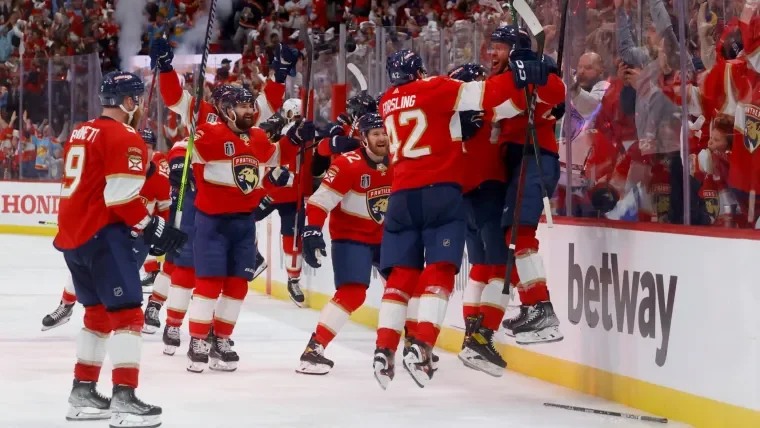
A Night in Carolina That Refused to End
The 2026 Stanley Cup playoffs are barely a week old, and they have already produced the kind of overtime chaos that makes postseason hockey unlike anything else in professional sports. In a first-round matchup between the Ottawa Senators and the Carolina Hurricanes, what appeared to be a decisive Carolina victory in the first overtime period was overturned when the goal was waved off on review. The drama compounded when Hurricanes were awarded a penalty shot — only for Ottawa goaltender Linus Ullmark to deny it. After a full 20 minutes of five-on-five overtime hockey with no goal scored, both teams retreated to their dressing rooms, the ice was resurfaced, and a second overtime period began. The game pressed on, a reminder of why playoff overtime is one of the most tension-filled formats in all of sports.
This kind of unbending, sudden-death format is not a quirk or an exception — it is the defining rule of NHL postseason hockey, and it is generating enormous interest among casual and devoted fans alike as the 2026 bracket heats up.
How NHL Playoff Overtime Actually Works
For viewers tuning in for the first time, the NHL playoff overtime system can seem almost severe in its simplicity: play until someone scores, no matter how long it takes.
The Basic Structure
When a game is tied after three regulation periods, both teams return to their locker rooms for a 15-minute intermission. During that time, arena crews resurface the ice. When play resumes, it is five-on-five hockey — the same configuration as regulation — played in full 20-minute periods. There are no television timeouts during overtime, adding to the breathless, uninterrupted quality of the action.
If no goal is scored by the end of the first overtime period, the 15-minute intermission repeats, the ice is cleaned again, and a second overtime begins. This cycle continues indefinitely until a goal is scored. The moment the puck crosses the line, the game is over — sudden death for the losing team, ecstasy for the winner.
Key Rules That Often Surprise Viewers
Several details distinguish NHL playoff overtime from the regular season and from other sports. First, there are no shootouts. During the regular season, a five-minute three-on-three overtime period precedes a skills competition if no one scores. In the playoffs, that option does not exist. The three-on-three format is also eliminated entirely; it is five-on-five from the moment overtime begins.
Penalty time carries over. If a player was assessed a minor penalty near the end of regulation — or late in a previous overtime period — the remaining time on that infraction is active when the next period drops. This has led to power-play opportunities at the very start of overtime, creating immediate, high-stakes situations.
The home team retains last change privileges after every stoppage in play, meaning the home coach can see which skaters the visiting team sends out before committing his own lineup. The visiting team must put its players on the ice first. When it comes to which end of the ice each team attacks, the home team begins the first overtime shooting at the same end it used during the second period — mirroring the regular-season setup — and teams alternate attacking ends with each subsequent overtime period.
Finally, the NHL Situation Room reviews every goal to confirm it was legally scored, a process that can briefly suspend the celebration before officially confirming the outcome, as Hurricanes fans experienced painfully in the game against Ottawa.
The 2026 Playoffs: Already a Theater of Overtime
Through the first week of the 2026 Stanley Cup playoffs, the postseason has already produced four overtime games, including one that extended to a second overtime period. That rate is consistent with recent postseason history and suggests the bracket could be heading toward another extended run of late-night drama.
Last Year Set the Bar High
The 2025 playoffs offered a compelling recent benchmark. Across 86 total games, 20 went to overtime — roughly 23 percent of the postseason. Twelve of those overtime games occurred in the first round alone, while five came in the second round. Even the Stanley Cup Final, in which the Florida Panthers were considered dominant against the Edmonton Oilers, saw three of its six games extend past regulation, including one double-overtime contest.
Perhaps the most memorable overtime moment of the 2025 playoffs came in Game 7 of the Winnipeg Jets versus St. Louis Blues first-round series. Winnipeg had been in dire straits, falling behind late in the third period before scoring two goals to force overtime. The Jets then delivered the series-ending goal in double overtime — a sequence that encapsulated everything that makes playoff hockey uniquely compelling.
This year's postseason is unfolding against that backdrop, with fans and analysts already watching closely to see which series will produce its own defining overtime chapter. For readers following multiple playoff sports this spring, the contrast with the NBA's format is stark — as the 2026 NBA Playoff Bracket: Upsets, Injuries and Momentum Shifts Define a Wild First Round demonstrates, basketball has its own brand of late-game tension, but nothing quite mirrors the open-ended, sudden-death marathon of NHL overtime.
The Longest Games in NHL History: A Benchmark for Endurance
The rules that govern 2026 playoff overtime are the same rules that produced some of the most extraordinary athletic endurance events in professional sports history. Understanding those records provides essential context for just how extreme playoff hockey can become.
Six Overtimes and Beyond
The longest game in NHL history took place on March 24, 1936, in the league's semifinals. The Detroit Red Wings and the Montreal Maroons played for 116 minutes and 30 seconds of overtime — the equivalent of nearly six full regulation periods of additional hockey — before Mud Bruneteau finally scored to give Detroit a 1-0 victory. That game remains the gold standard of endurance in North American professional team sports.
The second-longest game came three years earlier, on April 3 (or April 4 by some accounts), 1933, when the Toronto Maple Leafs defeated the Boston Bruins 1-0 in six overtime periods spanning 104 minutes and 46 seconds. Ken Doraty scored the decisive goal.
The most recent entry among the five longest games in NHL history came on May 4, 2000, when Keith Primeau scored in the fifth overtime to give the Philadelphia Flyers a 2-1 victory over the Pittsburgh Penguins in the conference semifinals — 92 minutes and 1 second of extra time. Tampa Bay's Brayden Point scored after 90 minutes and 27 seconds of overtime on August 11, 2020, in a five-overtime game against the Columbus Blue Jackets during the pandemic-era bubble playoffs.
In more recent memory, the Florida Panthers defeated the Carolina Hurricanes in four overtimes in 2023, the last time a game extended that far. As of the 2026 playoffs, no game has yet approached that length, but the Senators-Hurricanes series has already shown that the potential for marathon hockey is very much alive.
Why the Format Generates Such Intense Fan Engagement
The NHL's decision to maintain full five-on-five, unlimited-duration overtime in the playoffs is a deliberate philosophical stance. League officials and team executives have consistently argued that the stakes of postseason hockey demand resolution through skill and endurance, not through a skills competition or an abbreviated format designed for entertainment convenience.
The result is a fan experience unlike almost any other in sports. Late-night overtime periods routinely produce some of the highest television ratings of the NHL season. Social media engagement spikes dramatically during overtime, as fans who might have tuned out during a lopsided game find themselves riveted to a tied contest that could end at any moment — or could stretch into the early hours of the morning.
For players, the physical and mental toll is equally severe. Skating a full additional 20-minute period, then another, then potentially a third, requires conditioning that goes well beyond what most regular-season preparation accounts for. Goaltenders in particular face extraordinary demands, facing dozens of additional shots over multiple overtime periods without any of the scheduled rest breaks that television timeouts provide during regulation.
Broader Implications: What Overtime Moments Define Dynasties
Overtime goals in the Stanley Cup playoffs carry a weight that extends far beyond the immediate series. They become career-defining moments for the players who score them and foundational memories for the fan bases that witness them. The culture of NHL overtime — its brutality, its unpredictability, its refusal to accommodate the clock — is inseparable from how the sport defines greatness.
The 2026 postseason is still in its earliest stages, but the Senators-Hurricanes saga has already signaled that this year's bracket will not be short on memorable moments. With the format guaranteeing that no game can end in a tie and no champion can be crowned through anything less than an actual goal, every overtime face-off carries the weight of everything that has come before it — from Mud Bruneteau in 1936 to whoever scores the next winner in 2026.
As the bracket narrows and the pressure intensifies over the coming weeks, the overtime format will continue to serve as the ultimate stress test for every team still standing. The rules have not changed. The stakes, as always, keep rising.
Comments