
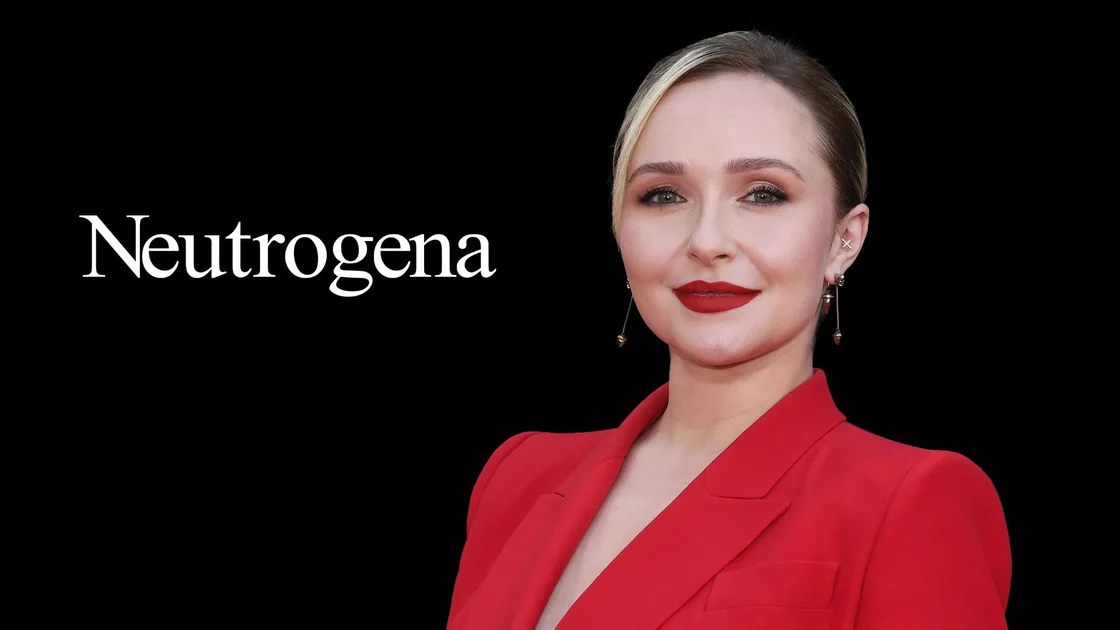
Neutrogena Under Siege: Boycott Calls Intensify After Hayden Panettiere's Death
Less than 48 hours after the sudden death of actress Hayden Panettiere, the skincare giant Neutrogena has found itself at the center of a growing social media firestorm. Fans, celebrities, and mental health advocates are flooding the brand's platforms with demands for accountability, reviving a controversy that first erupted in May when Panettiere's memoir detailed her abrupt firing after discussing her postpartum depression. The backlash has escalated into widespread calls for a boycott, and stock prices for Neutrogena's parent company, Kenvue Inc., took an immediate hit.
As of Wednesday morning, Neutrogena has remained silent, issuing no public statement regarding Panettiere's death or the resurfaced allegations. NBC News reported reaching out to the company on Wednesday without receiving a response, and The Independent's requests for comment have also gone unanswered. This deafening silence has only amplified the outrage, with critics accusing the brand of prioritizing its image over compassion.
The Controversy Reignited
Panettiere, who died over the weekend at her apartment in Greenville, South Carolina, at age 36, served as the face of Neutrogena for approximately a decade, from 2005 to 2015. In her posthumously spotlighted memoir, This Is Me: A Reckoning, she alleged that the company terminated her contract after she publicly spoke about her battle with postpartum depression (PPD) following the 2014 birth of her daughter, Kaya. On the May episode of the Jay Shetty Podcast, Panettiere described her disbelief, recalling that her representative told her her comments had breached the contract's morality clause.
“Of all the things to... that they would fire me over, this was the last thing that I thought they would ever fire me over,” she said in that interview, which has now been viewed millions of times since her death.
The initial backlash in May was significant but largely contained to social media. Her untimely death, however, has transformed that criticism into a full-blown crisis. A Reddit post proposing a boycott in Panettiere's honor has garnered more than 5,000 upvotes, while an X post declaring “Neutrogena hates women!” has received over 34,000 likes. Hundreds of comments have been left on Neutrogena's official accounts, with Real Housewives of New York City's Carole Radziwill directly telling the brand: “You deserve the hate. #hayden.”
Stock Impact and Financial Repercussions
The boycott calls have moved beyond digital outrage into tangible financial consequences. The New York Post reported that shares of Kenvue Inc., which owns Neutrogena along with Tylenol, Band-Aid, and Aveeno, fell by more than two percent on Monday, August 18, in the wake of the backlash. While the stock appeared to begin recovering by Wednesday morning, the initial drop signals that investors are taking the reputational risk seriously. PR expert Molly McPherson, speaking on NBC News Now, noted that this is a moment requiring far more than a standard corporate response.
“Now what they need to see is action. This is not a time for a press release,” McPherson said. “This is the case of the story that they can no longer make good to the person who talked about this in May 2026. Now it is almost too late, and the silence is deafening here. The social media commentary is being written, this narrative is being written by the public, and the public is not giving them a break.”
The Backstory: Panettiere's Career and Mental Health Advocacy
Hayden Panettiere was not just a skincare model; she was a beloved actress known for her fierce, outspoken nature. She rose to fame as a child actor, but it was her role as Claire Bennet on the hit NBC series Heroes that made her a household name. She later starred in Nashville and reprised her iconic role in Scream 4, a part she landed, as The Independent noted, because of her warrior-like spirit.
In 2014, after the birth of her daughter, Panettiere began experiencing severe postpartum depression. She sought treatment and bravely went public with her struggle in 2015, appearing on Live! with Kelly and Michael to discuss the realities of PPD. At the time, she was considered a pioneer for speaking openly about a condition that many celebrities had hidden. The decision to share her story was widely praised by mental health professionals and mothers across the country.
But according to Panettiere's memoir, that openness came at a professional cost. She wrote: “Neutrogena canceled my long-standing contract, and it was yet another blow in a year that had given almost nothing else.” The implication that a skincare brand would punish an actress for speaking about a legitimate medical condition struck a nerve, and it is that nerve that has now been exposed to the world again.
The Morality Clause Question
Central to the controversy is the notion of a morality clause. These clauses, standard in many celebrity endorsement contracts, allow brands to terminate agreements if the talent engages in behavior deemed immoral or likely to harm the brand's image. Panettiere's representatives allegedly argued that her PPD remarks constituted a breach of this clause. Critics, however, see this as a deeply misguided interpretation that stigmatizes mental health and punishes women for being honest.
The case has become a touchstone for broader conversations about how corporations treat mental health disclosures. The fact that Panettiere had been diagnosed with postpartum depression, a condition affecting one in seven new mothers, makes the alleged firing seem especially callous. The public's reaction suggests that consumers are no longer willing to accept such corporate behavior without consequence.
A Crisis in the Age of Consumer Activism
This is not an isolated incident. The Panettiere boycott joins a growing list of consumer-driven campaigns that have forced major corporations to change their practices. Just as the Meta Glasses backlash highlighted privacy concerns, and the Channel 4 ADHD documentary prompted an Ofcom complaint for allegedly spreading misinformation, the Neutrogena case reflects a broader trend where public sentiment can quickly transform into economic pressure.
What makes the Neutrogena situation unique is the involvement of a celebrity's death. Panettiere had recently spoken publicly about her struggles during her promotional tour for the memoir. Her death, which remains under investigation with no cause determined, has given the boycott movement an emotional urgency that is difficult for any brand to counter.
PR expert McPherson suggested that simply issuing an apology would do little to quell the anger. “What they need to see is action. This is not a time for a press release,” she reiterated. She suspects Neutrogena will need to make earnest commitments to maternal health programs or mental health charities to demonstrate genuine change. “You could never plan for this. But you can always plan to be empathetic.”
The Power of Social Media Memory
One of the most striking aspects of the backlash is how quickly the public has resurrected Panettiere's own words from just three months ago. The Jay Shetty podcast episode has become a rallying point, with clips circulating widely. Users are pairing her voice with images of her smiling for Neutrogena ads, creating a devastating contrast between the brand's past use of her image and its alleged treatment of her when she needed support.
This ability of social media to keep stories alive has fundamentally changed the dynamics of crisis management. In the past, a brand might have been able to wait out a controversy. Today, the digital memory is permanent, and the outrage is scalable. The Independent reported that the company's official social media accounts have been inundated, with hundreds of comments on each post. The hashtag #BoycottNeutrogena trends periodically, and each new share reignites the conversation.
What This Means for Corporate Responsibility
The Panettiere case is likely to become a case study in business schools and public relations courses for years to come. It demonstrates that a decade-old decision, made behind closed doors, can come back to haunt a company if it runs counter to the prevailing ethical standards of the time. In 2015, discussing postpartum depression in public was still relatively rare. By 2026, it is viewed as a courageous act of advocacy. What a brand once saw as a risk to its image, consumers now see as a badge of honor.
The boycott also underscores the increasing importance of mental health in consumer decision-making. A 2026 survey by a leading consumer advocacy group found that 68% of consumers said they would avoid brands they perceive as unsupportive of mental health issues. Neutrogena's parent company, Kenvue, has yet to publicly address the boycott, but if the stock dip continues, shareholders may start demanding a response.
The Silent Treatment
Perhaps the most damaging aspect of Neutrogena's current strategy is its silence. As of this writing, the company has not issued a statement mourning Panettiere. This is particularly jarring given her long association with the brand. Even competitors and former collaborators have spoken publicly about her death, but Neutrogena, a brand whose name is synonymous with her image in the mid-2000s, has not said a word.
The phrase “the silence is deafening” has been repeated across social media and news headlines, encapsulating the public's frustration. It speaks to a fundamental expectation that when someone who helped build your brand dies, you acknowledge them, especially if that person publicly accused you of mistreating them. The lack of response is being interpreted as guilt, and it fuels further speculation and anger.
A Broader Movement: From Cancel Culture to Accountability
While some have labeled this a case of cancel culture, the more accurate description is consumer accountability. The public is not simply trying to destroy a brand; they are demanding that it acknowledge its past actions and take meaningful steps to prevent similar situations in the future. Calls for Neutrogena to donate a portion of profits to postpartum depression research are common, as are requests for a formal apology and the reinstatement of a mental health advisory board.
The parallels to other recent controversies are instructive. The LIV Golf saga, where Saudi funding was cut, showed that financial backers can flee when reputations are at stake. The deportation hearings controversy revealed how public opinion can shift quickly when policies are perceived as unjust. And the Messi grief story demonstrated how personal pain, when handled with empathy, can deepen public affection. Neutrogena is currently failing that empathy test.
The Future of the Brand
As the boycott gains traction, the question becomes: can Neutrogena recover? History suggests that brands can survive consumer boycotts if they respond with humility and action. However, the longer they remain silent, the harder it will be to rebuild trust. Panettiere's death has given the controversy a finality that makes it impossible to resolve with a simple apology. The company cannot, as McPherson noted, “make good” to Panettiere anymore.
The best case scenario for Neutrogena would be to publicly mourn Panettiere, acknowledge her allegations, and announce a substantial donation to a maternal mental health organization. But even that may not be enough. Many consumers have already vowed never to purchase Neutrogena products again, and those pledges are not easily reversed.
For now, the brand is in a reactive mode, watching its stock and reputation decline. The world is watching how it responds. The story continues to develop, but one thing is clear: Hayden Panettiere's voice, even in death, is shaping the corporate conversation around mental health and ethics. Her final message, shared just months ago, has become a powerful posthumous testimony.
Comments