
NBA Senior VP Addresses Austin Reaves Confrontation with Referee
McCutchen Calls Interaction 'Out of the Ordinary' but Professional
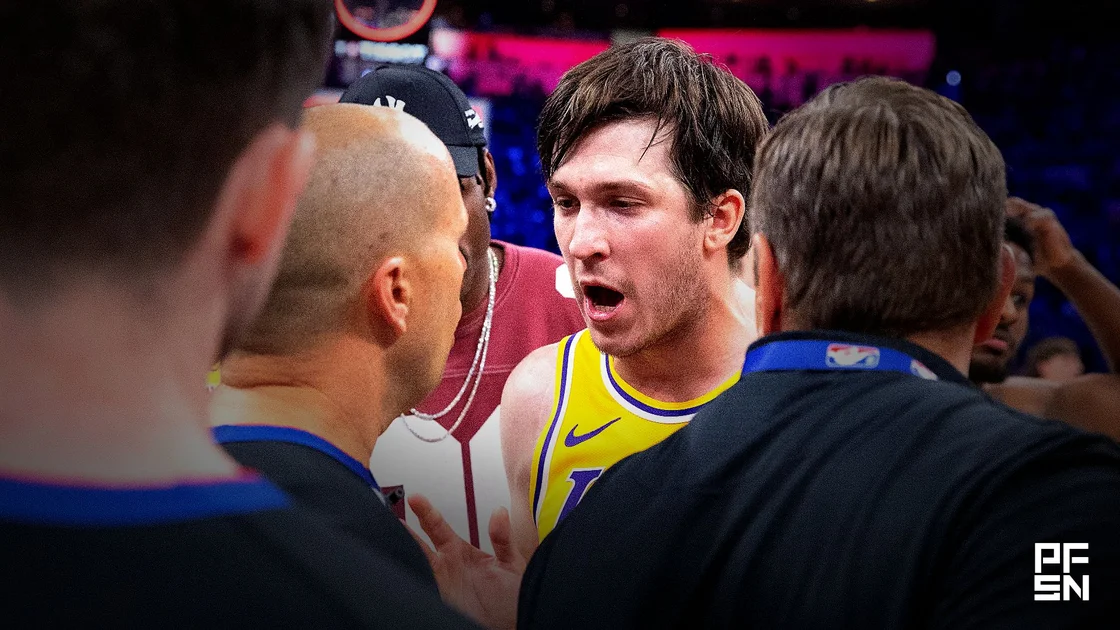
NBA Senior Vice President of Referee Development Monty McCutchen has weighed in on the heated confrontation between Los Angeles Lakers guard Austin Reaves and referee Scott Goble following Game 2 of the Lakers' first-round playoff series against the Oklahoma City Thunder. In comments obtained by ESPN, McCutchen acknowledged the unusual nature of the exchange but stopped short of criticizing either party, stating that the interaction was ultimately professional and within acceptable bounds.
"We teach our officials to go to center court so we’re not leaving at the same time when emotions can run high," McCutchen said. "Most certainly, we want interactions to be professional there. I do think that had a look to it, but there wasn’t a ton of profanity or anything like that. It was out of the ordinary, there’s no doubt about that."
McCutchen praised both Reaves and Goble for maintaining composure. "Austin was in control," he added. "John did a good job of letting him hear his peace. There were a couple of plays at the end of that game that lived on the nuances of our rules… I can understand in the passion of that moment the disagreement from a team. If there is meaningful conversation after and it’s not out of control, and in this situation it was not, we want to make sure on our end we are not defensive and willing to listen."
The incident occurred after a jump-ball situation late in the fourth quarter, a moment that has become a flashpoint in the series as the Lakers now face a 2-0 deficit heading into Game 3 in Los Angeles.
Reaves Explains His Side of the Dispute
Following the game, Reaves offered his own account of what transpired. He described a sequence during a jump ball between himself and Thunder guard Cason Wallace. Reaves claimed he was attempting to gain a positional advantage by switching to the other side of the circle when Goble turned and yelled in his face.
"I felt like I was respectful to all of them all night," Reaves told Spectrum Sportsnet after the game. "A million times in the past, I've said way worse stuff. And when we were doing the whole tip ball and they were switching spots, I wanted to get on the other side because they had a guy on the other side, was just trying to keep an advantage. And he turned around and yelled in my face… I just thought it was disrespectful."
The confrontation has drawn significant media attention, partly because it is rare to see the league's referee development office publicly comment on a specific in-game interaction, especially one that took place after the final buzzer.
Why the Confrontation Matters
The Stakes for the Lakers in a Must-Win Game 3
The Reaves-Goble incident is not an isolated moment of frustration. It comes at a critical juncture for the Lakers, who trail the defending champion Thunder 2-0 in the first-round series. After a regular season that saw the Lakers finish seventh in the Western Conference, the team has struggled to contain Oklahoma City's balanced attack.
Game 2 was particularly painful for Los Angeles. Several controversial calls in the final minutes—including the jump-ball sequence involving Reaves—have left players and fans questioning the officiating. The Lakers were penalized for a double foul on the jump ball, a rare call that effectively ended their chance to tie or take the lead in the closing moments.
The stakes could not be higher. Historical NBA data shows that teams trailing 2-0 in a best-of-seven series have a grim record, with only about 7% of such teams winning the series. For the Lakers, a loss in Game 3 would effectively end their season.
The emotional weight of the situation was evident in Reaves' postgame comments. The guard, who has emerged as a key contributor alongside LeBron James and Anthony Davis, has been targeted by Thunder defenders throughout the series. His frustration boiled over when he felt a throwback to past confrontations with officials, which he had previously navigated without incident.
A Pattern of Officiating Controversies
This is not the first time officiating has come under scrutiny in the 2026 NBA Playoffs. Earlier in the postseason, several other series featured controversial calls, including a disputed goaltending decision in the Eastern Conference first round. The league has faced increasing pressure to improve consistency in officiating, with players and coaches alike calling for greater accountability.
McCutchen's comments suggest the league is aware of these perceptions but is trying to strike a balance. By acknowledging the 'out of the ordinary' nature of the Reaves confrontation while also defending the official's professionalism, the NBA is attempting to manage a narrative that often pits competitive passion against the need for orderly game management.
The situation also highlights the delicate relationship between players and referees. Reaves, a relatively young star who has risen from undrafted free agent to a central figure on a title contender, now finds himself at the center of a league-wide discussion about how officials communicate with players.
Broader Implications for the NBA
The Evolution of Player-Official Relations
The Reaves-Goble incident is emblematic of a broader trend in the NBA: the increasing scrutiny of how referees interact with players, especially during high-stress playoff moments. In recent years, the league has taken steps to improve communication, including the introduction of the 'Referee Development' program that McCutchen leads.
The goal is to de-escalate tensions rather than inflame them. McCutchen's defense of Goble—stating that the official did a good job letting Reaves be heard—suggests that the league prioritizes open channels of communication, even when emotions run high.
This philosophy marks a departure from the past. Historically, officials were trained to maintain strict authority and avoid extended conversations with players. The modern approach is more collaborative, but it carries risks. If a player feels disrespected, as Reaves did, the system can backfire.
The NBA's willingness to publicly analyze such interactions is itself a shift. By having the Senior VP of Referee Development speak on the record, the league signals that it is taking the issue seriously and that transparency is part of the solution.
The Impact on the Thunder-Lakers Series
Beyond the broader conversation, this incident could have a direct impact on the series. If the Lakers feel aggrieved by the officiating, they may channel that frustration into a more aggressive performance in Game 3. Alternatively, the distraction could undermine their focus.
For the Thunder, the situation is a welcome distraction from their own performance. Oklahoma City has been dominant at home, and the team has shown resilience in the face of physical play. The confrontation also gives the Thunder a psychological edge, as they can frame themselves as the disciplined team that avoided such controversies.
As the series shifts to Los Angeles, the atmosphere at Crypto.com Arena is expected to be electric. Lakers fans will likely be vocal in their support for Reaves and their displeasure with the officials. Whether that energy lifts the Lakers or contributes to further tension remains to be seen.
What the Future Holds
Can the Lakers Overcome the Odds?
The Lakers now face a must-win Game 3, and history is not on their side. However, the team has shown resilience before. LeBron James, now in his 22nd season, has repeatedly defied expectations. The question is whether the supporting cast, including Reaves, can rise to the occasion.
If the Lakers lose on their home court, the series will effectively be over. But if they win, the momentum could shift. The small sample size of playoff history shows that teams down 2-0 who win Game 3 often force a Game 5, and occasionally more.
Injuries and fatigue have already taken a toll on both rosters. The Thunder are relatively healthy, while the Lakers have been dealing with minor ailments throughout the series. The 2026 playoff landscape is crowded, with several series already tightly contested in both conferences. The Lakers are not the only team dealing with officiating controversies, but they are certainly one of the most high-profile.
The Role of the Referee Development Program
Moving forward, the NBA's Referee Development program will likely use the Reaves-Goble incident as a case study. McCutchen's comments indicate that the league views the interaction as a successful example of conflict de-escalation, even if it appeared confrontational from the outside.
The program has been praised for improving communication between officials and players, but critics argue that it has not gone far enough. The league continues to face questions about consistency, especially in playoff games where margins are razor-thin.
McCutchen's role is to bridge the gap between the referees and the public. By speaking candidly about incidents like this one, he provides a rare glimpse into the league's internal thinking. This transparency is valuable, but it also opens the NBA up to further scrutiny.
For fans, the bottom line remains: the Lakers need to win. The Reaves confrontation will be remembered as a footnote if Los Angeles goes on to win the series—or as a symbol of a season that slipped away if they don't.
A Trending Topic in Sports Media
The 'wallace bell pit road confrontation'—a phrase that merges elements from two different sports stories—has become a viral search term. While the original reference points to a NASCAR incident between Chase Elliott and a pit road official, the term has been co-opted by basketball discussions. This cross-sport confusion highlights how quickly news can blur in the digital age.
As the NBA playoffs continue, the conversation around player-official dynamics is unlikely to fade. The Reaves-Goble incident is just one of many such moments that will be analyzed and debated in the coming weeks. For now, the league has spoken: the interaction was not out of control, and both parties behaved professionally. Whether that assessment stands up to public scrutiny is another matter entirely.
For more sports analysis and updates, check out our coverage of the latest playoff action and the ongoing WNBA season, including Dominique Malonga's standout performance. As the Lakers prepare for Game 3, all eyes will be on how they respond to adversity.
The 2026 NBA season has been one of the most competitive in recent memory. With upsets, controversies, and storylines unfolding daily, the league remains the focus of the sports world. Whether the Lakers can recover from their 2-0 hole will be one of the defining narratives of this postseason.
Conclusion: A Defining Moment for Reaves and the League
Austin Reaves has established himself as a cornerstone of the Lakers' future. His confrontation with Scott Goble is not just a footnote—it's a test of his leadership under fire. How he responds in Game 3 will shape the narrative of his career moving forward.
For the NBA, the incident is a reminder of the fine line between passion and professionalism. The league's willingness to discuss it openly suggests a mature approach to a perennial problem. But talk is cheap. What matters is whether the Lakers can convert their frustration into victory.
Game 3 tips off tonight in Los Angeles. The basketball world will be watching.
Comments