
A Midnight Tweak That Launched a Thousand Trade Rumors
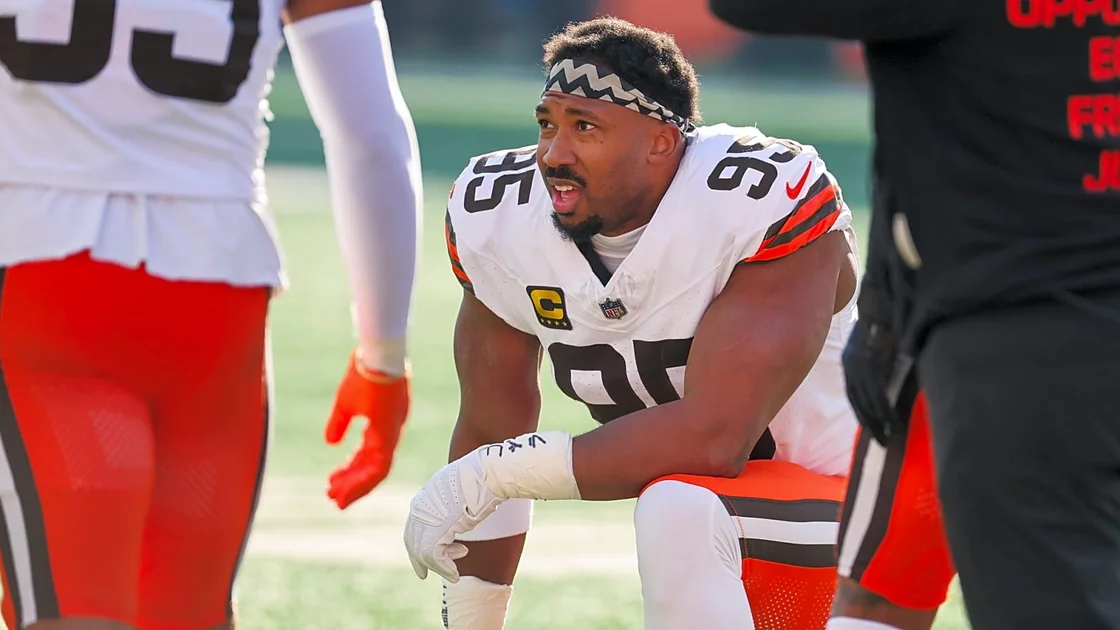
On March 25, ESPN's Field Yates reported that the Cleveland Browns had quietly adjusted the language in Myles Garrett's contract, deferring a sizable 2026 option bonus from March until early September. The word "trade" never appeared in Yates' original report. It didn't need to. Within hours, the NFL media world was flooded with hypotheticals, blockbuster scenarios, and pointed questions about why one of the league's most decorated pass rushers — and his team — would agree to such an unusual financial arrangement.
The Browns' answer, delivered repeatedly by general manager Andrew Berry, has been unequivocal: Myles Garrett is going nowhere. Berry has insisted the restructure had nothing to do with facilitating a trade, and that Garrett remains a cornerstone of the franchise — a career Brown destined for Canton. But as the 2026 NFL Draft approaches and the volume of speculation refuses to die down, a growing chorus of insiders and beat reporters are openly questioning whether Berry's public statements reflect the full picture.
Why the Contract Modification Has Everyone Talking
What Actually Changed — and Why It Matters
Contract analyst Jason Fitzgerald of Over The Cap described the move as "pretty bizarre," noting that the restructure defers salary to Garrett each year and effectively opens a trade window annually — except that Garrett holds a no-trade clause, meaning any deal would require his consent. Crucially, the tweak provides no immediate salary cap relief for Cleveland. What it does do is convert a heavily player-friendly deal into something more structurally aligned with how the Browns typically construct contracts under Berry, while quietly creating future mechanisms for an exit.
Two prominent Cleveland beat reporters from The Athletic, Zac Jackson and Jason Lloyd, were less circumspect than Berry in their assessment. Lloyd pointed out that deferring payment from March to September serves no obvious financial benefit for a player of Garrett's wealth, asking pointedly: "What's in it for him to delay payment?" Jackson went further, stating flatly that "the payment delay keeps the door open" to a trade, and speculating that a serious offer from a contender may already be in the background.
The Numbers That Complicate an Immediate Deal
Despite the swirling speculation, the financial mechanics make a pre-draft trade extremely difficult. Trading Garrett before June 1 would accelerate a $17.4 million dead-cap hit, nearly wiping out Cleveland's approximately $21 million in available cap space — the money the team needs to sign its incoming rookie class ahead of Todd Monken's first training camp as head coach. That logistical reality has led some analysts to argue that much of the current trade chatter is premature at best.
ESPN insider Dan Graziano pushed back on the trade narrative directly, telling viewers on Get Up that there is no real impetus for a deal. In fact, Graziano argued it is more likely that Garrett receives another contract bump from the Browns this offseason than that he gets traded at any point in 2026.
The Tension Behind the Official Messaging
Even if a trade is not imminent, there are unmistakable signs of friction between Garrett and the Browns organization. Garrett was a vocal advocate for Jim Schwartz to be named head coach; the Browns hired Todd Monken instead. As of mid-April, Garrett and Monken have not met face-to-face, an absence that has not gone unnoticed. ESPN analyst Kevin Clark, appearing on Get Up, raised visible concern about the dynamic, suggesting the end of Garrett's tenure in Cleveland may be closer than the organization's official line implies.
The broader backdrop makes those concerns easy to understand. Garrett has been the NFL's best defensive player for several seasons running — he holds the single-season sack record and, memorably, set the single-game sack record this past season — all while the Browns won just five games. The 2024 and 2025 seasons combined for 26 losses, a brutal stretch that has accelerated calls for a full rebuild. Some analysts have argued, with real logic, that trading Garrett now while his value is at its peak could accelerate that rebuild dramatically, potentially returning multiple first-round picks and starting-caliber players in a single transaction.
Bleacher Report's Gary Davenport sketched out one such scenario involving the Los Angeles Rams, in which Cleveland would receive the No. 13 pick in the 2026 draft, a 2027 first-rounder, and edge rusher Byron Young — a package that could theoretically net the Browns four Week 1 starters depending on how Berry deployed the picks.
What This Changes — and What It Reveals About Modern NFL Roster Management
The Myles Garrett situation is, at its core, a case study in the impossible tension franchises face when they build around elite players while struggling to build around them competitively. Garrett signed a massive extension to stay in Cleveland. He then watched two more seasons evaporate. Now a quiet contract restructure — the kind of administrative move that would barely register in another city — has become a Rorschach test for how people interpret the Browns' intentions.
What is clear is that both sides took a deliberate step to make a future trade structurally easier, even if neither is publicly committing to that outcome. In a league where front offices increasingly treat roster construction as a long-horizon financial exercise, that kind of optionality has real value. Whether or not Garrett is ultimately moved in 2026, the Browns have signaled that no outcome is entirely off the table — and that signal alone is significant. In the NFL, keeping doors open is often the first step to walking through them.
Comments