
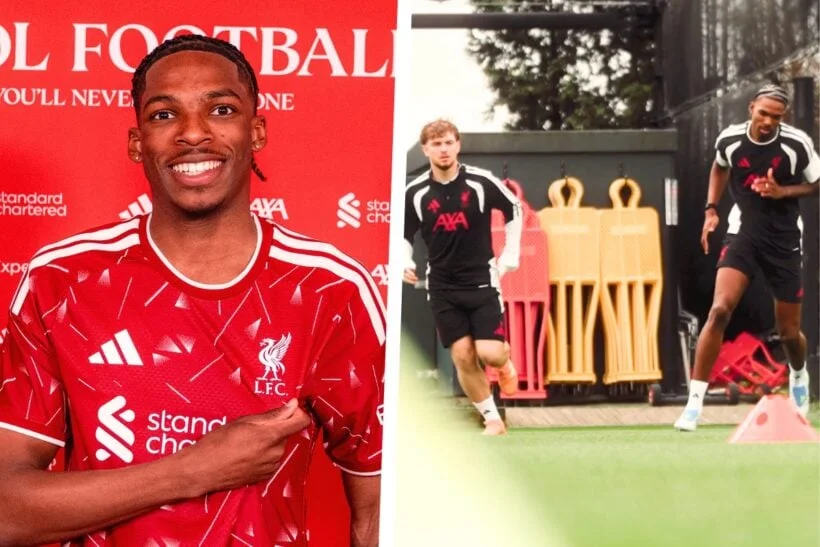
Super Eagles Star Moses Simon Admits Regret Over Failed Liverpool Transfer and the Mental Toll It Took
Nigerian international and Paris FC winger Moses Simon has broken his silence on one of the most pivotal moments of his career — the collapse of a proposed move to Liverpool in 2018. In a candid interview with Urban Dwell Sport, Simon acknowledged that the failed transfer triggered a deep psychological decline, leading him to deliberately underperform at Belgian club KAA Gent in a misguided attempt to force an exit.
Simon, now 30 and a veteran of nearly 100 appearances for the Super Eagles, revealed that Liverpool, under Jurgen Klopp, had submitted a £10 million offer for his services ahead of the 2018/19 season. The deal ultimately fell through, and Liverpool instead signed Xherdan Shaqiri from Stoke City. The Nigerian winger admitted that the rejection sent him into a spiral of frustration and self-sabotage.
"The second year [at Gent], I was supposed to go to Liverpool," Simon said. "It didn't work. In my head, I was like: 'Is it the agent or the club? I don't want to play.' So I was putting it in my head: 'Whether I play or I don't, I don't care.'"
Simon confessed that he deliberately reduced the quality of his performances, believing that if he stopped playing well, Gent would be forced to sell him. "I [thought] if I don't play, the club will find a way to quickly sell me," he explained. "The club bought me for €1 million (£852,000), but after one year, they wanted €25 million (£21.3 million)."
A Dream Transfer That Never Materialized
Simon’s trajectory could have been vastly different. Before the Liverpool interest, he had attracted attention from several Premier League clubs including Tottenham Hotspur, Brighton & Hove Albion, Fulham, and Hull City, as well as French side Lyon. The winger was at the peak of his powers in Belgium between 2015 and 2018, but the mounting speculation and failed moves began to weigh heavily on him.
During that period, Simon’s form suffered significantly. He acknowledges that between 2016 and 2018, his performance levels dropped because his mind was preoccupied with securing a move to England. He described this as the single greatest regret of his professional career, a mistake he wants young players to learn from.
"Yes, I have [a regret]. And this is something I will share with young players, the younger generation. My regret as a professional player," Simon said. "Between 2016 and 2018, my form declined because I was focused on making a transfer. Liverpool expressed interest in signing me, along with Hull City, Fulham, Brighton, Tottenham, and Lyon."
Simon’s story is a cautionary tale about the dangers of allowing transfer speculation to derail a player’s focus. At the time, he was a rising star in the Belgian league, but the constant media links and failed negotiations created an environment of anxiety and disillusionment.
The £10 Million Bid That Changed Nothing
Liverpool’s reported £10 million bid in 2018 was seen as a serious offer, but Gent refused to lower their valuation. The Belgian club had bought Simon for just €1 million a year earlier and demanded €25 million after his breakout season. The gap was too wide, and Klopp’s side moved on to other targets, including Shaqiri, who joined for £13 million.
Simon now reflects on that period with a mixture of resignation and regret. He admitted that he was not mentally prepared to handle the disappointment. "I was putting it in my head: 'Whether I play or I don't, I don't care.' I thought if I don't play, the club will find a way to quickly sell me," he repeated, underscoring his flawed logic.
The collapse of the Liverpool move had a domino effect on his relationship with Gent. He felt trapped by the club’s valuation and believed that only a dramatic decline in form could force a departure. That strategy backfired, leaving him stuck in a situation that harmed his career momentum.
Tribalism Allegations: A Separate Painful Chapter
In a separate but equally revealing interview, Simon opened up about an earlier career setback that he attributes to tribal discrimination. He alleged that he was denied a contract by NPFL champions Enugu Rangers because he is not Igbo. Simon, who was born in Jos and developed at GBS Academy, said he trained with the club for three months before being overlooked in favor of a player who arrived a week later.
"I went to Enugu Rangers and trained with them for three months. I never told someone these stories. It was the first time. But it is a disgrace. That year I was dropped because I was not Igbo," Simon alleged. "I was there for three months and a guy came. I forgot his name. He's an Igbo guy. He just came one week and they signed him."
Simon recounted how he was often referred to as 'Onye Hausa' because of his northern Nigerian origin. The experience, he said, was one of the most disappointing moments of his football journey, though it ultimately did not derail his career. He went on to secure a move to Ajax in 2013, then to Belgium, Spain, and France, making over 400 club appearances in Europe.
A Career That Could Have Been Different
Despite the setbacks, Simon has carved out a respectable career. After leaving Gent, he moved to Levante in Spain, then on to Nantes in France, and most recently joined Paris FC in Ligue 1 ahead of the 2026/27 season. He remains a key figure for the Super Eagles, with his pace and dribbling ability still posing problems for defenders.
But the question lingers: what if Liverpool had signed him? Could Simon have become a regular at Anfield under Klopp? The 2018 Liverpool team was on the cusp of greatness, having just reached the Champions League final. Klopp’s side needed depth in attack, and Simon could have provided an option on the wing. Shaqiri, while effective, never became a long-term starter. For Simon, the missed opportunity is not just about the club but about the stage. The Premier League remains the world’s most-watched league, and playing for Liverpool would have elevated his profile immeasurably.
Simon’s story is a reminder that a player’s career is shaped not only by talent but also by timing, negotiation, and mental resilience. The Nigerian winger’s honesty about his struggles is rare in a sport where players often project an image of unwavering confidence.
Broader Implications for Footballers
Simon’s experience highlights a systemic issue in football: the mental health challenges faced by players when transfers fail. Transfer windows are periods of intense speculation, and for players, the uncertainty can be debilitating. Many young footballers, especially those from developing nations, rely on moves to Europe to secure their financial future. When those moves collapse, the emotional fallout can be severe.
Simon’s admission that he deliberately underperformed is a stark warning to agents and clubs. It shows that players are not machines; they are human beings with emotions and vulnerabilities. The trend of clubs pricing players out of moves, as Gent did by demanding €25 million after paying just €1 million, can create a toxic environment. The player becomes a commodity, and his value on the pitch is tied to potential transfer fees rather than performance.
The transfer market, especially in the Premier League, has become a high-stakes game of poker. Clubs like Liverpool, with their vast resources, are often accused of triggering 'release clauses' or walking away from deals that do not meet their valuation. But for players like Simon, the effects are deeply personal.
What This Changes for Liverpool’s Transfer Legacy
Liverpool’s transfer business under Klopp was largely successful. The signings of Mohamed Salah, Sadio Mané, and Roberto Firmino transformed the club’s attack. Shaqiri, while not a star, contributed to the Champions League-winning campaign of 2018/19. Yet, the Simon deal is a reminder that even top clubs miss opportunities.
Simon’s regret is shared by many players whose moves fell through. But unlike some, he has been able to reflect and grow. "With age comes wisdom," he said, hinting that he now understands the importance of focusing on performance rather than speculation. He wants young players to learn from his mistakes: do not let transfer rumors dominate your mindset; stay concentrated on the game.
For Liverpool fans, Simon’s story is a footnote in a successful era. But for the player himself, it remains a pivotal moment. He wonders what might have been. As he enters the twilight of his career, Simon is at peace with his journey, but the 'what if' still lingers.
In a broader context, Simon’s story echoes a theme seen across football. The psychological impact of failed transfers is rarely discussed, but it is real. As the sport becomes more commercialized, clubs and agents must do more to support players through these difficult periods. The transfer window is not just a business transaction; it affects lives.
For now, Moses Simon continues to play for Paris FC and the Super Eagles, determined to end his career on a high note. His candidness about his past mistakes may help the next generation avoid the same pitfalls.
Conclusion: A Lesson in Resilience
Moses Simon’s career is a testament to resilience. From being rejected by Enugu Rangers due to perceived tribalism to missing out on a dream move to Liverpool, he has faced more than his share of disappointments. Yet he has persevered, achieving a successful career in Europe and representing his country with distinction.
His regret over the Liverpool transfer is not just about a missed opportunity; it is about how he handled it. The lesson for young players is clear: the transfer market is unpredictable, but your professionalism and performance should never waver. As Simon himself said, share the experience with the younger generation so they can learn without going through the same pain.
In the end, Simon’s story is human — a reminder that even elite athletes struggle with doubt and frustration. And that, perhaps, is the most valuable lesson of all.
Comments