
Morgan Rogers Transfer Saga: Buy-Back Clause Fuels £100m Premier League Battle
The future of Aston Villa and England star Morgan Rogers has ignited a fierce transfer tug-of-war this June, as conflicting reports over a secret buy-back clause held by Manchester City threaten to reshape the summer window for Arsenal and Manchester United. While some sources insist City can trigger an obscure repurchase option to bring the 23-year-old back to the Etihad, others—including the club’s own media—flatly deny any such mechanism exists.
What is clear is that Villa value their attacking midfielder at a staggering £100 million, a figure that would make Rogers one of the most expensive English players in history. The uncertainty over City’s alleged clause has sent shockwaves through the transfer market, leaving Arsenal, Manchester United, Chelsea, and Paris Saint-Germain scrambling for clarity as the World Cup approaches.
The Buy-Back Confusion
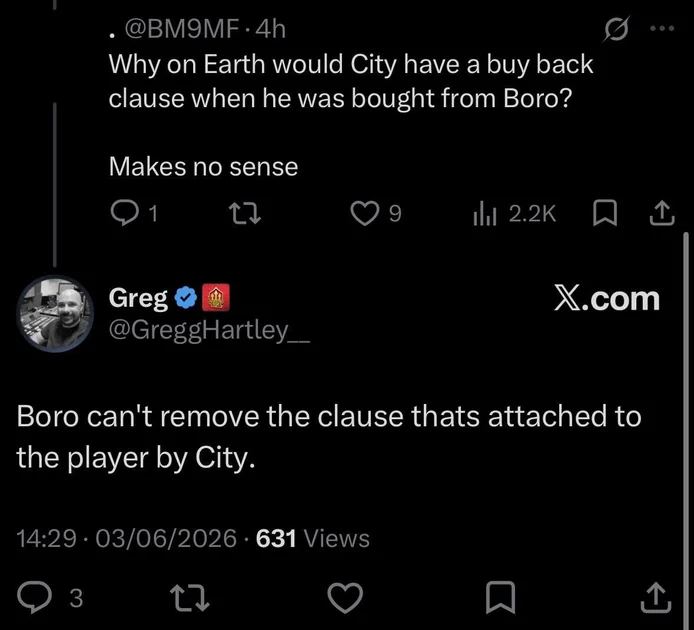
Transfer expert Ben Jacobs first dropped the bombshell on The United Stand this week, claiming that Manchester City hold a buy-back clause on Rogers—despite not having sold him directly to Aston Villa. “Man City have got a buyback clause there; they have held a conversation about potentially triggering that but nothing is advancing yet,” Jacobs revealed. The mechanism would be highly unusual: City sold Rogers to Middlesbrough for around £1 million in 2023, and the clause allegedly survived his subsequent £8 million move to Villa six months later.
However, multiple sources, including City Xtra and Yahoo Sports, have strongly refuted this. They argue that because Rogers was sold to Middlesbrough—not Villa—no buy-back clause was ever inserted into the deal. “Man City have no buy-back clause for Morgan Rogers as they sold him to Middlesbrough in 2023,” one report states. “The fact that the transfer was structured via Middlesbrough as an intermediary step means no such mechanism exists.”
This contradiction has thrown the saga into chaos. If City do hold a clause, they could potentially sign Rogers for a fraction of his market value, bypassing both Arsenal and Manchester United. If they don’t, they must join the open-market auction, paying Villa’s £100 million asking price or more.
Clubs in the Race
Arsenal have been the most consistent suitor, with Football London reporting that the Gunners are keen on adding Rogers to their Premier League-winning squad. The north London club won the top flight last season and reached both the Champions League and Carabao Cup finals, but are still looking to bolster their attack. Rogers is viewed as a long-term target capable of playing across the front line.
Manchester United, meanwhile, have identified the left-wing position as a priority this summer. According to Jacobs, “United are looking for a left winger and Morgan Rogers is one of the candidates.” The connection runs deep: Michael Carrick briefly coached Rogers at Middlesbrough, and Manchester United’s technical director Jason Wilcox previously worked with him at Manchester City’s academy. Chelsea and PSG also remain in the hunt, but the battle appears to be narrowing to a three-horse race between Arsenal, United, and the potential return of Pep Guardiola’s old protégé.
Villa’s Valuation and Stance
Aston Villa are in no rush to sell. Rogers is under contract until 2031, and the club’s hierarchy—led by Unai Emery—view him as a cornerstone of their project. Villa’s asking price of £100 million mirrors the fee they received for Jack Grealish when he joined Manchester City in 2021. That comparison is intentional, as Rogers has become just as indispensable. He scored 14 goals and provided 12 assists in all competitions last season, helping Villa win the Europa League and qualify for the Champions League.
Rogers himself is not pushing for a move. The Athletic reports that while he is open to a fresh challenge, he accepted Emery’s request to stay for at least one more season. He maintains a close relationship with the coaching staff and is grateful for the club’s role in his development. However, Villa’s willingness to sell may depend on the right offer. As Jacobs noted, “Aston Villa are prepared to sell before the tournament for the right offer.”
The Stakes: Why This Matters Now
The timing of this saga couldn’t be more critical. The summer transfer window opens in earnest this month, and with the 2026 World Cup kicking off in November, clubs are eager to finalize their squads before the tournament. Rogers is expected to be named in Thomas Tuchel’s England squad, having earned his first senior caps earlier this year. A strong World Cup performance could skyrocket his value even further, making a pre-tournament sale the most logical path for Villa.
For the buying clubs, landing Rogers would be a statement of intent. Arsenal’s attack, while potent, could use another dynamic creator to complement Bukayo Saka and Gabriel Martinelli. Manchester United’s need is even more acute—their left-wing production has been inconsistent since Marcus Rashford’s form dipped, and new manager Erik ten Hag is desperate for a reliable outlet. Chelsea, meanwhile, have been rebuilding under a new ownership group, and PSG see Rogers as the kind of young, marketable English star that fits their global brand.
The City Factor
Manchester City’s role is the most intriguing. If the buy-back clause does exist, they could swoop in and sign Rogers for a pre-agreed fee—potentially as low as £20-30 million—then either integrate him into Enzo Maresca’s squad (if Maresca is indeed appointed as Guardiola’s successor) or sell him for a massive profit. But if the clause is a myth, City are just another competitor in a crowded market, albeit one with deep pockets.
Pep Guardiola has reportedly always admired Rogers, having watched him develop in City’s academy. The manager’s future at the club remains uncertain after a turbulent season, but new manager Enzo Maresca—a former City coach—is said to favor “dynamic, box-to-box” midfielders like Rogers. Regardless of who sits in the dugout, City’s interest is real.
Broader Implications: The Transfer Market’s New Reality
This saga illustrates how the modern transfer market has become a game of contractual loopholes and media narratives. Buy-back clauses have long been a feature of Spanish football, but their use in England is still evolving. If City can successfully claim a clause on a player they sold two years ago—through an intermediary club—it would set a precedent that could reshape how clubs structure future deals.
It also highlights the power of selling clubs in the current financial environment. Aston Villa, once a selling club, are now in a position to demand nine-figure fees for their stars. Their revenue from Champions League qualification and the Europa League triumph has given them leverage, and they are using it to resist pressure from the Premier League’s traditional elite.
For Rogers, the situation presents a career-defining choice. Stay at Villa, where he is a guaranteed starter and hero, or move to a super-club where competition for places will be fierce. His decision will also impact England’s World Cup preparations. A settled player is often a better performer, and Tuchel may prefer his stars to have clarity before the tournament.
The Summer Ahead
As June unfolds, expect more leaks, counter-leaks, and contradictory reports. The buy-back clause story will likely be settled by the end of the week, either confirmed by City’s legal team or dismissed as a negotiating tactic. Either way, Morgan Rogers is the name on everyone’s lips this summer.
In a market that has seen record-breaking fees for players like Jude Bellingham and Kylian Mbappé, Rogers could become the next £100 million man. Whether he ends up at Arsenal, Manchester United, or back at Manchester City, one thing is certain: his rise from Championship prospect to England international has been meteoric, and the next chapter promises to be just as dramatic.
For now, fans of all four clubs will be refreshing their feeds, hoping for clarity. But in the world of football transfers, clarity is often the last thing to arrive.
Comments