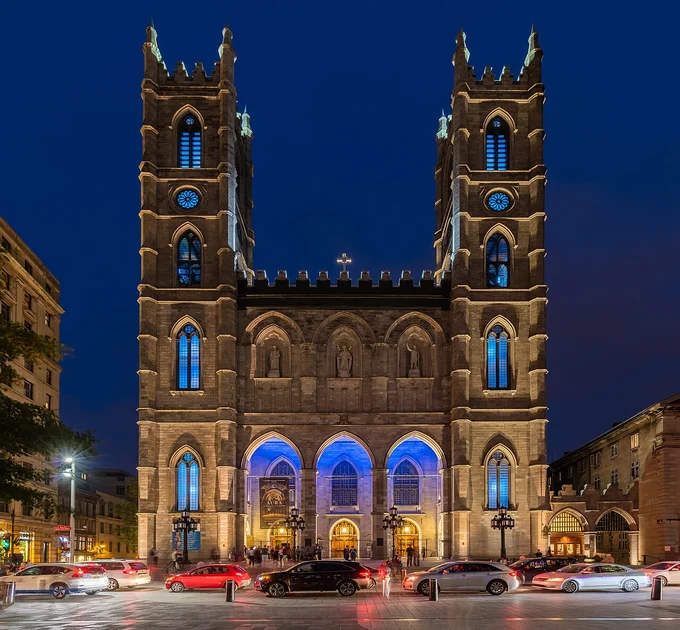
Montreal is the largest city in the province of Quebec and the second-largest in Canada, with a metropolitan population exceeding 4.2 million people. Situated on an island at the confluence of the St. Lawrence and Ottawa rivers, the city has grown from a 17th-century French colonial settlement into one of North America's most dynamic urban centres. Its distinctive blend of French and English influences shapes everything from its architecture and cuisine to its festivals and day-to-day civic life.
History and Origins
Indigenous and Colonial Roots
Long before European arrival, the island of Montreal was home to the Haudenosaunee people, who inhabited a village known as Hochelaga. French explorer Jacques Cartier made contact with this community in 1535. Permanent European settlement followed in 1642 when Paul Chomedey de Maisonneuve founded Ville-Marie, the settlement that would eventually become Montreal. The city served as a critical hub for the North American fur trade throughout the 17th and 18th centuries.
Growth Through the 19th and 20th Centuries
Following British conquest in 1760, Montreal evolved into a major commercial and industrial centre. By the mid-1800s, it was the largest city in British North America and a gateway for European immigrants. The construction of the Canadian Pacific Railway in the 1880s further cemented its role as an economic powerhouse. During the 20th century, the city hosted Expo 67 and the 1976 Summer Olympics, events that significantly raised its international profile.
Geography and Urban Layout
The Island and Its Boroughs
Montreal occupies most of the Island of Montreal, which spans approximately 499 square kilometres. The city is divided into 19 boroughs, each with its own distinct character. Mount Royal, an 233-metre hill at the city's heart, gives Montreal its name and provides green space to residents through the iconic Parc du Mont-Royal, designed by landscape architect Frederick Law Olmsted.
Climate
Montreal experiences a humid continental climate with four distinct seasons. Winters are cold and snowy, with average January temperatures around -10°C, while summers are warm and humid, reaching highs near 27°C in July. The city has adapted to its climate through an extensive underground pedestrian network known as the RÉSO, spanning over 33 kilometres of tunnels connecting shopping centres, metro stations, and office buildings.
Culture and Society
Bilingualism and Language
Montreal is one of the world's largest French-speaking cities and holds a unique position as a predominantly francophone metropolis in an otherwise English-dominant continent. French is the official language of Quebec, and the provincial language law, known as Bill 101, reinforces its use in public life and commerce. Nevertheless, English remains widely spoken, and many Montrealers are fully bilingual or multilingual, reflecting the city's diverse immigrant communities.
Festivals and Arts
Montreal has cultivated a strong reputation as a festival city. The Montreal International Jazz Festival, recognized by Guinness World Records as the world's largest jazz festival, draws over two million visitors annually. Other major events include the Just for Laughs comedy festival, the Montreal World Film Festival, and Osheaga, an outdoor music and arts gathering held each summer. The city is also home to renowned cultural institutions such as the Montreal Museum of Fine Arts and the Montreal Symphony Orchestra.
Food and Neighbourhoods
Montreal's culinary scene reflects its multicultural makeup. The city is internationally recognized for smoked meat sandwiches, bagels baked in wood-fired ovens, and poutine — a dish of fries topped with cheese curds and gravy that originated in Quebec. Neighbourhoods like the Plateau-Mont-Royal, Mile End, Old Montreal, and Chinatown each offer distinct atmospheres and dining experiences that attract both residents and tourists.
Economy and Innovation
Key Industries
Montreal's economy is diversified across several sectors. Aerospace is particularly prominent, with companies such as Bombardier and CAE headquartered in the city, making the Montreal region one of the top three aerospace clusters in the world. The finance, pharmaceutical, information technology, and creative industries also contribute significantly to the local economy.
Education and Research
The city is home to four major universities — McGill University, Université de Montréal, Concordia University, and Université du Québec à Montréal — along with numerous colleges and research institutes. This concentration of educational institutions has helped establish Montreal as a leading hub for artificial intelligence research, with organizations like Mila (Quebec Artificial Intelligence Institute) attracting global talent and investment.
Transportation and Infrastructure
Montreal's transit network includes a four-line metro system, extensive bus routes, and a growing cycling infrastructure with over 900 kilometres of bike paths. The Pierre Elliott Trudeau International Airport connects the city to destinations worldwide, while the Port of Montreal remains one of the busiest inland ports in North America, handling millions of tonnes of cargo annually.
Comments