
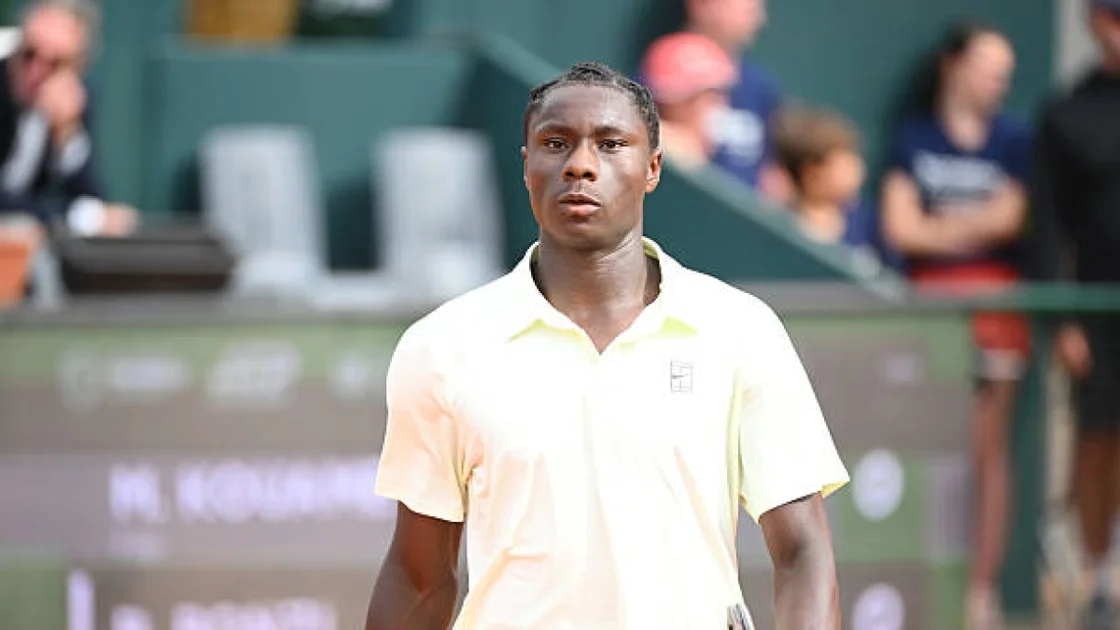
Moïse Kouamé Takes Center Court at Roland-Garros 2026
At just 17 years old, French tennis prodigy Moïse Kouamé is set to walk onto the clay of Roland-Garros for his first Grand Slam main-draw match on Tuesday, May 26, 2026. Awarded a wild card by tournament organizers, the 318th-ranked player from Sarcelles steps onto the biggest stage in French tennis carrying the weight of four decades of national hope.
"C'est un privilège pour moi d'être ici, si jeune," Kouamé said humbly in pre-tournament press conferences, according to reports from Eurosport and RMC Sport. This marks a stark contrast from his 2025 appearance, when he was eliminated in the first round of qualifying. Now, he enters as one of the most talked-about teenagers in the sport.
A Meteoric Rise in 2026
Kouamé’s journey to this moment has been nothing short of explosive. At the start of the year, he was ranked 833rd in the world. Since January, he has won three ITF Futures titles, claimed his first ATP match win at the Montpellier indoor event, and then stunned the tennis world by defeating American Zachary Svajda (then ranked 96th) at the Miami Masters 1000 in March.
According to Closer magazine, that Miami victory made him the youngest player to win a match at a Masters 1000 event since a 16-year-old Rafael Nadal triumphed in Monte-Carlo in 2003. Standing 1.91 meters tall and armed with a powerful baseline game, Kouamé has already earned comparisons to football star Kylian Mbappé for his precocious talent and mature demeanor.
The Weight of French Expectations
France has not seen one of its own lift the Coupe des Mousquetaires since Yannick Noah’s historic victory in 1983. Every generation since has produced talents who carried the burden of expectation—from Richard Gasquet to Gaël Monfils to Jo-Wilfried Tsonga—but none have broken the 43-year drought. Now, Kouamé represents the most promising candidate in a generation.
"Il est déjà ultraphysique à 17 ans," noted former top-40 player Nicolas Mahut in February, cautioning the public to let the teenager develop without excessive pressure. "Il va gagner en Challenger, il va être très bon très rapidement et on va beaucoup en parler. Mais pour l'instant, laissons-le tranquille," Mahut implored on Eurosport.
Kouamé himself seems aware of the narrative. "Je suis toujours en apprentissage," he admitted. "Je suis loin d'être parfait." Yet his rapid climb—from 833rd to 318th in less than six months—has made him impossible to ignore.
Behind the Phenomenon: Training, Origins, and Support
A Sarcelles-Backed Journey
Born on March 6, 2009, in Sarcelles, a suburb north of Paris, Kouamé first picked up a racket at age five in his hometown. His mother is Cameroonian and his father Ivorian, giving him a multicultural heritage that resonates with France’s diverse tennis community.
According to Linternaute, his rise has been carefully managed. He trains under the guidance of former world No. 7 Richard Gasquet, who himself burst onto the scene at age 15 by defeating Franco Squillari (ranked 54th) at Monte-Carlo in 2002. Gasquet’s experience managing early fame has been invaluable for his young protégé.
"Le plus important c'est de travailler, il ne faut pas se reposer sur les acquis, mais il faut toujours chercher la perfection," Kouamé told Franceinfo, embodying the relentless work ethic that has defined his ascent.
Physical Maturity Beyond His Years
At 1.91 meters and already physically imposing, Kouamé has the build of a player several years older. His powerful serve and explosive groundstrokes have drawn comparisons to a young Novak Djokovic. He is the youngest player currently inside the ATP top 400, and his ability to compete physically with seasoned professionals has been a key factor in his success.
His Miami Masters 1000 win came after a grueling three-set battle against Svajda, a match that demonstrated not just talent but stamina and mental resilience. "Il est déjà ultraphysique," Mahut repeated, emphasizing that his physical readiness is unusual for a 17-year-old.
The Gasquet Factor
The pairing with Gasquet is strategic. Gasquet’s own teenage stardom—he was once called "the new Nadal"—gives him unique insight into managing early pressure. The former world No. 7 has reportedly structured Kouamé’s schedule to avoid burnout, interspersing Challenger and ATP events while keeping Grand Slam appearances as benchmarks rather than destinations.
"Ça ne va jamais trop vite," Kouamé insisted in April, pushing back against comparisons to Mbappé, who famously said, "Don’t talk to me about age." The tennis prodigy seems determined to write his own story, even as the media frames him as French tennis’s next great hope.
The Broader Implications: A Changing of the Guard in French Tennis?
Beyond One Tournament
While all eyes are on Kouamé’s performance at Roland-Garros 2026, his emergence signals a deeper shift. French tennis has long struggled to produce a male Grand Slam champion in the post-Noah era, despite producing a series of top-10 players. The country’s federation has invested heavily in youth development, and Kouamé could be the first major payoff.
Should he win his first-round match at Roland-Garros, he would become the youngest French player to win a main-draw match at the tournament in decades. The victory would extend the momentum from his ITF titles and Miami breakthrough, validating the wild card decision and sparking a wave of public excitement reminiscent of Noah’s run in 1983.
The Economics of Early Stardom
Kouamé’s rise also comes at a time when the tennis world is grappling with the rapid commercial exploitation of young talent. Endorsement deals, media obligations, and social media scrutiny now accompany any teenager who shows promise. Kouamé, however, has shown a mature head, stating that he is preparing for the pressure he will face over the "10 to 15 years" of his career.
In a broader context, his story mirrors that of other sports prodigies who have navigated early fame—from Emma Raducanu to Coco Gauff. But unlike Raducanu’s shock US Open victory at 18, Kouamé’s path has been more gradual, with clear benchmarks at the ITF, Challenger, and now Grand Slam level.
A Potential Changing Point for French Tennis Culture
If Kouamé succeeds, it could reshape French tennis culture. The nation has often been accused of producing players who are talented but mentally fragile in big moments. Kouamé’s calm, workmanlike approach—"toujours chercher la perfection"—suggests a different mindset. Combined with Gasquet’s mentorship, he could represent a new archetype: the French champion built on patience and process rather than raw flair alone.
For now, the immediate focus is on his Tuesday debut. The draw has yet to reveal his opponent, but whoever faces the teenager will be up against a player who has surprised everyone this year—except perhaps himself.
"Je suis là pour faire rêver le public," Kouamé said, capturing the national sentiment. Whether he can deliver on that promise remains to be seen, but one thing is certain: French tennis has found its next great hope, and his name is Moïse Kouamé.
For more on rising sports stars and their impact across industries, read about Christos Tzolis hands Man United transfer boost with 51 goal contributions. To understand broader trends in sports governance, see BP Ousts Chairman Albert Manifold in Boardroom Shakeup Over Governance Issues.
Comments