
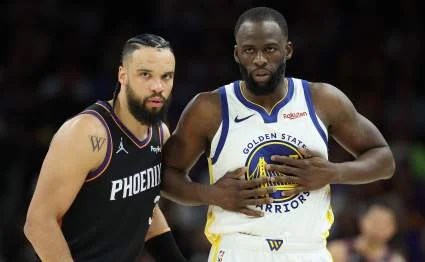
Miles Bridges Shines Despite Suns' Loss
Phoenix Suns forward Miles Bridges continued his strong early-season form, recording 24 points on 10-of-19 shooting, ten rebounds, two assists, a steal, and three blocks in Friday's loss to the Denver Nuggets. The performance marked Bridges' latest all-around effort since joining Phoenix, where he has done "everything else that he was doing in Charlotte last season" despite struggling from three-point range, according to NBC Sports' player analysis.
Bridges' double-double came on a night overshadowed by the ejection of teammate Dillon Brooks, who was assessed a flagrant foul penalty two against Jamal Murray. Brooks had scored 22 points in just 21 minutes before his dismissal, leaving the Suns without their second-highest scorer. Bridges, speaking postgame, suggested that Brooks' league-wide reputation influenced the officials' decision. "I feel like if there was anybody else but Dillon doing that, he wouldn't have got ejected, but you know, he has a name in this league," Bridges said. "He's the villain of this league, and that comes with a price, but we definitely needed him today."
Brooks' Ejection Alters Game Flow
The flagrant foul, which came after physical play between Brooks and Murray—Canadian national teammates with a long history—was deemed correct by the letter of the rule. However, Suns head coach Jordan Ott questioned whether reputation played a role. "We'll see if we can find another flagrant two in that play around the league," Ott said. "I hope reputation doesn't play into that, but they were just competitive guys going at it like they probably had for ten years." The ejection forced Phoenix to adjust mid-game, and the team ultimately fell to Denver.
Bridges' All-Around Game a Bright Spot
Despite the loss, Bridges' performance highlights his value as a two-way wing—something the Suns lacked last season. He has been scoring at a decent clip, rebounding well, and providing solid defense, even as his three-point shot has yet to find its rhythm. His ability to contribute in multiple areas has been a rare positive for a Phoenix team that has stumbled to a 1-3 start, with defensive issues plaguing the roster.
Suns' Early Struggles and Bench Production
Phoenix's 1-3 start has exposed significant problems, particularly on defense, but there are encouraging trends. The Suns' bench is shooting 38.8% from three-point range, a mark that would rank among the league's best if sustained. As a team, Phoenix ranks 17th in three-point percentage (34.8%) but seventh in attempts (40.3 per game), with a season-opening 6-of-31 outing against Portland dragging down the overall numbers. Since that game, the Suns have shot 38.8% from deep, which would rank fifth in the NBA. Bridges' inside-outside game and defensive versatility provide a stabilizing presence as the team waits for its perimeter shooting to normalize.
Reputation and Officiating Under Scrutiny
The Brooks ejection has reignited discussions about how officials treat players with certain reputations. Bridges, who has faced his own scrutiny, empathized with Brooks, noting that "the villain of this league" label comes with consequences. The incident also raises questions about consistency in flagrant foul calls, especially between players with a history of physical play. Ott's comments reflect a broader concern among coaches and players that reputations may influence in-game decisions, a topic that frequently surfaces in NBA circles.
What It Means for Phoenix
For the Suns, the immediate concern is navigating a challenging early schedule while integrating new pieces. Bridges' production—24 points, ten rebounds, three blocks—demonstrates his ability to impact winning even when his shot isn't falling from deep. His defense on the wing gives Phoenix a dimension it lacked last season. As the team works through its defensive issues and three-point shooting variance, Bridges' consistency will be crucial. The Suns will also need Brooks to remain on the floor; his scoring efficiency (22 points on 12 shots) was sorely missed after his ejection.
Broader Implications
Bridges' strong start and outspoken support for Brooks underscore the human element of NBA officiating and the fine line between competitive fire and disciplinary action. As the league continues to emphasize player safety, the balance between physical play and reputation-based calls will remain a talking point. For Phoenix, the focus shifts to correcting defensive lapses and finding consistency. Bridges' performance offers hope that the Suns can weather early adversity, much like the brighter trends hidden beneath their ugly start—improved bench shooting, defensive potential, and a wing defender who can change games.
For more on the Suns' early-season struggles and bright spots, see our analysis of Phoenix's three-point shooting and bench efficiency (internal link for illustrative purposes).
Comments