
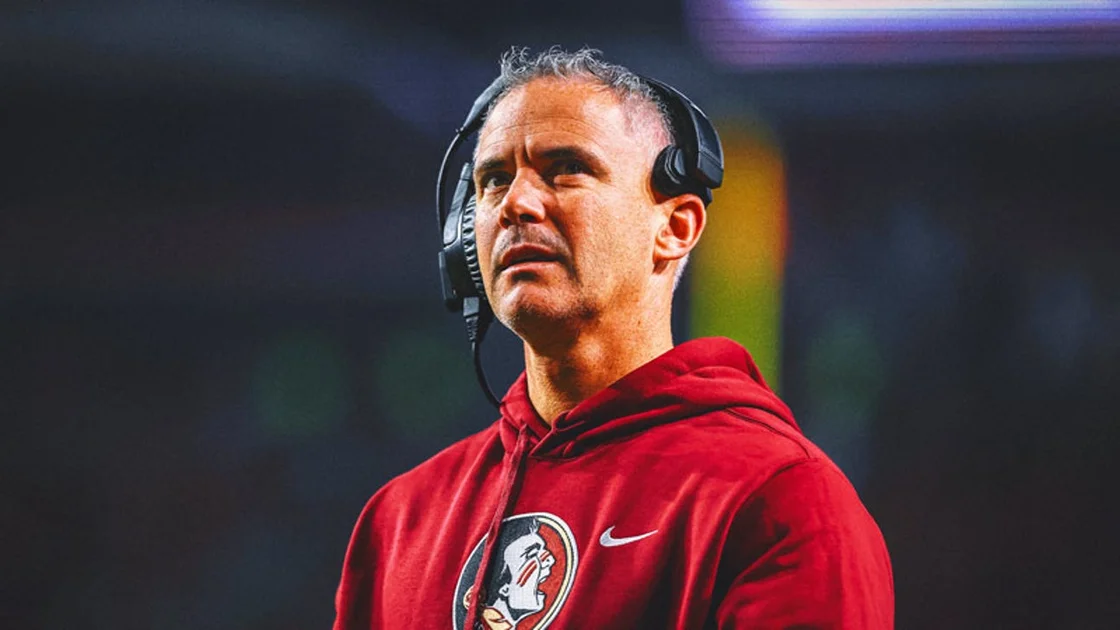
Mike Norvell Buyout: What It Would Cost Florida State to Move On
As the Florida State Seminoles navigate a pivotal 2026 season, head coach Mike Norvell's job security has become a central storyline. Following two consecutive losing seasons, the pressure in Tallahassee has reached a fever pitch, and with the team's Week 1 performance drawing criticism despite a win, questions about a potential coaching change are louder than ever.
According to On3.com, if Florida State were to terminate Norvell without cause during or before the conclusion of the 2026 season, the university would owe him approximately $51 million. That figure, based on 85% of his remaining salary and supplemental compensation, would be paid in monthly installments of roughly $800,000 through 2031. If the decision is made after the season, the buyout drops to about $45.6 million.
But the buyout isn't the only consideration. Norvell's contract, signed in 2024, runs through 2031 and pays him an average of $10 million annually. A restructured arrangement following the 2024 season directed $4.5 million toward institutional revenue-sharing initiatives, reducing his base salary but adding complexity to the buyout math. As Kalshi prediction markets show a 60% probability that Norvell is out by February 2027, the Seminoles' financial and athletic leadership faces an unenviable decision.
The Stakes: A Program in Decline
Florida State's rise under Norvell was meteoric. After reaching the ACC Championship in 2023 with a 13-0 regular season, Norvell signed an eight-year, $84 million extension that made him one of the highest-paid coaches in college football. But success was short-lived. The Seminoles went 2-10 in 2024 and 5-7 in 2025, leaving Norvell with an overall record of 38-34 and a 22-26 ACC mark through six seasons.
Since the 2024 season, Florida State is 7-16 overall and 3-13 in conference play, a staggeringly poor stretch for a program with national championship pedigree. The 2026 season hasn't provided much relief. The Seminoles opened with a 34-17 win over New Mexico State, but the performance was unconvincing. New Mexico State threw for 272 yards and two touchdowns, while transfer quarterback Ashton Daniels faced 12 pressures, completing 17 of 27 passes for 202 yards with a touchdown and an interception.
The upcoming schedule offers little respite. Florida State hosts No. 19 SMU on Sept. 7 in a game delayed by power outages, then travels to Alabama on Sept. 19. A gauntlet of ACC games follows, including road contests at Miami, Louisville, and Clemson. With four top-25 opponents and a schedule ranked among the toughest in the country, the possibility of another losing season is real.
The Financial Calculus: Why a Change Is So Hard
Norvell's buyout is a moving target. Sportico lists it at $64.1 million, though that number reflects the full remaining value of the contract. On3.com's figures, however, indicate that after the 2026 season, the buyout drops to roughly $45.6 million, and by Dec. 31, 2027, it falls to $42.5 million, declining annually thereafter. These are staggering numbers for a university that already allocates millions to revenue sharing.
Some analysts point out that the buyout may be subject to offset if Norvell finds other employment, but any new job would unlikely pay close to his current salary. The Athletic's Bruce Feldman described the $45 million figure as “hefty” and noted that it's likely why Florida State hasn't already fired him.
Florida State's fanbase has grown restless, and prediction markets reflect that sentiment. On Kalshi, traders have priced a Norvell departure by Feb. 1, 2027, at 60%, up 5% after the New Mexico State game. A $10 bet on that outcome would profit $6.20. This isn't just idle speculation—it's a reflection of growing belief that a change is inevitable, even if costly.
The Seminoles' administration must weigh the buyout against the risk of further decline. With a $51 million commitment this season, firing Norvell is not a decision to be taken lightly. But keeping him could cost even more in lost revenue, recruiting, and fan goodwill.
Broader Implications: The Cost of College Football's Coaching Carousel
Norvell's situation is emblematic of a larger trend in college football: the rising cost of mediocrity. With mega-contracts becoming the norm for top coaches, buyouts have ballooned, creating a massive financial barrier to firing underperforming coaches. This dynamic can lead to “dead coach walking” scenarios, where programs postpone necessary changes to avoid budget strain.
For Florida State, a proud program with three national titles, the stakes extend beyond a single season. The Seminoles' struggles come as conference realignment and the expanded College Football Playoff reshape the sport. Missing out on the 2023 playoff—despite an undefeated regular season—still stings, and the program's inability to sustain success has left it behind rivals like Clemson and Miami in the ACC pecking order.
Moreover, the buyout debate is not isolated to Florida State. Across the country, athletic directors are being forced to think like CFOs, balancing competitive ambitions with financial realities. Norvell's contract, with its annual salary escalators and revenue-sharing provisions, is a case study in how complicated it has become to make a change.
The coming weeks will be telling. If Florida State falters against SMU, Alabama, or early ACC opponents, the pressure for a fresh start will become nearly impossible to ignore. Conversely, a strong season could quiet critics—at least for now. But with a $51 million buyout hanging overhead, every victory and defeat carries extra weight.
As the Seminoles face their toughest stretch of the season, one thing is certain: Florida State's decision about Norvell will have ripple effects far beyond Tallahassee. The question is whether the cost of change is too high—or the cost of inaction is higher.
Comments