
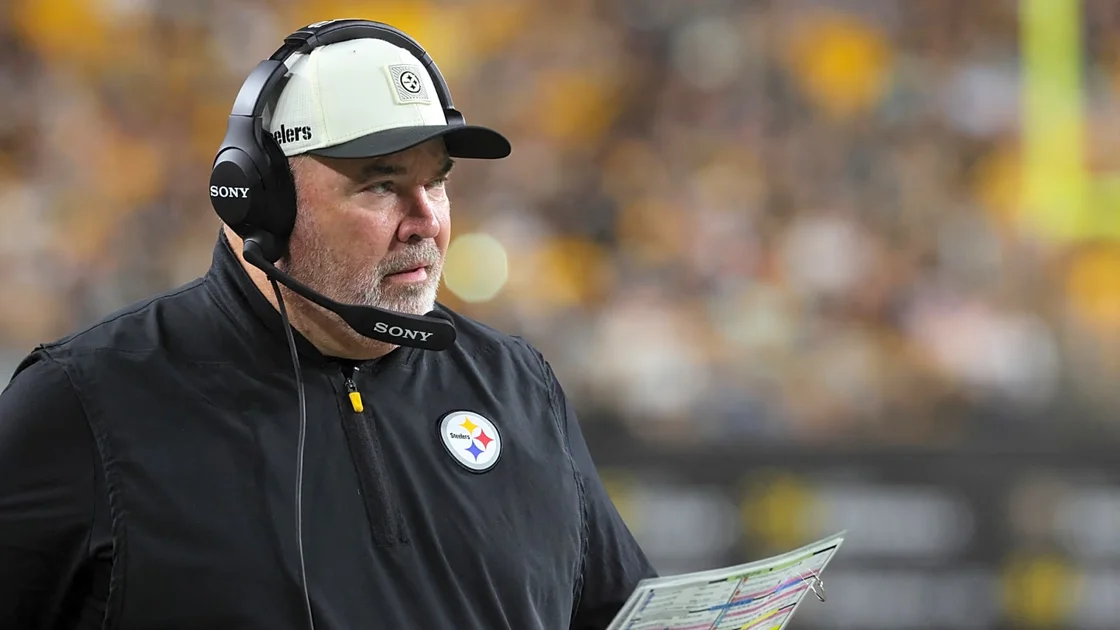
Steelers Start Fresh Under Mike McCarthy With New Leadership Approach
As the Pittsburgh Steelers gear up for their 2026 regular-season opener against the Atlanta Falcons on Sunday, head coach Mike McCarthy is making it clear that the honeymoon phase in his hometown is officially over. The team concluded its final full practice Wednesday at UPMC Rooney Sports Complex on the South Side, with McCarthy emphasizing a shift from the camaraderie of training camp to the singular focus of competitive game planning.
McCarthy, who took over the Steelers in January, addressed the media ahead of the home opener, underscoring the transition from preseason preparation to the reality of a 17-game schedule. "We're all excited about our first opportunity to compete," McCarthy said. "You're guaranteed 17 games. Obviously, it's our home opener, but really, I think the honeymoon's kind of over now." The sentiment reflects a broader organizational push to channel the positive energy from a productive summer into results that matter when the games actually count.
A key storyline emerging from this week's preparation is McCarthy's decision to abandon the traditional model of full-season team captains. In a departure from NFL norms—and from the practices of his predecessor, Mike Tomlin—McCarthy announced on Monday that the Steelers will instead name weekly captains for each game. The move is designed to keep leadership fluid and merit-based, ensuring that players who demonstrate the right effort and mentality in a given week are recognized and empowered to lead.
This change is one of several subtle but tangible shifts McCarthy is implementing as he puts his own stamp on a franchise known for stability and a strong internal culture. The former Green Bay Packers and Dallas Cowboys head coach is reuniting with quarterback Aaron Rodgers, a partnership last seen in 2018 when the two led the Packers to an NFC North division title. That reunion has generated national headlines, but McCarthy has been quick to pivot the narrative towards execution and week-to-week consistency rather than nostalgia.
Hometown Homecoming: The Weight of Coaching the Black and Gold
McCarthy's return to Pittsburgh is more than just a professional assignment; it is a personal journey steeped in local history. A native of the city, McCarthy has spoken openly about the profound emotional connection he feels to his role, noting that every drive through familiar streets carries weight. He expressed this sentiment in a recent press conference, acknowledging that the responsibility of leading the Steelers is not something he takes lightly.
"Being from here, this is heavy being here," McCarthy admitted. "You know, you ride the streets that you grew up on, that you walked on, and do it every day. So many memories here and some memories that are heavy, so yeah, that's real." At 62, McCarthy admits he reflects more than he did in his younger coaching years, and that introspection has deepened his appreciation for the opportunity to guide the franchise he idolized growing up.
The emotional undercurrent of his appointment is matched by a pragmatic understanding of the expectations in Pittsburgh. The Steelers have historically been measured against a standard of excellence defined by six Super Bowl titles and a legacy of Hall of Fame players and coaches. McCarthy, who earned his own Super Bowl ring with Green Bay (XLV), is inheriting a roster that has shown playoff potential but has grappled with consistency in recent seasons. The hiring of a veteran coach with a championship pedigree signals the organization's intent to maximize its current window with Rodgers at the helm.
Beyond the sentimental value, McCarthy's impact on the Steelers' tactical setup is already being felt. He is taking over primary play-calling duties for an offense that struggled to find rhythm in the latter half of last season. His first task has been integrating Aaron Rodgers into the offensive scheme, a process he acknowledges requires a deliberate buildup over the course of the practice week. "Looking forward to getting back in the saddle with Aaron," McCarthy stated. "But we know that's something you build during the course of the week. You know it's been a minute since he and I have worked together in that aspect."
The Quarterback-Coach Conundrum: Rodgers and the New System
The collaboration between McCarthy and Rodgers is a central axis for Pittsburgh's season arc. Their previous partnership in Green Bay was highly productive but eventually soured, culminating in McCarthy's dismissal midway through the 2018 season. The narrative of reconciliation and second chances is one the national media will scrutinize deeply, but McCarthy is treating it with a level of professionalism that focuses on the present.
Rodgers, who joined the Steelers in the offseason, has reportedly embraced the new system, which is designed to leverage his arm talent and pre-snap recognition. McCarthy’s zone-based schemes and play-action concepts are familiar to Rodgers, but the implementation period has been accelerated due to the veteran quarterback's arrival late in the spring. The regular season will be the true litmus test of how quickly they can re-sync their cadence and improvisational chemistry on the field.
Defensively, the team is also undergoing a philosophical alignment under coordinator Patrick Graham, who replaced the departed Teryl Austin. Graham has preached defensive line dominance as the panacea for a run defense that was exploited in crucial moments last season. The team has invested in depth up front, leading to the surprising but welcomed 53-man roster inclusion of undrafted rookie Kevin Jobity Jr., whose versatility adds a rotational piece.
Weekly Captains and a Shift in Leadership Dynamics
The decision to implement weekly captains breaks a tradition that had become a point of pride elsewhere around the league, particularly during Tomlin's 19-year tenure. Tomlin, now a broadcaster, famously used a rotating group of leaders but typically maintained a core of season-long captains. McCarthy’s approach is more radical: no one will don a single "C" for the entire season; instead, game-by-game honors will be distributed based on performance and practice habits.
This modification might seem cosmetic, but it carries strategic weight. For a roster that includes several new acquisitions and a blend of young, hungry players and seasoned veterans, weekly messaging can help maintain motivation. McCarthy has stressed that leadership is earned, not conferred, and that his system forces players to compete for the designation every Saturday evening. It also allows him to tailor leadership to matchup-specific needs, e.g., elevating a defensive captain when facing a heavy run team or a special teams ace when field position is expected to be critical.
The ripple effect of this decision was covered extensively by national outlets, notably NBC Sports' Pro Football Talk, where Mike Florio highlighted the departure from franchise precedent. It serves as a concrete example of McCarthy's willingness to adopt a fresh playbook of operations, free from the constraints of "how it has always been done" in Pittsburgh. By decentralizing the captaincy, McCarthy is prompting veterans to self-police without institutional entitlement and encouraging younger players to step into vocal roles more organically.
Training Camp Lessons and Roster Decisions
The final cuts to the 53-man roster were completed just days ago, with general manager Omar Khan citing the strategic balance of new veterans and promising rookies. One of the biggest stories of camp was the emergence of rookie defensive tackle Kevin Jobity Jr., whose background in soccer and high-school placekicking earned him a feature in the team's own "Asked and Answered" column. While Jobity is unlikely to be active for the opener given depth along the defensive line, his multi-sport pedigree made him an intriguing project for the new coaching staff.
In the same column, it was also highlighted that the Steelers have a history of using unconventional backup kickers in emergency situations, dating back to center Ray Mansfield making a PAT in the 1976 AFC Championship Game. Trivia aside, the focus remains on the starting units. On offense, running back Jaylen Warren is expected to share carries with a rejuvenated backfield, aiming to control the clock and relieve pressure from Rodgers. Against an Atlanta Falcons team that wants to run the ball, defensive coordinator Graham is expected to lean on his primary run-stopping specialists rather than relying on rotating second-level players.
The Road Ahead: First Test vs. Atlanta and Beyond
The Atlanta Falcons present a tricky opening opponent for the Steelers. Despite playing on the road in Pittsburgh, the Falcons boast a revamped offensive line and a bruising running game philosophy. Week 1 often produces unpredictable results due to limited preseason film and rust, but McCarthy’s experience provides an advantage in game preparation. The lack of full-season captains could prove either a galvanizing force or a source of uncertainty in high-pressure moments; the Atlanta game will provide the first tangible evidence.
The Steelers also face an interesting scheduling convergence with the bulk of the league. Several high-profile games are slated across the NFL this weekend, including a Rams-49ers matchup being played in Melbourne, Australia. Notably, former Steelers rival Myles Garrett, who broke the single-season sack record in 2025, is making his debut for the Los Angeles Rams. Mike Tomlin, now working as an analyst, praised Garrett as "the best damn player in football" during a recent appearance on the Pro Football Focus podcast, offering a rare glimpse into how the former Steelers coach views the modern game from outside the sidelines.
For Pittsburgh, the immediate path is clear: win the opener, establish the ground game, and let Rodgers orchestrate the passing attack against a Falcons secondary that has seen significant turnover. McCarthy’s focus, however, is on internal standards over external outcomes. He told the media this week that his primary goal is execution and discipline in all three phases of the game.
Looking further ahead, the early schedule does not relent, with primetime games and conference clashes awaiting in October. But McCarthy is having none of that foreshadowing. In his first in-season news conference, he drilled down on how he wants coaches and players to approach every single day, emphasizing process over outcome. His message is intended to keep the honeymoon's good feelings alive without letting the intensity drop—a balance he has struck before with championship-winning results.
Should the Steelers stumble out of the gate, the weekly captain strategy and the Rodgers-McCarthy dynamic will be put under an immediate microscope. Should they win, the narrative will transform into that of a cohesive, reimagined Pittsburgh unit. Either way, the 2026 season represents one of the more intriguing chapters in recent franchise history, where a hometown hero is charged with delivering the city another Lombardi Trophy.
The evolution of leadership and the re-ignition of a famous quarterback-coach partnership are compelling storylines, but the Steelers' success will ultimately hinge on preparation. As McCarthy stated simply, "We're all excited about our first opportunity to compete." That competition begins Sunday at 1:00 PM ET, and the honeymoon will officially be over for all parties involved.
Broader Implications for the Steelers Organization
McCarthy's arrival signals a broader shift within the Steelers organization towards a more democratized, week-by-week approach to team building. The decision to eliminate permanent captains is part of a wider trend in the NFL where head coaches are moving away from hierarchal structures to drive performance. It also places the onus of leadership back onto the coaching staff, who will now have to calibrate the pulse of the locker room on a rolling basis.
This shift could also impact final rosters and practice squad decisions as the season wears on. Without defined power centers, there may be more opportunity for undrafted players like Jobity to see the field if they show a spark during a given practice week. McCarthy has indicated that his game-week personnel choices will be determined by matchups and weekly effort, which is a direct departure from Tomlin's philosophy that "the standard is the standard," often relying on veteran continuity week-to-week.
The concept of shared leadership might also help manage the inevitable internal distractions that come with a high-profile quarterback. Giving more players an official formal title each week could tip the balance away from a star-centric culture. This is especially poignant for the dynamic with Aaron Rodgers, who has historically attracted intense media scrutiny. By placing the leadership spotlight on different players each Sunday, the pressure to perform might be diffused across the roster.
For an organization like the Steelers, which prides itself on family lineage (the Rooney family ownership and the front-office stability), the implementation of these new tactics will be synonymous with embracing modern adaptability. The organization has publicly blessed McCarthy's autonomy, but the proof will be in the win-loss column. With a quarterback of Rodgers' caliber and a play-calling head coach who has been there before, the possibilities for the upcoming season are as exciting as the cultural reset that precipitated them.
Comments