
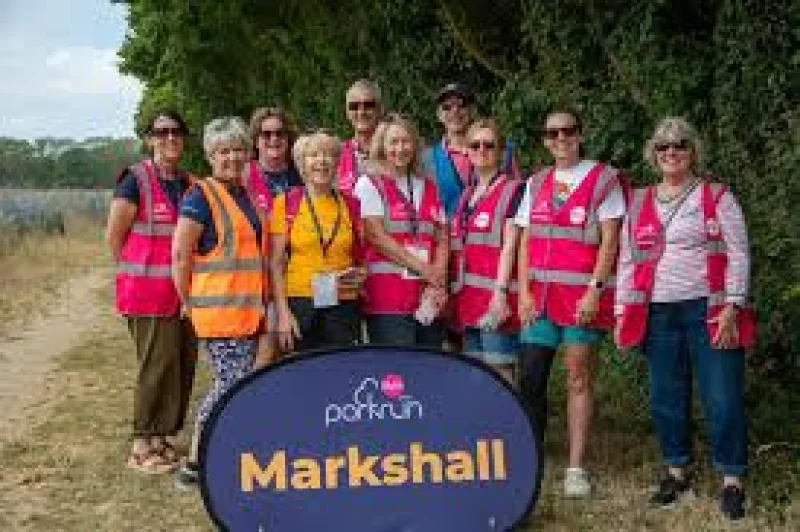
Markshall parkrun Cancelled Permanently After 229 Events
Markshall parkrun, a weekly 5km event held at the Markshall Estate near Coggeshall in Essex, has been permanently cancelled, organisers announced. The final run took place on 22 August 2026, ending a nearly five-year run that began in November 2021. During its lifetime, the event hosted 229 runs, attracting 9,942 participants and 833 volunteers. The decision to close was made after organisers concluded that ongoing issues related to the site’s infrastructure, facilities, and participant behaviour could not be resolved satisfactorily.
A statement on Parkrun’s website confirmed the permanent closure, expressing regret and gratitude to Markshall Estate for hosting the event and to the core team and volunteers for their efforts. The cancellation follows a period of temporary suspension that began in late August, when organisers paused the event to address mounting concerns. Despite attempts to find solutions, Parkrun ultimately determined that the event could no longer be sustained safely or sustainably at the location.
Growing Pains: Infrastructure and Behavioural Challenges
The cancellation stems from a combination of factors that intensified as the event’s popularity grew. According to organisers, the sustained increase in participants placed “increased pressures” on the estate’s infrastructure and facilities. Markshall Estate covers approximately 2,200 acres (890 hectares), including ancient woodland and gardens, but even this expansive setting struggled to accommodate the weekly influx of runners and walkers. Issues such as parking, access routes, and amenities became increasingly difficult to manage.
In addition to logistical strains, concerns about participant behaviour had been raised prior to the cancellation. Organisers had previously criticised a “small minority who do not understand how their behaviour impacts” others. Allegations of verbal abuse directed at staff and event coordinators further complicated the situation. These behavioural issues, combined with infrastructure challenges, created an environment that Parkrun felt was no longer viable for a community-focused event. The decision to cancel was not taken lightly, but ultimately, the organisers concluded that the problems “could not be resolved satisfactorily.”
Community Reaction and the Legacy of Markshall parkrun
News of the cancellation prompted an outpouring of disappointment on social media. Runners described the loss as “such a shame” and praised the marshals who had worked “so hard” to ensure the event ran smoothly each week. Many lamented the end of a cherished Saturday morning tradition that had become a fixture in the local community. The event’s contribution was also recognised by Parkrun, which thanked the team at Mrs Salisbury’s of Coggeshall for their Saturday morning catering and acknowledged the immense efforts of the core team and volunteers.
For local runners, the cancellation leaves a gap. However, Friends of Markshall can still access the arboretum and woodland routes from 9am on Saturdays by checking in at the admissions building. This allows individuals to continue running in the scenic surroundings, albeit without the organised parkrun format. The permanent closure of Markshall parkrun is a significant loss for the community, but it also highlights the challenges that can arise when a grassroots event experiences rapid growth.
Broader Implications for the parkrun Movement
Markshall parkrun’s closure is a noteworthy moment for the wider parkrun movement, which began in October 2004 with 13 runners and five volunteers at Bushy Park in Teddington, south-west London. Founded by Paul Sinton-Hewitt, parkrun has since expanded to more than 2,000 weekly locations across over 20 countries. The movement’s success is built on accessibility, volunteerism, and community spirit. However, the Markshall case illustrates that growth can bring unintended consequences, particularly when local infrastructure and volunteer capacity are stretched.
While parkrun events are typically designed to be low-impact and inclusive, they still depend on adequate space, staffing, and goodwill. When these elements come under strain, even a simple 5km run can become unsustainable. The cancellation serves as a reminder that expansion is not always a straightforward sign of success; it can also expose vulnerabilities. For parkrun as a whole, the challenge is to balance the movement’s popularity with the practical limits of individual venues. As communities continue to embrace parkrun, organisers will need to work closely with landowners and local authorities to ensure that events remain viable for the long term.
The permanent closure of Markshall parkrun is a loss for Essex runners, but it also provides a cautionary tale about the pressures that can accompany rapid growth. In a time when community fitness events are more popular than ever, the need for sustainable planning and respectful participation has never been clearer.
Comments