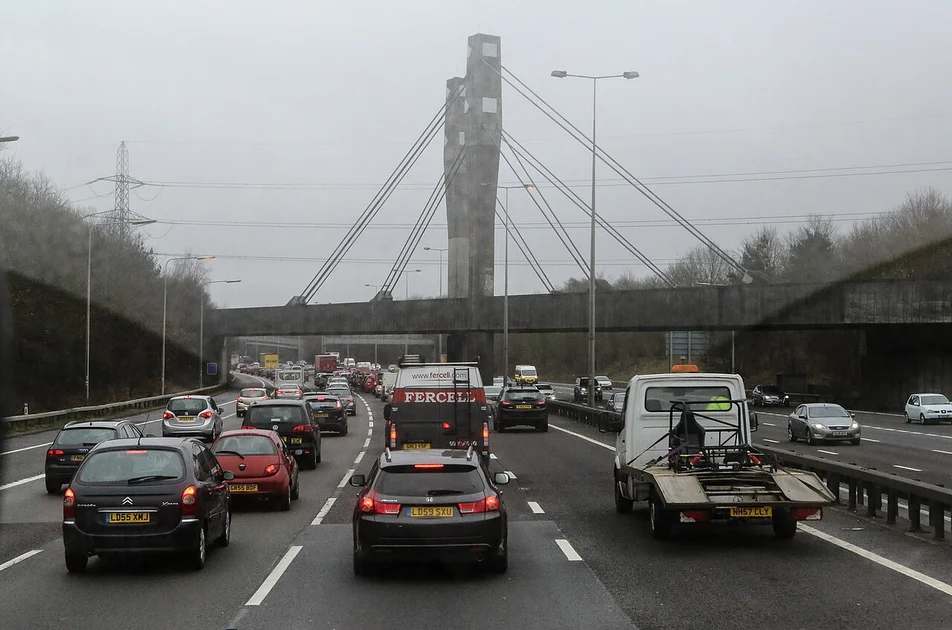
Overview of the M25 Motorway
The M25 motorway, officially known as the London Orbital Motorway, encircles Greater London and stretches approximately 117 miles (188 kilometres), making it one of the busiest and longest ring roads in Europe. Opened in stages between 1975 and 1986, the motorway connects numerous major roads, towns, and cities surrounding the capital, serving as a critical artery for both commuters and freight transport.
Every day, hundreds of thousands of vehicles use the M25, and traffic volumes regularly exceed the motorway's original design capacity. According to National Highways, some sections carry more than 200,000 vehicles per day, placing it among the most heavily used stretches of road in the United Kingdom.
Key Junctions and Routes
The M25 intersects with nearly every major motorway radiating out from London, including the M1, M3, M4, M11, M20, and M23. Notable junctions include:
- Junction 6 (M23): A frequent congestion hotspot providing access to Gatwick Airport.
- Junction 15 (M25/M4): A complex interchange near Heathrow Airport, often heavily congested.
- Junction 25 (A10): A key point for traffic heading into Hertfordshire.
- Junction 30/31 (Thurrock): Near the Dartford Crossing, one of the most congested sections of the entire motorway.
Common Causes of M25 Traffic Congestion
Several factors contribute to persistent traffic delays on the M25, ranging from the volume of daily users to roadworks and incidents.
Peak Hours and Commuter Traffic
The busiest periods on the M25 typically occur during weekday morning rush hours, between 7:00 am and 9:30 am, and evening rush hours, from 4:30 pm to 7:00 pm. Friday afternoons are particularly congested as leisure travel combines with regular commuting patterns. Bank holidays and school half-term periods also generate significantly higher traffic volumes.
Roadworks and Maintenance
Ongoing maintenance and upgrade projects regularly contribute to lane closures and reduced speed limits. The Smart Motorway programme, which converted hard shoulders into permanent running lanes to increase capacity, has been implemented along several M25 sections. These upgrades, while intended to ease congestion long-term, often cause temporary disruption during construction phases.
Incidents and Accidents
Breakdowns and collisions on the M25 can have a rapid and severe knock-on effect across the network. Because of the motorway's high traffic density, even a minor incident in one lane can generate tailbacks extending several miles. National Highways operates traffic officer patrols specifically to manage incidents quickly and reduce secondary congestion.
The Dartford Crossing
The Dartford Crossing — comprising the QE2 Bridge and twin tunnels — represents one of the most notorious congestion points on the M25. Handling around 180,000 vehicles per day at peak periods, this crossing links Essex and Kent and frequently experiences lengthy queues, particularly during morning and evening peaks, as well as periods of high wind that restrict bridge access.
Live M25 Traffic Updates and Planning Your Journey
Staying informed about current conditions is the most effective way to manage travel time on this busy motorway.
Where to Find Real-Time Information
Several reliable sources provide live M25 traffic data:
- National Highways website and app: Offers real-time traffic cameras, roadworks information, and incident alerts.
- Google Maps and Apple Maps: Both provide dynamic routing based on live traffic conditions.
- Traffic England (trafficengland.com): A dedicated government portal featuring journey time data and live camera feeds.
- Radio travel bulletins: BBC Radio 2 and local BBC radio stations broadcast regular traffic updates, particularly during peak hours.
Variable Speed Limits and Overhead Signs
Along many sections of the M25, electronic overhead gantry signs display variable speed limits, lane closure signals, and hazard warnings. These signs are managed in real time by National Highways' Regional Control Centre and are legally enforceable. Observing these signals is both a legal requirement and an important safety measure.
Future Developments and Long-Term Solutions
Addressing M25 traffic remains a long-term infrastructure challenge. National Highways continues to invest in capacity improvements, including junction upgrades and technology-led traffic management systems. The use of connected vehicle technology and improved data analytics is expected to play a growing role in reducing congestion in future decades.
Additionally, government policies encouraging working from home and modal shifts toward rail travel may help reduce road demand over time. The expansion of the Elizabeth line (Crossrail) has already been credited with reducing some vehicle journeys into and around London, and further investment in public transport is likely to influence M25 traffic volumes in the years ahead.
For travellers using the motorway regularly, staying updated, planning journeys outside peak hours where possible, and using alternative routes when incidents are reported remain the most practical strategies for a smoother experience.
Comments