
Nanny Takes the Stand: 'A Wonderful Mom Who Loved Her Kids'
PLYMOUTH, Mass. – On the seventh day of the Lindsay Clancy murder trial, the family's former nanny testified that the Massachusetts mother appeared devoted to her children in the months before she confessed to strangling them, offering the defense a poignant counterpoint to the prosecution's portrayal of intentional violence.
Elaine Rossi, who cared for the Clancy children from September to December 2022, told the jury in Plymouth Superior Court that she never witnessed any signs of neglect or abuse. 'I observed a wonderful mom who loved her kids,' Rossi said, echoing her earlier statement to Massachusetts State Police. 'She was very concerned about their safety. She was very concerned with Callan's eating and sleeping. She was a wonderful mother.'
Rossi's testimony came as the trial entered its second week, with the jury also hearing from a forensic toxicologist about the cocktail of psychiatric medications found in Clancy's blood after the Jan. 24, 2023, killings. Lindsay Clancy, 35, has pleaded not guilty to three counts of first-degree murder in the deaths of her daughter Cora, 5, and sons Dawson, 3, and Callan, 8 months. She admitted to the killings but her defense argues she was in the throes of postpartum psychosis and not criminally responsible.
A Glimpse Into the Clancy Household
Rossi, a nanny of 15 years, described a typical routine of three days a week, from 8:30 a.m. to 1:30 p.m., during which she helped with baby Callan, light housekeeping, and meal prep. She testified that Clancy was open about her mental health struggles, telling Rossi she was 'suffering from postpartum' and had trouble sleeping, sometimes retreating to the basement. Rossi recalled seeing prescription bottles in the home and said Clancy mentioned she would stop nursing Callan before starting a new medication.
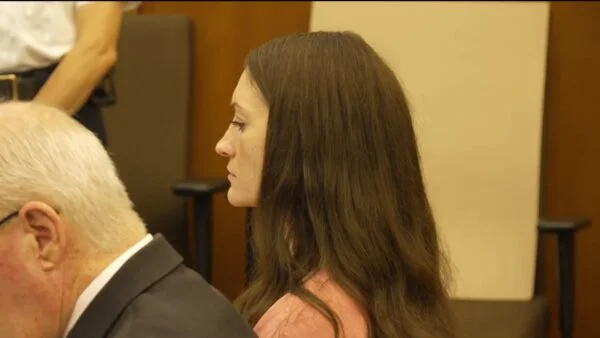
Despite those disclosures, Rossi said she never doubted Clancy's parenting. She described Cora as a 'girly-girl' who loved arts and crafts, Dawson as 'full of energy, rambunctious, funny, silly,' and Callan as 'the sweetest, happiest, easiest baby.' During the nanny's testimony, Clancy cried in court, her shoulders shaking, as Rossi painted a picture of a loving household.
Under cross-examination by defense attorney Kevin Reddington, Rossi confirmed she told police, 'I love my Lindsay,' a sentiment that reinforced the defense's narrative of a devoted mother overwhelmed by illness.
Toxicologist Details Medication Levels
Earlier in the week, the prosecution called forensic toxicologist Justin Brower of NMS Laboratories to explain the drug concentrations found in Clancy's blood shortly after the killings and her subsequent suicide attempt, when she jumped from a second-story window. Brower testified that Clancy's system contained four psychiatric medications: mirtazapine (antidepressant), lamotrigine (mood stabilizer), trazodone (antidepressant), and quetiapine (antipsychotic, often used in low doses for insomnia).
Brower noted that quetiapine was slightly elevated compared to a typical prescribed dose, but he stressed that it was not at a 'toxic concentration' or a 'suicidal concentration.' 'Usually people take handfuls of pills when they're trying to harm themselves and take their own life, and this is not consistent with that,' he testified. This statement supported the prosecution's theory that Clancy's suicide attempt was not a desperate, impulsive act but perhaps a calculated one.
However, under questioning from the defense, Brower conceded that toxicology results 'don't tell the entire story.' That caveat gives the defense room to argue that the medications—combined with sleep deprivation and undiagnosed bipolar disorder—could have triggered psychotic symptoms.
The Stakes: Life in Prison or a Mental Health Verdict
The trial, now in its eighth day, is unfolding against a backdrop of intense public scrutiny. Clancy faces life in prison without parole if convicted of first-degree murder. The case has sparked a national conversation about postpartum mental health, the adequacy of psychiatric care for new mothers, and the legal boundaries of criminal responsibility.
Prosecutors contend that Clancy acted intentionally, planning the killings in advance. They have pointed to her online searches for methods of strangulation and her diary entries, which they say show awareness of her actions. The defense, meanwhile, has presented expert testimony that Clancy suffered from postpartum psychosis—a rare but severe condition that can cause delusions, hallucinations, and a break with reality. They argue that she was overmedicated, sleep-deprived, and psychotic, making her unable to distinguish right from wrong.
The case has also been emotionally taxing for all involved. Court has at times halted when witnesses, including Clancy's ex-husband Patrick Clancy, broke down. On Thursday, Clancy sobbed loudly as a medical examiner testified about the autopsy of her infant son, and later as the jury was shown autopsy photos.
Diary Entries and a Facebook Post Reveal a Mother in Crisis
Both the prosecution and defense have used Clancy's own words to build their cases. On Monday, they read excerpts from her diary, in which she documented feelings of anxiety, overwhelming motherhood, and thoughts of suicide. She wrote about struggling to get Callan to sleep, constant worry, and an ever-changing lineup of psychiatric prescriptions. One entry described a 'brain fog' that made her feel disconnected from reality.
On Thursday, the prosecution introduced a Facebook post Clancy made in May 2021, when Dawson was 19 months old. In it, she called him 'the most difficult human I have ever encountered' and wrote, 'I mean that with all of the love in my heart but I honestly cannot make it through a day without getting so frustrated with him. EVERY. SINGLE. THING. with him is a battle.' The post was intended to show that Clancy had long been struggling with parenting stress, suggesting her mental health issues predated the postpartum period.
But under cross-examination, Massachusetts State Police investigator Andrew Chiachio acknowledged that detectives found no evidence that Clancy had ever been abusive toward Dawson or her other children. The defense seized on this, arguing that Clancy was a loving mother who simply reached a breaking point under the weight of untreated mental illness.
A Family's Testimony: Concern on Thanksgiving
Also on Thursday, the jury heard from Christopher Clancy, the defendant's former father-in-law, who said he noticed a subtle change in Lindsay during Thanksgiving 2022. 'She seemed quiet,' he testified. He said his son Patrick had expressed grave concerns about his wife's health, even declining offers of help with the children because he was worried about leaving Lindsay alone.
Christopher Clancy described receiving a phone call from his son on the night of the murders as 'terrible,' but did not elaborate. His testimony underscored the tension between the family's love for Lindsay and the horror of what she did.
The Broader Implications: A Landmark Case for Mental Health and Criminal Justice
As the trial continues, legal experts say the case could set a precedent for how the justice system treats defendants with severe postpartum psychiatric conditions. While postpartum psychosis has been used as a defense in infanticide cases before, it remains rare and controversial. The outcome here could influence how courts view the mental state of mothers who harm their children, and whether they are held criminally responsible or sent to psychiatric facilities instead of prisons.
The case has also reignited debates about the safety of psychiatric medications prescribed to new mothers, particularly the combination of drugs Clancy was taking. Public health advocates argue that more research is needed on how these medications affect women with underlying bipolar disorder, who are at higher risk for postpartum psychosis.
For now, the jury must weigh the testimony of toxicologists, medical examiners, and family members to decide whether Lindsay Clancy was a murderer or a victim of her own mind. The trial is expected to last several more weeks, with the defense set to call its own expert witnesses next.
If you or someone you know is struggling with suicidal thoughts, call or text 988 to reach the Suicide & Crisis Lifeline.
Comments