
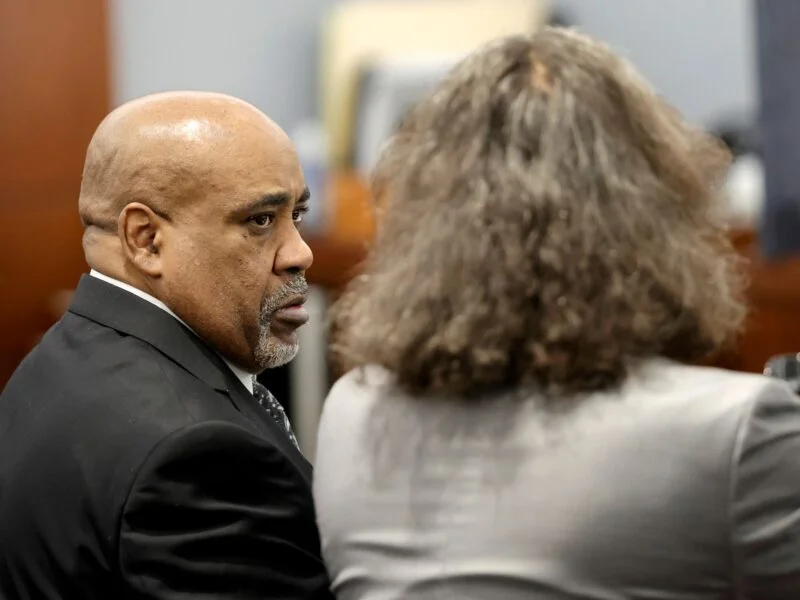
Defense Rests in Lil Durk Murder-for-Hire Trial; Jury to Hear Closing Arguments
LOS ANGELES — The murder-for-hire trial of Grammy-nominated rapper Lil Durk reached a pivotal juncture on Monday as the defense rested its case without putting the artist on the witness stand. Jurors are now set to hear closing arguments on Tuesday, September 8, after which they will begin deliberations in a case that has drawn celebrity spectators and intense media scrutiny to the downtown Los Angeles federal courthouse.
Durk, born Durk Banks, faces charges that he orchestrated a 2022 plot to kill rival rapper Quando Rondo, whose legal name is Tyquian Bowman, as revenge for the killing of his close friend and protégé King Von. The attack, which occurred at a gas station near the Beverly Center, left Bowman’s cousin, Saviay’a Robinson—known as Lul Pab—dead. Prosecutors allege Banks placed a bounty on Bowman and that members of his Only the Family (OTF) collective carried out the shooting.
The defense team, which called nine witnesses over the past week, including the wife of a key government cooperator and former associates of the rapper, sought to portray Banks as a scapegoat for his former assistant, Kavon Grant, also known as OTF Vonnie. Grant, along with Banks’ co-defendants Deandre Wilson and David Lindsey, also declined to testify. The judge has ordered jurors to return Tuesday for closing arguments.
Rapid-Fire Defense: Key Witnesses Dispute Government's Narrative
The defense's final day featured testimony from Lashawntay Hester, the wife of Kasey “OTF Jam” Hester, one of the prosecution's star cooperating witnesses. Kasey Hester previously took the stand and admitted he was among the gunmen who opened fire on Quando Rondo's vehicle. He claimed that he was riding in a car with his wife when Anthony “OTF Boonie Mo” Jones called and told him to head to the airport for an urgent trip to California, and that he could hear Banks on a separate call directing the travel.
Lashawntay Hester directly disputed her husband’s account. Under questioning from the defense, she testified, “No, it didn’t happen,” when asked whether Jones ever called her husband in her presence with instructions about a plane ticket. She also said she never heard Banks tell her husband to travel to California. Under cross-examination by Assistant U.S. Attorney Michael Morse, Hester was asked about gang affiliations in her family and expressed reluctance to answer, at one point stating, “I’m testifying for myself because my name was brought up.” She confirmed she contacted the defense within the past week to dispute her husband’s testimony.
The defense also called Tonya Johnican, sister of former security guard Big Country; Kevin Freeman from Durk’s charity Neighborhood Heroes; and Sanchay Jain, former Senior Vice President of Marketing at Alamo Records, the label that represents Banks. Shekema Springfield, the mother of one of King Von’s children, and one of Banks’ former girlfriends also testified, along with others from his personal and professional circle.
Earlier in the trial, Durk’s father, Dontay Banks, spoke to reporters outside the courthouse, criticizing the judge's decision to deny the defense's request to admit a podcast interview where Durk said, "I'm trying to turn all the hate to love." The defense argued prosecutors had used clips from the same interview to support their case, and that the full context should be presented. Dontay Banks, who spent 26 years in prison on drug charges, said, "You supposed to be a system that's looking for the truth. ... Bring the truth out." He added that he envisions walking out of court with his son as a free man.
High Stakes: Murder-for-Hire Charges, Bounty Allegations, and a Life Sentence on the Line
The case against Lil Durk is one of the most consequential legal battles in rap history, with a guilty verdict potentially resulting in a life sentence. The charges stem from an alleged conspiracy that began after King Von was killed in Atlanta in November 2020. Prosecutors contend Banks, enraged by the death of his friend and collaborator, spent years planning revenge against Quando Rondo, whom he blamed for the violence.
According to court testimony, the plot culminated on August 19, 2022, when three shooters unloaded 18 rounds at a black Escalade at a gas station near the busy Beverly Center mall. Bowman survived the ambush, but his cousin Saviay’a Robinson, 24, was killed. The government's case relies heavily on cooperating witnesses like Kasey “OTF Jam” Hester, who have pleaded guilty and agreed to testify against Banks.
Defense attorneys have described Banks as a scapegoat, alleging that his former assistant Kavon Grant was the actual mastermind behind the plot. They have also highlighted the absence of any direct evidence—such as phone records or financial transactions—linking Banks to the alleged bounty. The defense's decision to keep Banks off the stand is a standard legal strategy, but it leaves jurors without hearing directly from the rapper, a significant gap in the narrative they are constructing.
The trial has also been marked by a series of high-profile moments outside the courtroom. Ye, formerly known as Kanye West, was warned by security to remove his dark glasses; Machine Gun Kelly set off a metal detector with his chain; and paid line sitters were hired to secure seats for Banks' family. The spectacle has turned the normally austere federal courthouse into a hub of celebrity and media attention, with livestreamers and fans gathering daily.
Broad Implications: Celebrity, Justice, and the Scrutiny of Rap Lyrics
The trial underscores a broader cultural and legal trend: the increasing use of rap lyrics and social media content as evidence in criminal proceedings. While the judge denied the defense's attempt to introduce the full podcast interview, prosecutors previously used clips to argue that Banks had a motive. This case, alongside other recent trials involving rappers like YoungBoy Never Broke Again and Tory Lanez, highlights the ongoing debate about whether artistic expression should be used to prosecute artists.
Legal experts say the outcome of this trial could set a precedent for how courts handle similar cases involving high-profile musicians. A conviction could embolden prosecutors to pursue charges based on lyrical content, while an acquittal might reinforce arguments that such evidence is prejudicial and unreliable.
For the families of the victims, the trial is about accountability. Saviay’a Robinson’s relatives have sat through weeks of testimony, seeking justice for a young man killed in a feud between rivals. The defense has pointed to the involvement of other individuals, including the former assistant, as the real culprit, but the jury will have to weigh the credibility of witnesses like Kasey Hester, whose wife now disputes key parts of his story.
As closing arguments approach, both sides are expected to emphasize the strengths of their cases. Prosecutors will likely point to the cooperating witnesses and the evidence of a coordinated plan, while the defense will highlight inconsistencies in testimony and the lack of direct links to Banks. The jury’s decision will reverberate far beyond this courtroom, affecting not only the fates of the four defendants but also the broader conversations about celebrity justice and the power of music culture.
In a week that has also seen other major news stories, from trade tensions to sports controversies, the Lil Durk trial remains a focal point for public attention. The case touches on themes of loyalty, revenge, and the often blurry line between artistic persona and real-life actions. As the jury prepares to deliberate, all eyes will remain on the downtown LA courthouse, waiting for a verdict that could define a generation of rap on trial.
Comments