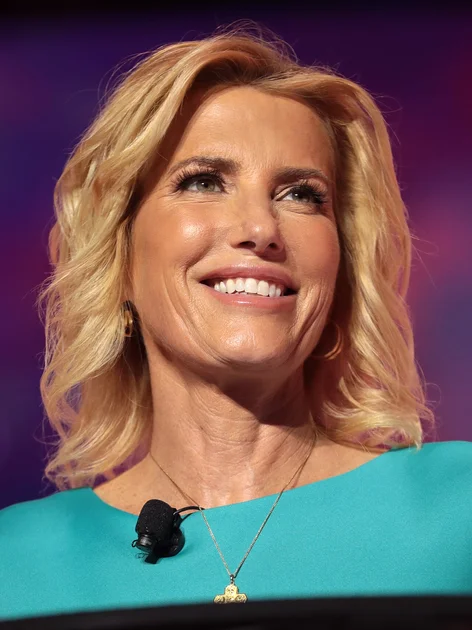
Laura Ingraham Ignites Another Media Storm in April 2026
Laura Ingraham, the veteran Fox News host and conservative commentator, has once again become one of the most searched names in American media this week. The renewed attention comes following a series of on-air remarks and editorial decisions on The Ingraham Angle that have drawn sharp reactions from across the political spectrum. Clips from recent broadcasts have been widely circulated on social media platforms, amplifying scrutiny of both her editorial positions and her role within the broader Fox News programming strategy.
The specific trigger appears to be a combination of her commentary surrounding the Trump administration's ongoing tariff policy debates and her framing of dissenting voices within the Republican Party. Her remarks, delivered with characteristically sharp rhetoric, have reignited discussions about the boundaries of political opinion journalism and the influence of prime-time cable hosts on public policy narratives. Market Futures Surge After Tariff Pause: Wall Street Braces for What Comes Next provides useful context on the economic backdrop that is fueling much of this political commentary.
Key Facts at a Glance
- Ingraham's broadcast segments from the first two weeks of April 2026 have generated millions of social media impressions
- Critics from both left-leaning media watchdog groups and Republican moderates have publicly responded to her statements
- Fox News has not issued any public statement distancing itself from her commentary
- Ingraham remains one of the network's highest-rated prime-time hosts, consistently drawing audiences above two million viewers per episode
Why This Moment Matters: Context and Stakes
Laura Ingraham has been a polarizing figure in American media since her early days as a radio host in the 1990s. Her ascent at Fox News, particularly after The Ingraham Angle launched in 2017, positioned her as a leading voice of the populist-nationalist wing of conservative media. Over the years, her program has faced advertiser boycotts, public controversies over guest choices, and criticism from journalism ethics organizations — yet her ratings have remained resilient.
What makes April 2026 distinct is the political environment in which her commentary is landing. The Trump administration's second term has entered a particularly volatile phase, with internal Republican debates over trade, foreign policy, and executive authority creating fractures that even loyal conservative media figures are being forced to navigate. Ingraham's decision to wade aggressively into these fault lines — rather than maintaining a more unified front — has drawn attention not just to what she is saying, but to how Fox News is managing its on-air talent during a politically complex moment.
The Advertiser and Audience Equation
The commercial stakes for Fox News are not trivial. The network's prime-time lineup depends heavily on Ingraham's block to anchor advertising revenue. Any sustained controversy that triggers an advertiser pullback — as occurred notably in 2018 — would have tangible financial consequences. So far, no major brands have publicly announced a departure from her program, but media analysts are watching the situation closely. The broader conversation about how cable news hosts shape political reality is one that observers of American media have been tracking for years, and Ingraham consistently sits at its center.
As one media analyst noted this week, the relationship between opinion hosts and their networks has become increasingly complex in the current media landscape — a dynamic also visible in the reinvention of other television personalities across different genres. Ryan Seacrest at 41: How the American Idol Host Is Reshaping Live Television in 2026 illustrates, from a very different angle, how television talent adapts to shifting audience expectations and institutional pressures.
Broader Implications: Cable News, Influence, and the Shifting Media Landscape
The attention surrounding Laura Ingraham in April 2026 is not happening in a vacuum. It reflects a larger question about the role of opinionated prime-time cable journalism in a fragmented media ecosystem. Streaming platforms, podcasts, and social media have steadily chipped away at the dominance cable news once enjoyed. Yet figures like Ingraham retain outsized influence precisely because they serve as reliable anchors for specific communities of viewers who continue to treat live television as their primary source of political orientation.
For the journalism industry writ large, the Ingraham cycle — controversy, backlash, ratings stability, repeat — raises durable questions about accountability in opinion media. How Breaking News Travels Faster Than Ever — and Why Accuracy Is Paying the Price examines related tensions between speed, reach, and journalistic responsibility that underpin many of today's media flashpoints.
What happens with Laura Ingraham in the coming weeks will serve as a barometer not just for Fox News, but for whether the political media model that has defined the past decade still holds — or whether cracks are beginning to show at the foundation.
Comments