
Power Crisis Hits Lake Tahoe as Energy Supply Is Redirected to Data Centers
Nearly 50,000 residents and businesses on the California side of Lake Tahoe have been told they will lose 75 percent of their electricity supply by May 2027, after NV Energy — the Nevada utility that has long powered the region — informed Liberty Utilities that it will redirect that capacity to serve the booming AI data center industry in Northern Nevada.
The announcement has sparked alarm in the Sierra Nevada tourist hub, which draws 25 to 28 million visitors annually to its ski resorts and lakeside casinos. Liberty Utilities, the small California-based company that serves the Lake Tahoe basin, generates only about 25 percent of its own power from solar facilities in Nevada. The remaining 75 percent comes from NV Energy — and that supply line will be cut off in less than a year.
“It’s like we don’t exist,” Danielle Hughes, a North Lake Tahoe resident and CEO of the nonprofit Tahoe Spark, who also works within the California Energy Commission’s Efficiency Division, told Fortune. South Lake Tahoe Mayor Cody Bass described the planned cutoff as a source of “a great deal of concern” in an April letter to state regulators.
Liberty Utilities has sought to downplay the disruption. “This does not mean the power is shutting off,” Eric Schwarzrock, president of Liberty Utilities in Lake Tahoe, said at a city council meeting last month, adding that utilities frequently change energy suppliers. The company has since stated it is preparing to issue a formal request for proposals for new wholesale power suppliers this summer.
Why This Matters: Strained Grids, Growing AI Demand, and a Regulatory Tangle
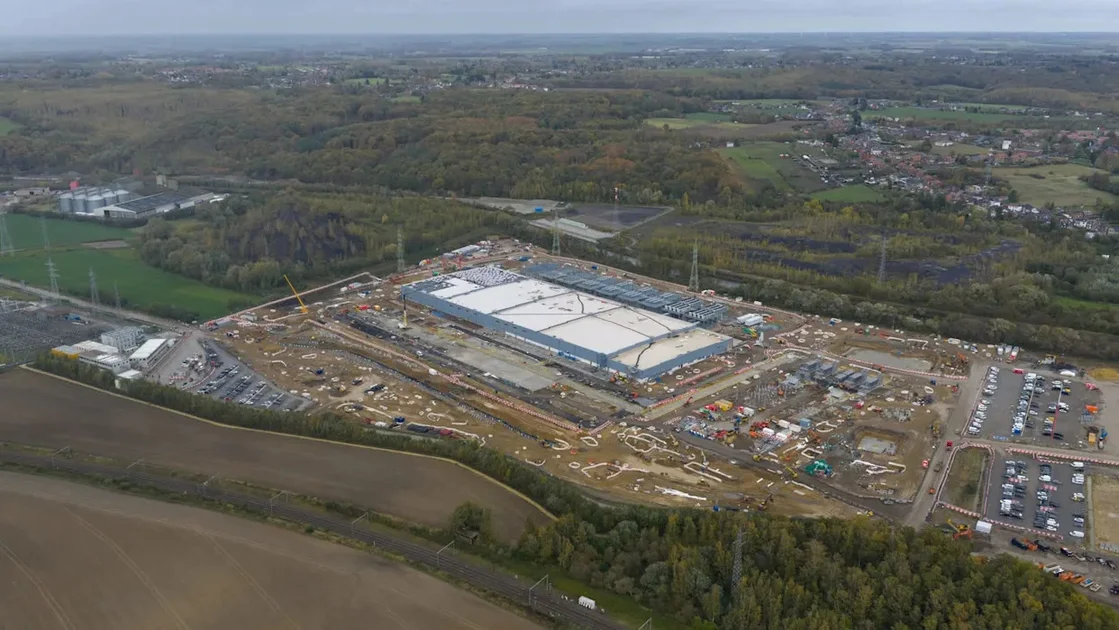
Northern Nevada has become one of the fastest-growing data-center corridors in the country, with Google, Apple, and Microsoft either building or planning massive facilities around the Tahoe-Reno Industrial Center east of Reno. According to the Desert Research Institute, data from NV Energy’s 2024 Integrated Resource Plan shows that 12 data center projects — overwhelmingly located in Northern Nevada — could drive 5,900 megawatts of new demand by 2033.
NV Energy had previously stated that serving this new industrial load would not “impact our existing customer base.” Yet the decision to end power delivery to Lake Tahoe customers suggests otherwise, raising questions about whether the utility is prioritizing data center profits over residential and small-business reliability.
The jurisdictional complexity of the situation makes it especially difficult to resolve. Liberty Utilities is a California investor-owned utility, and its customers pay rates approved by the California Public Utilities Commission. But its grid sits inside NV Energy’s balancing authority in Nevada. No single regulator oversees the entire chain from power generation to customer bills, creating what one local official called “a jurisdictional knot with no easy fix.”
Local groups, including the Sierra Club’s Tahoe Area Group, have called for a full public review and a slowdown of data center approvals. Residents are increasingly worried that AI-driven energy demand — and the facilities that support it — are driving up electricity costs, straining local grids, and threatening the region’s fragile environment.
Broader Implications: Tourism, Disaster Risks, and a Community in Transition
The Lake Tahoe power crisis is unfolding against a backdrop of mounting pressures on local and state governments. In Nevada, emergency management officials recently warned lawmakers that the state faces an exceptionally severe wildfire season, and that its disaster response capabilities remain underfunded and understaffed. Brett Compston, Nevada’s disaster relief chief, told lawmakers bluntly: “If you go home and sleep well tonight after I’m done talking to you, I have done you a disservice.” He noted that the state office of emergency management was “six to eight months away from being optimally functional.”
Yet, as one commentator wrote this week, the same meeting featured a presentation from the Lake Tahoe tourism lobby that entirely ignored these warnings, instead promoting a tax-like scheme to shift corporate tourism costs onto residents across the state. Critics argue that Lake Tahoe’s governance model — heavily influenced by tourism interests — has failed to account for the real environmental and public safety risks posed by unmanaged visitation and now, the energy demands of the AI industry.
Meanwhile, the community is also looking inward for resilience. In South Lake Tahoe, residents are working to revive the local Pop Warner youth football program, which was discontinued after the pandemic. Head coach Shane Rollins, who has raised over $1,700 in recent fundraisers, says the program is about more than sports: “The biggest thing to me is community… bringing kids who might not know each other well an opportunity to play on the same team.” Twenty children have already registered.
As Lake Tahoe confronts an uncertain energy future, its residents are caught between the relentless expansion of AI infrastructure and a regulatory system that seems unable to protect them. For the 49,000 people who call the basin home, the next year will determine whether they can keep the lights on — and at what cost.
Comments