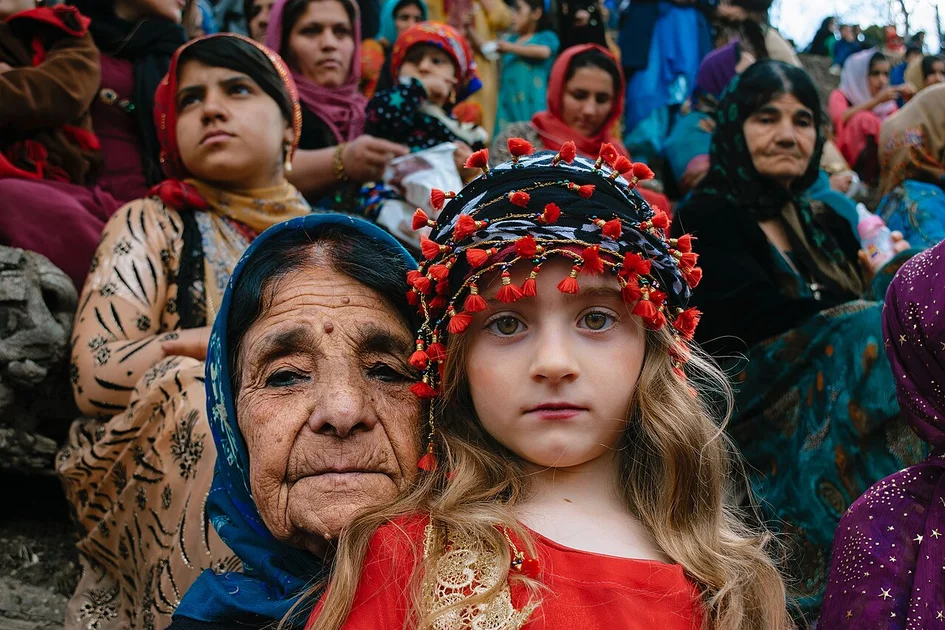
Kurdistan refers to a broad, mountainous region in the Middle East traditionally inhabited by the Kurdish people, one of the world's largest ethnic groups without an internationally recognized independent state. Spanning parts of southeastern Turkey, northwestern Iran, northern Iraq, and northern Syria, Kurdistan remains a region of deep historical significance and ongoing geopolitical importance.
Geographic Overview of Kurdistan
The region commonly referred to as Kurdistan covers an estimated area of 190,000 to 390,000 square kilometers, depending on the definition used. It sits at the crossroads of four modern nation-states, making its boundaries a matter of both political sensitivity and scholarly debate.
Physical Landscape and Climate
Kurdistan is characterized by rugged mountain ranges, fertile river valleys, and vast plateaus. The Zagros Mountains form a dominant geographic feature, providing natural barriers that have historically sheltered Kurdish communities. The region's climate varies considerably, from harsh, snowy winters in the highlands to hot, dry summers in the lower plains. Major rivers including the Tigris and Euphrates have their headwaters in this area, making it strategically vital for water resources across the broader Middle East.
The Kurdish Population
Estimates suggest that between 30 and 45 million Kurds live across the region and in diaspora communities worldwide. The Kurdish people speak several dialects of the Kurdish language, primarily Kurmanji and Sorani, both belonging to the Northwestern Iranian branch of the Indo-European language family. While the majority of Kurds are Sunni Muslims, significant minorities practice Shia Islam, Yazidism, Christianity, and other faiths.
Historical Background
The history of Kurdistan stretches back thousands of years. Ancient civilizations flourished in this mountainous region, and Kurdish identity as a distinct cultural and linguistic group developed over many centuries.
From Ottoman Rule to Modern States
For much of the medieval and early modern period, Kurdish principalities existed within the Ottoman Empire. The Treaty of Sèvres in 1920, signed after World War I, briefly proposed the possibility of a Kurdish homeland. However, the subsequent Treaty of Lausanne in 1923, which established the Republic of Turkey, made no such provision, effectively dividing Kurdish-populated territories among the new regional states. This political division left the Kurdish people fragmented across multiple national jurisdictions, a situation that persists today.
The Kurdistan Region of Iraq
The most formally recognized political entity associated with Kurdistan is the Kurdistan Region of Iraq (KRI), also known as Iraqi Kurdistan. Established with autonomous status following the 1991 Gulf War and formally recognized under Iraq's 2005 constitution, the KRI is governed by the Kurdistan Regional Government (KRG), based in Erbil. The region has developed its own administrative institutions, security forces known as the Peshmerga, and a growing economy driven significantly by oil exports.
Culture and Society
Kurdish culture is rich and multifaceted, shaped by centuries of oral tradition, music, poetry, and a deep connection to the land. The Newroz festival, celebrated on March 21 to mark the Kurdish New Year and the arrival of spring, is one of the most important cultural events, observed across all parts of Kurdistan and among diaspora communities globally.
Language and Literature
Kurdish literature has a long oral tradition, later committed to writing in various scripts. Today, Kurdish is written in Latin script in Turkey, modified Arabic script in Iraq and Iran, and Cyrillic in some diaspora contexts. Notable poets such as Ahmad Khani and Ahmadê Xanî have contributed to a literary tradition that reflects themes of identity, freedom, and love for the Kurdish homeland.
Arts, Music, and Traditions
Traditional Kurdish music features distinctive instruments such as the tanbur, saz, and duduk, accompanied by communal circle dances known as halparke or govend. Embroidered clothing, handwoven carpets, and jewelry are important expressions of cultural identity. Despite political pressures over decades, Kurdish cultural practices have proven remarkably resilient.
Geopolitical Context and Current Developments
The status of Kurdish populations remains one of the most complex issues in Middle Eastern geopolitics. In Turkey, the Kurdish question has been tied to decades of conflict involving the Kurdistan Workers' Party (PKK), designated as a terrorist organization by Turkey, the United States, and the European Union. In Syria, Kurdish forces, particularly the Syrian Democratic Forces (SDF), played a central role in combating the Islamic State and currently administer a semi-autonomous region in northeastern Syria known as Rojava.
In Iran, Kurdish political movements have historically faced suppression, though cultural expression has seen fluctuating levels of tolerance. Meanwhile, the Kurdistan Region of Iraq continues to function as the most stable and institutionally developed Kurdish political entity, maintaining international diplomatic relations and attracting foreign investment.
The question of full Kurdish statehood remains unresolved. A 2017 independence referendum in Iraqi Kurdistan yielded an overwhelming vote in favor of independence, but the result was not recognized internationally and prompted significant political and economic pressure from Baghdad and neighboring states.
Kurdistan's future trajectory will likely be shaped by regional power dynamics, internal Kurdish political divisions, and evolving international priorities across the Middle East.
Comments