
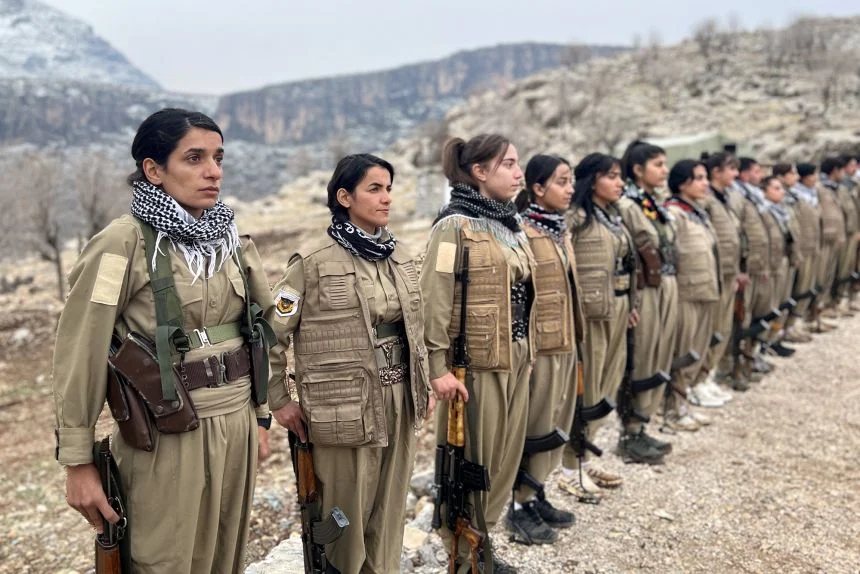
The Kurdish People Back in the Global Spotlight
As geopolitical tensions across the Middle East continue to reshape alliances and borders in 2026, the Kurdish people have once again emerged as a focal point of international attention. With ongoing developments in northern Syria, shifting dynamics in post-civil-war governance, and renewed diplomatic pressure surrounding Kurdish political representation in Turkey, Iraq, and Iran, discussions about who the Kurds are — and what they want — have surged across news platforms worldwide.
The Kurds are widely recognized as one of the largest ethnic groups in the world without a sovereign state of their own. Current estimates place the global Kurdish population between 30 and 40 million people, making them a demographically significant group whose cultural identity and political aspirations continue to carry enormous weight across at least four countries.
Who Are the Kurdish People?
Origins, Language, and Culture
The Kurds are an Indo-European ethnic group indigenous to a mountainous region historically known as Kurdistan, a territory that spans southeastern Turkey, northern Iraq, northwestern Iran, and northern Syria. Their languages — primarily Kurmanji in the north and Sorani in the south — belong to the Iranian branch of the Indo-European language family, linking them linguistically to Persian civilization while maintaining a distinct cultural identity of their own.
For readers interested in the broader regional cultural context, Iranian Culture, History, and Society: A Comprehensive Overview offers useful background on the civilizations with which Kurdish culture has long been intertwined.
Kurdish society has historically been organized around tribal structures, with a strong oral literary tradition, distinctive music, and celebrations such as Nowruz — the Persian New Year — which holds particular cultural significance for Kurdish communities. Nowruz, observed each year on the spring equinox, serves as a unifying cultural moment that transcends national borders.
Religion and Diversity Within the Group
The majority of Kurds are Sunni Muslim, though Kurdish communities also include Yazidis, Alevis, Christians, and followers of Yarsanism. This religious diversity is a defining characteristic of Kurdish society and has historically placed certain groups — particularly the Yazidis — at acute risk during periods of sectarian violence, most devastatingly during the 2014 ISIS genocide in the Sinjar region of Iraq.
The Political Landscape: Divided Across Four Nations
Iraq, Syria, Turkey, and Iran
The Kurdish political situation remains one of the most complex unresolved questions in modern geopolitics. In northern Iraq, the Kurdistan Regional Government (KRG) operates as an autonomous region with its own parliament, military forces known as the Peshmerga, and considerable control over oil revenues. Despite internal divisions between the two dominant political parties — the Kurdistan Democratic Party (KDP) and the Patriotic Union of Kurdistan (PUK) — the KRG represents the most institutionalized form of Kurdish self-governance in existence.
In Syria, the Kurdish-led Autonomous Administration of North and East Syria (AANES), often called Rojava, emerged from the chaos of the Syrian civil war and remains a contested but functioning political entity in 2026. Its governing framework, which draws on principles of democratic confederalism, gender equality, and multi-ethnic coexistence, has attracted significant international interest — and significant hostility from Ankara.
In Turkey, the Kurdish issue remains deeply contentious. The Kurdistan Workers' Party (PKK), designated a terrorist organization by Turkey, the United States, and the European Union, has been engaged in armed conflict with the Turkish state since 1984. Peace talks have sporadically emerged and collapsed over the decades, and 2026 finds Turkish-Kurdish relations at another sensitive juncture, with renewed parliamentary debates over the legal status of Kurdish political parties.
In Iran, Kurdish populations — concentrated primarily in the provinces of Kurdistan, Kermanshah, and West Azerbaijan — have historically faced suppression of cultural and linguistic expression. Kurdish political parties operating in Iran, several of which are based in exile in Iraqi Kurdistan, continue to press for greater autonomy.
Why This Matters Now: Stakes and Shifting Dynamics
The renewed global focus on Kurdish identity in April 2026 comes against a backdrop of broader Middle Eastern realignment. The post-Assad transition in Syria, the continued fragility of Iraqi federal politics, and Turkey's evolving role within NATO all intersect with the Kurdish question in ways that will shape the region for years to come.
Humanitarian concerns also remain acute. Hundreds of thousands of Kurds continue to live in displacement camps across the region, and the reconstruction of areas devastated by ISIS — including Sinjar and parts of northeastern Syria — proceeds unevenly. International organizations have repeatedly called for stronger protections for minority communities, including the Yazidis, whose case for genocide recognition has gained broader legal traction in European courts.
Broader Implications: A Stateless Nation in a World Reordering Itself
The Kurdish situation offers a striking case study in the tensions between state sovereignty and the rights of large, cohesive ethnic groups. In an era when questions of self-determination, minority rights, and post-colonial borders are being debated with fresh urgency — from Europe to Africa to Southeast Asia — the Kurdish experience resonates far beyond the Middle East.
Analysts observing the region in 2026 note that the Kurds' ability to maintain cultural cohesion across four hostile or indifferent state structures, while simultaneously building governance institutions in places like northern Iraq and northeastern Syria, reflects both the resilience of Kurdish identity and the limits of the post-World War I international order that left them without a homeland.
Whether through negotiated autonomy arrangements, formal federalism, or continued de facto self-governance, the trajectory of Kurdish political aspirations will remain a defining story of the 2020s — one with implications for international law, regional security, and the rights of stateless peoples everywhere.
Comments