
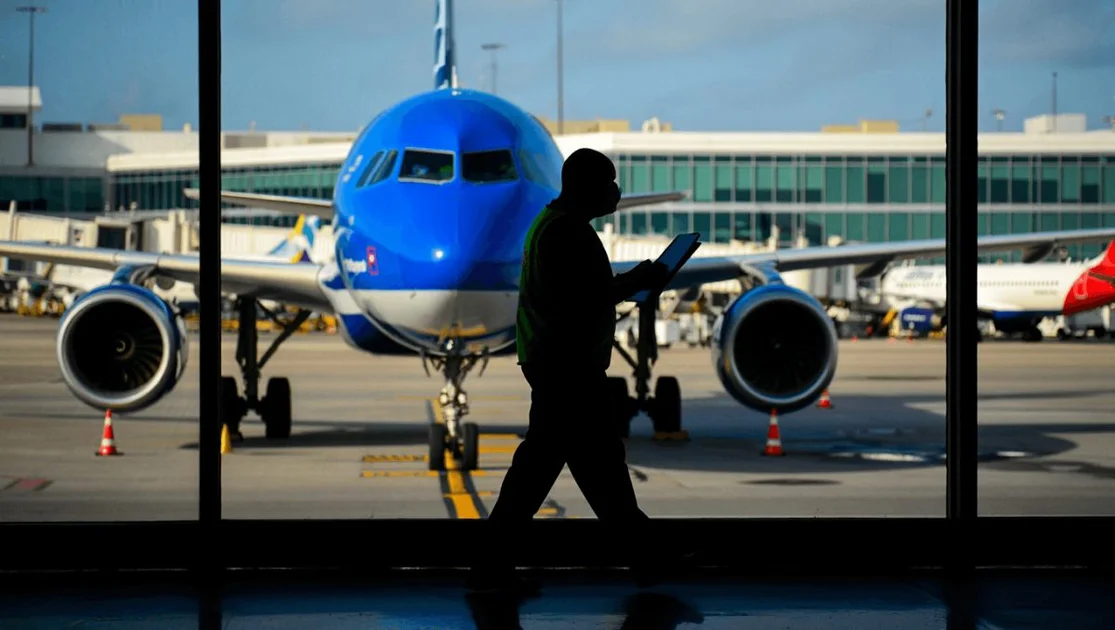
JetBlue Exits Manchester-Boston Regional Airport as Part of Major Route Overhaul
JetBlue Airways has confirmed it will permanently end service to Manchester-Boston Regional Airport (MHT) effective July 8, pulling its three remaining routes from the New Hampshire airport and exiting the market less than 18 months after launching flights there. The move is part of a broader strategic realignment in which the carrier is cutting a total of 11 underperforming routes across the Northeast and redeploying those aircraft to build a stronger hub in Fort Lauderdale-Hollywood International Airport (FLL).
The route cuts, announced internally on May 18 and confirmed in public statements over the following days, represent one of the most aggressive network reshuffles JetBlue has undertaken since it began restructuring its operations last year. Along with Manchester, the airline is trimming service from Newark Liberty International Airport (EWR), Hartford Bradley International Airport (BDL), and Providence T.F. Green Airport (PVD), among others. The affected Newark routes include five destinations, while Hartford and Providence each lose at least one route to the Caribbean or Central America.
JetBlue said in a statement that the adjustments are “targeted schedule adjustments” aimed at strengthening its focus city strategy in South Florida. “While we know it’s disappointing when JetBlue ends service on a route,” the airline said, “this decision will allow us to better align flying with customer demand and strengthen our focus city strategy in South Florida.”
The Manchester exit is the most symbolic cut. JetBlue only returned to MHT in 2025 after a years-long absence, betting that demand from the Boston suburbs could support leisure flights to Florida. The airport marketed the service heavily, but internal communications cited by multiple aviation outlets described the experiment as having “not performed to” expectations. Manchester airport officials said they were “very disappointed” with the decision, adding that their promotional efforts “were not enough to overcome their ongoing business challenges, which have only been exacerbated.”
Why JetBlue Is Pulling Planes Out of the Northeast
The route cuts stem from a simple fleet math problem. JetBlue is not adding many new aircraft this year. The airline expects to take delivery of only 12 Airbus A220-300s in 2026, and it has deferred deliveries of its larger A320neo-family planes until 2030 and beyond. At the same time, Pratt & Whitney engine issues continue to ground some of its existing narrowbody fleet, further constraining capacity.
With a limited number of planes available, every route must justify itself. Marginal performers are no longer tolerated because they tie up aircraft that could be deployed more profitably elsewhere. This is especially true in Fort Lauderdale, where JetBlue already holds the largest market share and sees a major opportunity to fill the gap left by Spirit Airlines, which collapsed and ceased operations late last year.
JetBlue added 11 new routes from Fort Lauderdale earlier this month, a mix of domestic and international destinations that leverage the airport’s strong leisure and visiting-friends-and-relatives (VFR) demand. Those additions include flights to smaller Caribbean islands and secondary Florida cities, all designed to capture passengers who previously flew Spirit. But because the overall fleet size is roughly static, every new Fort Lauderdale route requires a corresponding cut somewhere else.
Most of the cuts are hitting Northeast airports that are not JetBlue’s primary focus cities. Newark, for example, has long been a secondary market for the airline. While it still operates a significant schedule from Newark to destinations like Los Angeles and Fort Lauderdale, the five routes being eliminated are all to Caribbean and Central American points — markets where JetBlue believes it can serve demand more efficiently from Fort Lauderdale with larger aircraft or better connections.
Hartford and Providence are also losing key leisure routes. JetBlue has historically served those cities as part of its broader Northeast network, but both have struggled to match the load factors and yields of flights from Boston or New York. An internal staff memo obtained by Simple Flying noted that the airline is “making targeted schedule adjustments, including ending service on a small number of underperforming routes.”
Customer Impact and Employee Morale
For travelers, the immediate impact is significant. Passengers with bookings on affected routes after the cut dates will need to be rebooked or refunded. JetBlue has said it will notify customers directly and offer alternatives, but the lack of nonstop options from airports like Manchester will force many to drive to Boston Logan International Airport (BOS) or connect through other hubs.
Employee morale has taken a hit as well. According to a report from View from the Wing, Newark-based crew members learned that their flights were being eliminated not through a personal conversation from management but via a routine daily email update. “EWR Crews are very upset they had to find out via a basic daily email update that a significant amount of their flying is being eliminated, management should have handled it better,” aviation insider JonNYC posted on social media, citing crew frustration. The impersonal communication has exacerbated concerns about job security and working conditions as the airline continues to shrink parts of its network.
JetBlue has offered reassignment and relocation options for affected employees, but the cuts reduce the total number of flying opportunities from several bases. The airline’s network team has defended the moves as necessary for long-term financial health, but the abruptness of the changes has left some workers feeling undervalued.
Betting Big on Fort Lauderdale After Spirit’s Collapse
JetBlue’s strategy is built around a single premise: Fort Lauderdale is now the most valuable piece of real estate in the U.S. airline industry. Spirit Airlines was the dominant ultra-low-cost carrier at the airport, operating dozens of routes to the Caribbean, Latin America, and secondary U.S. cities. When Spirit ceased operations, that capacity vanished almost overnight, creating a vacuum that JetBlue has moved quickly to fill.
The airline already had the largest market share at FLL, but Spirit’s collapse has opened the door to even more growth. In the same week it announced the route cuts, JetBlue revealed plans to launch service to 11 new destinations from Fort Lauderdale, including several cities that Spirit had served exclusively from the airport. These include secondary Caribbean islands like St. Kitts and Grenada, as well as smaller Florida markets such as Key West and Sarasota.
JetBlue’s calculus is that it can capture a significant portion of Spirit’s former customer base — flyers who are price-sensitive but still value the full-service experience that JetBlue offers, including seatback entertainment, free Wi-Fi on some aircraft, and more legroom in economy. However, this is not a traditional growth story. The airline is not adding net capacity; it is reallocating existing aircraft from other parts of the network.
“JetBlue has spent much of the past year trying to reshape itself into a leaner, more profitable airline,” wrote Paul Hartley of Simple Flying, who noted that the carrier “is not flooding the market with new aircraft. It is moving capacity around.”
Fort Lauderdale also serves as a key connecting point for JetBlue’s growing Latin American network. The airline flies to more than 30 destinations in the region from FLL, and the new routes will strengthen its ability to compete with American Airlines at Miami International Airport (MIA) and other legacy carriers. By focusing its resources on a single gateway, JetBlue hopes to achieve the scale and frequency that makes it the preferred option for travelers in South Florida.
Airlines Face Rising Costs and Engine Headaches
The broader context for these cuts is a challenging operating environment for U.S. airlines. Fuel costs have risen sharply in 2026, eating into margins at a time when several carriers are already struggling to return to sustained profitability. JetBlue has reported repeated losses in recent quarters, and its share price has underperformed the broader market.
Add to that the ongoing Pratt & Whitney PW1000G engine issues, which have forced the grounding of dozens of Airbus A220s and A320neos across multiple airlines. JetBlue operates both aircraft types, and the engine problems have reduced the number of available planes. The airline has had to cancel flights and defer planned growth, making it all the more critical to ensure that every flight in its network is pulling its weight.
The fleet constraint is unlikely to ease soon. JetBlue’s order book is relatively thin for the next two years, and while it has options for additional A220s, the airline has been cautious about committing to new deliveries given its balance sheet. Until the Pratt & Whitney situation is resolved and new planes arrive, JetBlue will need to keep reshuffling its network to match capacity with demand.
The Broader Shift: Airlines Are Pruning to Survive
JetBlue’s route cuts are not an isolated event. Across the industry, airlines are reevaluating their networks with a sharper eye on profitability. The post-pandemic travel boom has faded, and carriers are no longer adding routes indiscriminately. Legacy airlines like United and Delta have trimmed unprofitable flying in smaller markets, even as they expand at their megahubs. Low-cost carriers like Southwest and Frontier have also pulled back from some cities.
What makes JetBlue’s moves notable is the speed and scale of the pivot. The airline essentially exited Manchester less than a year and a half after re-entering, a reversal that underscores how quickly network strategies can change in a capital-constrained environment. It also highlights the winner-take-all dynamic that can emerge after a competitor fails: Spirit’s collapse has given JetBlue a rare chance to cement its position in Fort Lauderdale, but it comes at a cost to customers and employees in other parts of the country.
In a market where aircraft are scarce and fuel is expensive, the airlines that survive will be those that make tough choices early. JetBlue is clearly making those choices now, betting that a stronger Fort Lauderdale fortress will offset the pain of cutting routes in New Hampshire and New Jersey.
What This Means for Travelers
For passengers in Manchester, the loss of JetBlue service means fewer nonstop flights to Florida and higher fares. The airport will still be served by Southwest, American, Delta, and United, but JetBlue’s departure removes a popular budget option. Travelers may need to drive to Boston Logan, which is about an hour south, or pay more for connecting itineraries.
Those in the Hartford and Providence areas face similar challenges. JetBlue’s cuts there will affect leisure travelers heading to sun destinations, many of whom had relied on the airline’s relatively low fares and convenient schedules. They may still book JetBlue, but they will now have to connect through Boston, New York, or Fort Lauderdale, lengthening their travel times.
The silver lining is for South Florida travelers. Passengers flying out of Fort Lauderdale will see a wider array of nonstop destinations, likely at competitive prices, as JetBlue and other carriers jockey for market share. The airline has promised to add more frequencies on popular routes, meaning better schedules for those based in the area.
Looking Ahead: Can JetBlue’s Gamble Pay Off?
JetBlue’s strategy is not without risk. By putting so many eggs in the Fort Lauderdale basket, the airline is exposing itself to the fortunes of a single airport. If demand to South Florida softens, or if a competitor like Delta or American makes a concerted push at FLL, JetBlue could find itself overexposed.
There is also the question of whether the displaced passengers from the cut routes will simply switch to other airlines, reducing JetBlue’s overall market share in the Northeast. The carrier has long marketed itself as the hometown favorite in New York and Boston, and withdrawing from smaller New England airports could erode brand loyalty over time.
Still, JetBlue’s leadership has made it clear that survival and profitability come first. The airline has explored a range of strategic options in recent years — from a proposed merger with Spirit that was blocked by regulators, to a now-defunct plan to join the Oneworld alliance. None of those moves came to fruition. Instead, JetBlue is forging a more independent path, one that relies on ruthless network discipline and a focused bet on Florida.
Whether that bet pays off will depend on many factors: the pace of fleet growth, the resolution of engine issues, and the competitive response from other carriers. For now, JetBlue is cutting what doesn’t work and doubling down on what does — and for Manchester, that means the airline’s second homecoming was even shorter than the first.
Comments