
Introduction: Watters sparks controversy with 'self-deport' comment
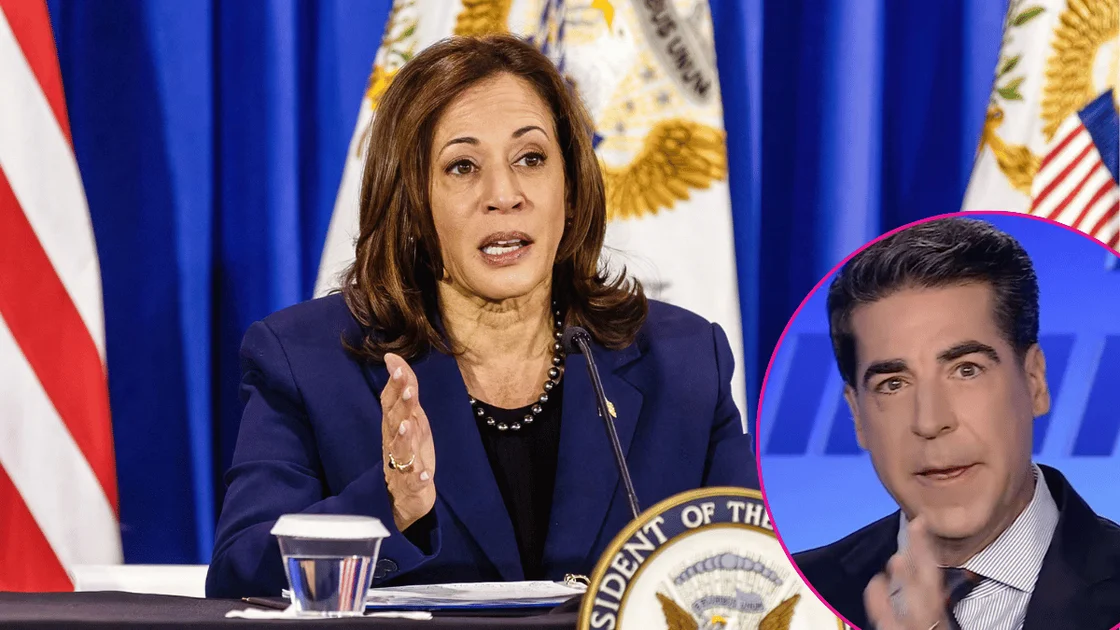
Fox News host Jesse Watters has ignited a firestorm of criticism after declaring on the network's talk show The Five that he would "self-deport" if former Vice President Kamala Harris were to win the presidency in 2028. The remark, made on July 13, 2026, during a discussion about Harris's potential candidacy, has drawn sharp rebukes from viewers and media watchdogs alike.
During the segment, a video clip showed Harris speaking at a WNBA event, which Fox labeled an "airball." Watters responded by saying, "I see how close we were to having a woman president. And this is what it would have been like for four years." When co-host Sandra Smith pressed him on whether his criticism was rooted in gender or personality, Watters replied, "Both! 'The future is female. Women empowerment.' And anytime I attacked her, I would’ve been called, 'I'm afraid of powerful women.' I'm not! I just don't like her."
Watters then doubled down, promising viewers, "So if she wins the presidency, I will make a promise right now. I will self-deport. I will self-deport, probably France. The only thing that will make me come back is if Doug has an affair" — a reference to Harris's husband, Doug Emhoff.
Public and media reaction: backlash erupts
Social media platforms erupted within hours. One X user wrote, "Do it now Jesse. You are the worst reporter I have ever listened to in my life." Another commenter quipped, "Like France would ever let you in." The segment quickly became a rallying point for critics who argue that Fox News has increasingly blurred the line between commentary and partisan advocacy.
The Irish Star, which first reported the remarks, noted that viewers were "fuming" over Watters's attack on Harris, who lost the 2024 presidential election to Donald Trump and has since signaled interest in a 2028 run. During a recent appearance at New York's National Action Network convention, Harris told Rev. Al Sharpton, "Listen, I might. I might. I'm thinking about it."
Fox News under renewed scrutiny
The incident is the latest in a series of controversies involving Fox News and its anchors. Just a day earlier, on July 14, 2026, Watters returned from scheduled time off to guest-host Jesse Watters Primetime, where he interviewed Treasury Secretary Scott Bessent about the addition of Trump's signature to U.S. currency — a first for a sitting president. The interview, which included a tour of the Treasury Department, was labeled by critics as "sycophantic" and evidence that Fox News operates as "a propaganda outlet" for the Trump administration.
During that segment, Bessent showed Watters a strip of $100 bills bearing Trump's signature, joking, "Don't smudge it." Watters laughed and replied, "Let's not get carried away" after Bessent suggested putting Watters's image on a coin. The exchange further fueled accusations that the network prioritizes access over journalistic independence.
The stakes: Harris's 2028 ambitions and Trump's shadow
While the 2028 election is more than two years away, Harris's hints at a second bid have already reshaped the political landscape. Her 2024 loss to Trump was narrow, and Democrats see her as a strong contender, especially given her fundraising network and name recognition. However, she faces potential primary challengers, including Gavin Newsom, Gretchen Whitmer, and Pete Buttigieg.
Trump's own health and legal challenges — including recent reports of a "fresh health symptom" that have alarmed allies — add further uncertainty. Meanwhile, the White House has been embroiled in controversies, including a reported Secret Service dispute over a chopper request for JD Vance's son's golf lesson. That incident, covered by multiple outlets, highlighted tensions between political appointees and career law enforcement.
Watters's comment, though seemingly hyperbolic, taps into deeper cultural divisions. The phrase "self-deport" carries heavy political baggage: it was popularized during the 2012 Republican primary by Mitt Romney, who proposed the concept as a way to encourage undocumented immigrants to leave voluntarily. Critics at the time called the term dehumanizing. By using it in a joking context about his own hypothetical departure, Watters drew accusations of insensitivity.
Broader implications: Media bias, political entertainment, and the erosion of trust
The incident reflects a larger trend in cable news where opinion hosts blur the lines between reporting and performance. Watters is not alone — figures like Tucker Carlson (formerly of Fox) and Rachel Maddow (on MSNBC) have built careers on partisan commentary. However, recent studies show that public trust in media has fallen to historic lows, with only 32% of Americans expressing confidence in news accuracy, according to a 2025 Gallup poll.
For Fox News specifically, the network has faced multiple lawsuits and public relations crises. A 2023 defamation settlement with Dominion Voting Systems cost the network $787.5 million, and ongoing legal battles with Smartmatic could result in even larger penalties. The network has since tightened editorial controls, but incidents like Watters's comment suggest that the culture of provocative commentary persists.
The cost of hyper-partisan coverage
Watters's self-deport joke also underscores how political figures and media personalities increasingly use hyperbole to engage audiences — a strategy that risks trivializing serious issues. Immigration policy, deportation, and political exile are real-world concerns that affect millions of people. By using them as punchlines, commentators may deepen cynicism and reduce the capacity for substantive debate.
This dynamic is not limited to Fox; left-leaning outlets also engage in fierce rhetoric. But the power imbalance matters: Fox News remains the most-watched cable news network, with an average prime-time audience of over 2 million viewers. When its hosts make inflammatory statements, the ripple effects are amplified.
What comes next: Watters's future and the 2026 midterm context
Thus far, Fox News has not issued a statement regarding Watters's remarks. The network often relies on the argument that its opinion hosts are exercising free speech, not reporting news. However, critics argue that the network's content — including Watters's Primetime show — increasingly blurs into advocacy for Trump and Republican candidates.
The 2026 midterm elections are just four months away, and control of Congress is at stake. With Trump's approval ratings hovering around 48% (averaged from recent polls), Democrats see an opportunity to reclaim the House and possibly the Senate. Watters's comments could serve as a fundraising tool for Democratic campaigns, who may use them to rally voters against what they call the "Fox-Trump axis."
Meanwhile, Harris has not yet formally announced her candidacy, but she is widely expected to do so in early 2027. Her team is likely watching these media narratives closely, knowing that public perception of her — shaped in part by figures like Watters — could influence her path forward.
Conclusion: A moment that crystallizes a divide
The Jesse Watters self-deport episode is more than a viral clip. It is a window into the state of American political media: a space where partisan identities dictate on-air personas, where the line between news and entertainment has dissolved, and where even a throwaway comment about moving to France can trigger a national conversation.
In a country already grappling with deep polarization, such moments risk further alienating citizens from the institutions — including the press and the presidency — that are supposed to unite them. Whether Watters's remark will have lasting consequences or simply fade into the 24-hour news cycle remains to be seen. But for now, it highlights how the intersection of celebrity, politics, and media can ignite debates that extend far beyond any single cable segment.
Comments