
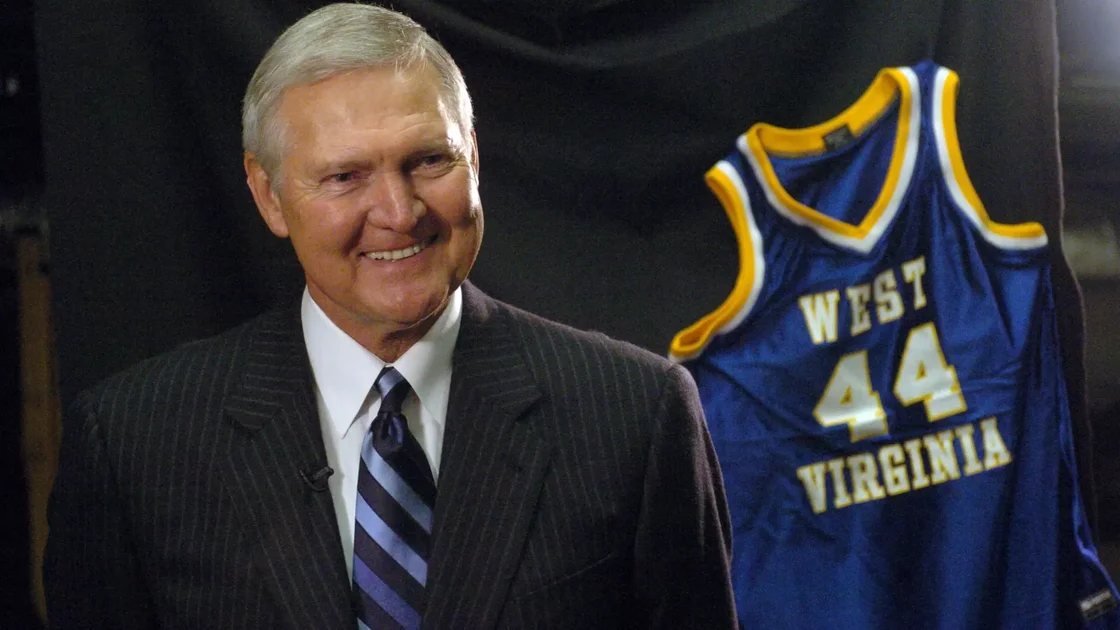
A Documentary Premiere Reframes a Basketball Legend
One of the most anticipated sports documentaries of 2026 officially landed on Prime Video on April 16, bringing renewed attention to one of basketball's most complex and consequential figures. Jerry West: The Logo, directed by black-ish creator Kenya Barris, offers an unflinching portrait of the Los Angeles Lakers legend — tracing his Hall of Fame playing career, his equally storied executive tenure, and the deep personal struggles that shadowed him throughout his life.
The timing carries particular emotional weight. West, who was born in 1938 in Chelyan, West Virginia, died in 2024, making the documentary both a celebration and a posthumous tribute. Barris conducted extensive interviews with West before his passing, giving the film an intimacy that distinguishes it from conventional sports retrospectives.
The Logo Confirmed — At Last
Among the film's most newsworthy revelations is a moment involving NBA Commissioner Adam Silver, who, according to the Los Angeles Times, acknowledges on camera for the first time that Jerry West was indeed the inspiration for the NBA's iconic logo. Despite decades of widespread assumption, the league had never officially confirmed the identity of the silhouetted ballhandler. That confirmation, arriving in a documentary rather than a press release, underscores the personal and emotional register in which the film operates.
The Man Behind the Myth: Triumph and Inner Turmoil
West's on-court legacy alone would justify a feature-length documentary. He retired from the Lakers in 1974 ranking among the all-time leaders in points per game — a figure made more remarkable by the absence of the three-point line during his era. His playoff scoring record for a single series remains unmatched. As an executive, he was the architect of the Showtime Lakers dynasty in the 1980s, orchestrated the acquisitions of both Kobe Bryant and Shaquille O'Neal, and later provided crucial guidance to the Golden State Warriors during their championship run.
But Barris set out to tell a different kind of story. In interviews ahead of the premiere, the director explained that West's memoir was what convinced him to take on the project. "There was so much about fatherhood, being a husband, leadership, saying things people don't necessarily want you to say," Barris told Lakers On SI. The documentary probes West's struggles with depression, a fractured sense of self-worth, and the lasting psychological impact of a difficult childhood with a domineering father in rural West Virginia.
Family, Vulnerability, and a Final Phone Call
The film's most affecting passages draw on testimony from West's son, Ryan West, who describes his father as "my best friend, my mentor" while also acknowledging the emotional distance that sometimes defined their relationship. The elder West, by his own account recorded before his death, admitted he could have been a better father and husband — a candor that Ryan West described as both painful and meaningful.
The final chapter of their relationship is rendered in a single detail that lands quietly but hard. "My last phone call with my father, he made sure to tell me he loved me," Ryan West recalled — a gesture that, given his father's well-documented difficulty with emotional expression, carried the weight of a lifetime.
The documentary also captures lighter moments, including Ryan's account of picking up a teenage Kobe Bryant from a hotel before the future five-time champion even had a driver's license. "I was probably his first friend in Los Angeles," Ryan said. Years later, at Bryant's 60-point farewell game in 2026, Kobe reportedly told him: "The first time I was ever on the 405 was in your car."
Why This Documentary Matters Beyond Sports
Barris has been deliberate in framing Jerry West: The Logo as something larger than a sports film. "Sports are an allegory for life in so many ways," he told Lakers On SI. "The profundity lies in the idea that we're all aggregates of our experiences. Failure actually breeds success."
That framing is consistent with a broader trend in sports documentary filmmaking, where the genre has moved decisively away from highlight-reel hagiography toward psychological depth. Films and series examining the inner lives of athletic icons have become some of the most culturally resonant content on streaming platforms, attracting audiences well beyond traditional sports fans.
The participation of figures like Magic Johnson, Michael Jordan, Pat Riley, Stephen Curry, Jeanie Buss, and Shaquille O'Neal — all of whom granted interviews — signals the esteem in which West is held across generations of the sport. Former Lakers center Vlade Divac, who was himself traded by West to secure the draft rights to Bryant, chose West to introduce him at his Basketball Hall of Fame induction. "He was very honest and he cared about people and helped you achieve your goals," Divac said. "He's one of the best guys I ever met. Period."
For Prime Video, the premiere represents a significant addition to its sports documentary slate. And for basketball fans, it offers something rarer than championship footage: a legendary figure, on his own terms, telling the truth about who he was — on and off the court — before it was too late.
Comments