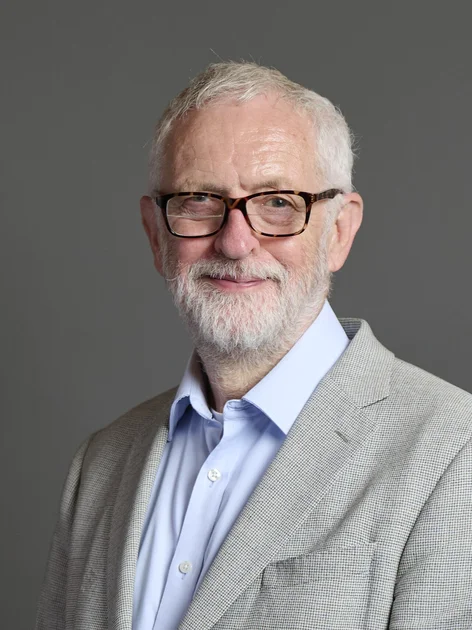
Jeremy Corbyn is one of the most significant and divisive figures in modern British political history. A veteran left-wing politician, he served as Leader of the Labour Party from 2015 to 2020, reshaping the party's direction and energising a new generation of political activists while simultaneously generating considerable controversy.
Early Life and Political Beginnings
Background and Education
Born on 26 May 1949 in Chippenham, Wiltshire, Jeremy Bernard Corbyn grew up in a politically engaged household. He attended Adams' Grammar School in Newport, Shropshire, before studying at North London Polytechnic, though he left without completing his degree. His interest in politics emerged early, shaped in part by his parents' involvement in the peace movement.
Entry into Politics
Corbyn began his political career as a trade union organiser and local councillor in the London Borough of Haringey during the 1970s. He was elected as the Member of Parliament for Islington North in the 1983 general election, a seat he would hold for over four decades. Throughout his backbench career, he became known for championing causes including anti-war activism, civil liberties, and international human rights, often voting against his own party's leadership.
Labour Leadership and Political Platform
Rise to Party Leader
In 2015, following Labour's defeat in the general election, Jeremy Corbyn entered the leadership contest as a largely unknown backbencher. To widespread surprise, he won with nearly 60% of the vote among party members, reflecting a strong appetite within the membership for a more radical left-wing direction. He was re-elected as leader in 2016 following a leadership challenge, again with a substantial majority.
Key Policy Positions
Under Corbyn's leadership, Labour adopted a significantly left-leaning manifesto. Key policy positions included the renationalisation of key public utilities such as rail, water, and energy, increased public spending on the National Health Service and education, opposition to austerity measures, and the abolition of university tuition fees. The 2017 Labour manifesto, titled For the Many, Not the Few, attracted widespread attention and contributed to a surprise increase in Labour's vote share during that year's general election.
On foreign policy, Corbyn maintained long-standing positions critical of NATO expansion, Western military interventions, and nuclear weapons. He was a vocal supporter of Palestinian rights and had engaged, in earlier decades, with various international peace processes, including dialogue with Sinn Féin and other groups.
Controversies and Challenges
Antisemitism Crisis
One of the most damaging episodes of Corbyn's leadership was a prolonged controversy over antisemitism within the Labour Party. Jewish community organisations and members of Parliament raised serious concerns about the handling of antisemitism complaints within the party. In 2020, the Equality and Human Rights Commission (EHRC) investigated Labour and found the party had unlawfully discriminated against Jewish members. The EHRC report concluded that there had been political interference in the complaints process and identified multiple failures of leadership.
Corbyn's response to the report led to his suspension from the Labour Party by his successor, Keir Starmer, in October 2020. Although the suspension was later lifted, he was not restored to the Parliamentary Labour Party.
2019 General Election Defeat
The December 2019 general election resulted in a heavy defeat for Labour, with the party receiving its worst result since 1935. The Conservatives under Boris Johnson secured a majority of 80 seats. Analysis of the result pointed to multiple factors, including Brexit policy uncertainty, concerns about Corbyn's leadership, and the broader political climate. The defeat effectively ended Corbyn's tenure as leader, and he announced his resignation in April 2020.
Life After the Labour Party
Independent Parliamentarian
Following his removal from the Labour Parliamentary Party, Jeremy Corbyn stood as an independent candidate in Islington North at the 2024 general election. He won the seat, defeating the official Labour candidate and demonstrating continued personal support within his constituency. His victory made him one of the most prominent independent MPs in the House of Commons.
Ongoing Activism
Outside Parliament, Corbyn has remained active in left-wing and peace movements. He has spoken at rallies, contributed to political commentary, and maintained involvement in campaigns related to housing, workers' rights, and international conflicts. In 2024, he was among the founders of a new political organisation called Peace and Justice, aimed at building a broader progressive movement.
Jeremy Corbyn's political journey reflects deep tensions within British left-wing politics around questions of electability, party unity, foreign policy, and social justice. His career continues to provoke debate among politicians, academics, and the public alike.
Comments