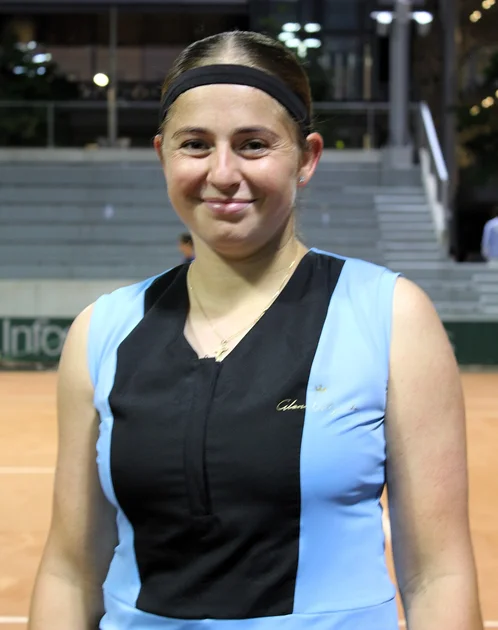
Ostapenko Delivers a Statement Performance on Clay
Jelena Ostapenko is making headlines once again in April 2026, reigniting conversations about her place among the WTA's most dangerous players on clay. The Latvian powerhouse has been turning heads during the European clay swing, producing the kind of aggressive, flat-hitting tennis that once earned her a stunning Roland Garros title back in 2017. Her performances over the past two weeks have been marked by an elevated consistency that has historically been the one element missing from her formidable game.
In her most recent outing, Ostapenko dismantled a top-15 opponent in straight sets, landing over 70 percent of her first serves and striking 38 winners — a stat line that underlines just how difficult she is to contain when her game clicks. The 28-year-old Latvian, currently ranked inside the WTA top 20, appears physically sharper and more tactically disciplined than she has been in several seasons.
Key Numbers Behind the Run
Ostapenko's current clay-season statistics are drawing attention from analysts and former players alike. Her average first-serve speed has increased marginally compared to her 2025 clay campaign, and her unforced error count is trending downward — a critical indicator for a player whose aggressive baseline style naturally walks a fine line between brilliance and implosion. Coaches and commentators are pointing to an improved return game as the clearest sign of her evolution heading into May.
Why This Moment Matters for the WTA Clay Season
The timing of Ostapenko's resurgence is significant. With Roland Garros scheduled to begin in late May, the clay swing that kicks off in April and accelerates through Madrid and Rome serves as the primary proving ground for title contenders. The women's draw at Roland Garros has appeared unusually open in 2026, with injuries and inconsistent form affecting several of the sport's top-ranked players in the early part of the season.
For Ostapenko, the stakes extend beyond just Grand Slam ambition. She has been a fixture on tour since her breakout Roland Garros victory, but sustained deep runs at the biggest clay events have eluded her since. A strong showing this spring would represent not just a competitive milestone but a reaffirmation of her long-term relevance in a generation of players who have grown increasingly powerful and athletic.
The Broader WTA Picture
The women's tour in 2026 has seen a wave of veterans reassert themselves alongside emerging talents — a dynamic not unlike what has been observed in other sports, where experience and reinvention are intersecting in compelling ways. Much like Lindsey Vonn's return to competitive skiing at 40 captured a broader narrative about athletes defying conventional timelines, Ostapenko's renewed focus at 28 speaks to the increasingly extended competitive windows in elite women's tennis.
The current draw also features several players who have reworked their games significantly over the past 12 to 18 months, making the clay season particularly unpredictable. Bookmakers have begun shortening Ostapenko's odds for Roland Garros, a signal that the broader tennis community is paying close attention.
What a Deep Roland Garros Run Would Change
Should Ostapenko continue this trajectory through Madrid and Rome and arrive at Roland Garros in full form, the implications for the tournament's narrative would be considerable. She remains one of very few players capable of hitting through anyone on any surface on any given day. Her 2017 Roland Garros title — won as an unseeded player — remains one of the most dramatic in the Open Era, and the prospect of a second title nine years later would be a storyline the sport would embrace fully.
Beyond the individual story, Ostapenko's form is a reminder that clay-court tennis rewards a diverse range of playing styles, and that the high-risk, high-reward approach she embodies has not been rendered obsolete by the baseline consistency that dominates the modern game. Her ability to compress points and take time away from her opponents remains a genuine tactical threat that no player on tour fully neutralises.
With Roland Garros now less than two months away, Jelena Ostapenko has positioned herself as one of the most compelling figures to watch in the final stretch of the clay season. Whether her current form translates into a deep Paris run remains to be seen — but the tennis world is, once again, paying attention.
Comments