
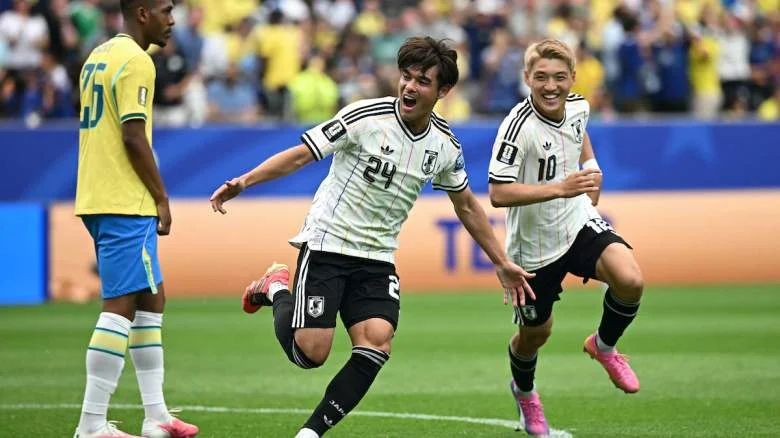
Japan Stuns Brazil at Halftime in World Cup Round of 32
Japan has taken a shocking 1-0 lead over Brazil at halftime in their Round of 32 match at NRG Stadium in Houston on Monday, June 29, 2026. Kaishu Sano delivered the breakthrough goal for Samurai Blue, capitalizing on a well-worked attacking move to put the five-time world champions on the back foot.
Brazil entered the match as heavy favorites, having dominated possession and created several chances in the opening 45 minutes. The Selecao registered eight shots to Japan’s four, completed 93% of their passes, and had 16 touches in the Japan box. But goalkeeper Zion Suzuki stood firm, making four saves to keep his team ahead. Japan, by contrast, managed only two touches in the Brazil box but made them count with clinical efficiency.
Vinicius Junior, Brazil’s star forward and a key figure in their group-stage success, has been largely neutralized by Japan’s disciplined defense. The Real Madrid winger has created one chance, taken one shot, and struggled to find space against a compact backline led by Takehiro Tomiyasu. As CBS Sports noted, "Vinicius Junior struggling to get his carries... the Real Madrid man [can't] move through the gears."
Japan’s aggressive approach came at a cost: Daichi Kamada picked up a yellow card, the team’s third of the half, for a push on Bruno Guimaraes. Four minutes of stoppage time were added, but Brazil could not find an equalizer before the whistle.
Why This Match Matters: Japan Seeks First-Ever Knockout Win
This Round of 32 clash carries enormous weight for both teams. For Japan, a victory would mark their first-ever knockout-stage win in World Cup history. The Samurai Blue have advanced past the group stage before but have never won a match in the elimination rounds. For Brazil, anything less than a deep run is considered a failure, especially after their impressive group-stage performances against Scotland and Haiti.
The stakes are heightened by recent history. In October 2025, Japan defeated Brazil 3-2 in a friendly, rallying from a 2-0 halftime deficit. That result, combined with Japan’s strong showing in Group F — where they finished second behind the Netherlands — has fueled belief that an upset is possible. Head coach Hajime Moriyasu said before the match, "We are aiming to win the World Cup... Some people will say Japan are underdogs. We will play with that in mind."
Brazil, meanwhile, is missing winger Raphinha, while Neymar started on the bench. Japan also made four changes to their lineup, with key players like Ao Tanaka and Takefusa Kubo unavailable. Kubo, who suffered a meniscus tear in his left knee during Japan’s group-stage opener, was ruled out by Moriyasu, who said, "He’s still only doing individual running [and] training, so he’s not going to play in the match against Brazil."
Japan’s game plan has been clear: defend in a low block, absorb pressure, and hit Brazil on the counterattack with quick, short passes. This approach worked in the first half, and if they can maintain their discipline in the second half, they could pull off one of the biggest upsets of the tournament.
Broader Implications: What This Means for the Tournament
Japan’s halftime lead is a reminder that the 2026 World Cup’s expanded knockout format — now featuring a Round of 32 — has already produced drama. Canada became the first team to advance to the Round of 16 on Sunday, beating South Africa 1-0 on a stoppage-time goal by Stephen Eustaquio. With co-host Canada already through, the tournament is witnessing a shift toward parity.
A Japan victory would not only shake up the bracket but also reinforce the growing competitiveness of Asian soccer on the global stage. Japan have consistently punched above their weight in recent World Cups, and a win over Brazil would be their most significant scalp yet. For Brazil, an early exit would raise questions about Carlo Ancelotti’s tactical setup and the team’s ability to handle disciplined, counterattacking sides.
Brazil must now find a way to unlock Japan’s defense in the second half. With Vinicius Junior struggling, the onus may fall on other attackers like Matheus Cunha or substitute Neymar to provide a spark. Japan, meanwhile, will look to Zion Suzuki to continue his heroics and lead his team to history. As noted in our earlier profile, Zion Suzuki: Japan's US-Born Goalkeeper Faces Brazil in World Cup Showdown, the young goalkeeper has been a revelation in this tournament.
The second half promises high drama. Brazil will push forward aggressively, leaving gaps that Japan can exploit on the break. One thing is certain: this match is far from over.
Comments